Russian drones damage substation in Odesa region, Ukrainian officials say
A barrage of Russian drones successfully targeted and damaged a critical power substation in Ukraine's sout...
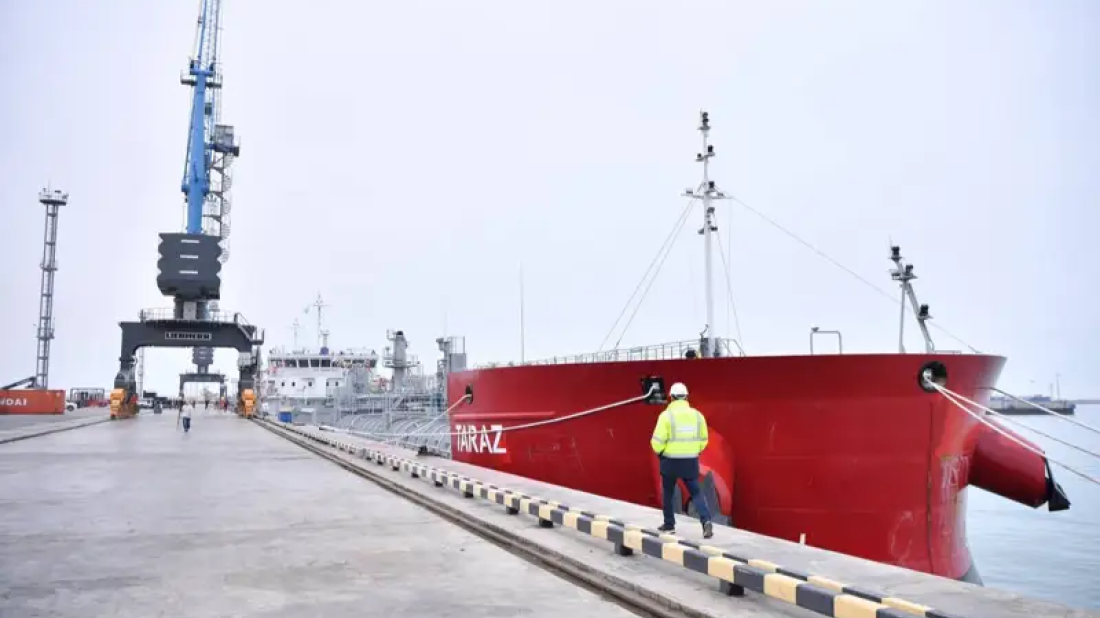
The Kazakh tanker Taraz, carrying Kashagan oil, has departed from the port of Aktau, heading toward Baku, according to a statement from the press service of KazMunayGas. This delivery is part of KazMunayGas' efforts to implement President Tokayev's instructions on diversifying export routes for Kazakhstan's hydrocarbons.
The oil will be transported via the Baku-Tbilisi-Ceyhan pipeline to the Mediterranean Sea. The export was handled by KMG Kashagan B.V.
This development further strengthens the Trans-Caspian International Transport Route. In 2022, KazMunayGas and Azerbaijan’s SOCAR signed a framework agreement on the transit of Kazakh oil, and in March 2024, they agreed to gradually increase oil transit through Azerbaijan. The new agreement sets a target of 2.2 million tons per year.
Located on the Kazakh shelf of the Caspian Sea, near the city of Atyrau, the Kashagan oil field is one of the largest discoveries in recent decades. With estimated reserves ranging from 9 to 13 billion barrels of oil, it is a significant asset for Kazakhstan’s energy sector. Commercial production at Kashagan, which relies on the use of artificial islands, began in the fall of 2016.
In November 2024, Kazakhstan’s Energy Minister Almasadam Satkaliyev revealed that the country is considering increasing its annual oil supplies through the Baku-Tbilisi-Ceyhan (BTC) pipeline to 20 million tons. This move aims to significantly reduce Kazakhstan's reliance on Russian pipelines, potentially cutting supplies through Russia by over 80%.

China and Russia vetoed a United Nations Security Council resolution on Tuesday aimed at coordinating defensive efforts to protect commercial shipping in the Strait of Hormuz, leaving no agreed international framework for securing the vital route.
Lebanon’s Hezbollah said it had stopped firing on northern Israel and Israeli forces on Wednesday as part of a two-week ceasefire in the Middle East brokered between the United States and Iran. However, a Hezbollah lawmaker warned that the pause could collapse if Tel Aviv does not adhere to it.
Pakistan’s Prime Minister Shehbaz Sharif said Iran and the United States, along with their allies, have agreed to an immediate two-week ceasefire covering all areas, but Israel says the deal excludes Lebanon. Tel Aviv says the U.S. is committed to achieving shared goals in upcoming negotiations.
Recent U.S. complaints about NATO allies and threats to quit the alliance are pushing European countries to seek alternative security arrangements, Spanish Foreign Minister Jose Manuel Albares said on Tuesday.
South Korea has welcomed a rare conciliatory response from North Korea, calling it a “meaningful step” towards easing military tensions on the Korean peninsula.
Israel launched its heaviest strikes on Lebanon since hostilities escalated last month, killing over 100 people, even as Hezbollah halted attacks under a disputed U.S.-Iran ceasefire.
Turkish President Recep Tayyip Erdoğan has said Türkiye aims to rank among the world’s top ten exporters of defence technology within the next two years.
As global attention centres on the conflict between Iran and the U.S., violence in Lebanon is intensifying, with Israeli strikes hitting residential areas, causing mounting civilian casualties and deepening an already severe humanitarian crisis.
Uzbekistan and the U.S. are preparing to launch a joint investment platform by the end of the year, alongside the creation of a new bilateral business council aimed at strengthening economic cooperation.
More than 94,000 people have been displaced in Afghanistan since late February due to cross-border fighting, the UN humanitarian agency OCHA said, while nearly 100,000 in Nuristan remain cut off from aid due to insecurity.
You can download the AnewZ application from Play Store and the App Store.
What is your opinion on this topic?
Leave the first comment