


14:38 CET
U.S.-Iran
live Iranian FM says Saudi talks continue as Yemen fighting intensifies
Iran and...


The AnewZ Opinion section provides a platform for independent voices to share expert perspectives on global and regional issues. The views expressed are solely those of the authors and do not represent the official position of AnewZ
Who leads Western support for Ukraine, and who holds the greatest influence over the terms of ending the war?
This question has become increasingly pressing as differences between Washington and its European allies widen, extending beyond the scale of military and financial assistance to encompass strategic priorities and calculations regarding a potential settlement.
The United States has become a less reliable partner for Ukraine.
In October, it put pressure on Ukraine in several ways. It eased sanctions on Russia; satellite services used by Ukraine’s military were limited; deliveries of air defense missiles were delayed. It even threatened to stop sharing intelligence.
The main cause of the disagreement is Ukraine’s attacks on Russian oil refineries. President Trump says these attacks increase fuel prices. This issue is important to him before the U.S. midterm elections on 3 November.
Some of this pressure was reduced later in the month as the United States had resumed intelligence sharing. However, the general direction of U.S. policy remains the same.
According to the Financial Times, U.S. envoys also proposed that European countries release part of the frozen Russian state assets and transfer them to a fund controlled by the United States, in order to restart peace talks. European officials rejected this proposal.
Two other developments matter. First, President Trump has invited President Putin to the meeting of the G20 in Miami in December. Second, Putin has proposed a meeting with Presidents Trump and Xi Jinping during the APEC summit in China on 18-19 November. These developments suggest that major powers may discuss the future of Ukraine without the participation of Ukraine or Europe.
On the other hand, the United Kingdom is playing three roles at the same time. It is leading on sanctions on Russia, supplying more weapons to Ukraine and acting as a mediator to improve relations between Washington and Kyiv.
The UK is also preparing for a possible peace agreement in the future. In November, at least 1,500 soldiers from the UK, France, Germany and Poland will hold military exercises in Poland. The exercises will practice sending a multinational force to Ukraine after a ceasefire.
In addition, the UK opened a business centre in Kyiv to support joint defense production between British and Ukrainian companies. The UK is also asking European Union countries to use €210 billion in frozen Russian assets to support Ukraine.
Germany is now Europe’s main financial supporter of Ukraine, but it faces budget limits. Germany’s 2026 federal budget includes about €11.5 billion for military aid to Ukraine. On 21 October, Chancellor Merz said that Germany and other European countries are now paying for Ukraine’s defense without U.S. help. He said this is a “huge burden” on their budgets.
Germany also faces direct security threats from Russia. On 5 October, the head of Germany’s foreign intelligence service warned that Germany is at risk of being drawn into a violent conflict with Russia. He said Russia is conducting a “shadow war” against Germany, meaning sabotage, cyberattacks and other hidden attacks.
These developments reveal an incomplete redistribution of roles within the Western camp. Leadership in supporting Ukraine is moving from the United States to the United Kingdom and Germany. European countries are paying a larger share of the costs.
However, the United States retains considerable influence over Kyiv’s strategic choices. Consequently, any shift toward European leadership remains contingent on Europe's ability to sustain its support, reduce its dependence on critical American capabilities, and formulate a unified position on a potential settlement.
Leadership, after all, is measured not only by the resources committed but also by the ability to translate those resources into influence over the course of the war and the terms of peace. That is the decisive test for Europe!

Iran and...
French high school students returned to protests on Monday, but demonstrations were far smaller than those seen before the two-week school break. A...
Armenian Prime Minister Nikol Pashinyan said the g...
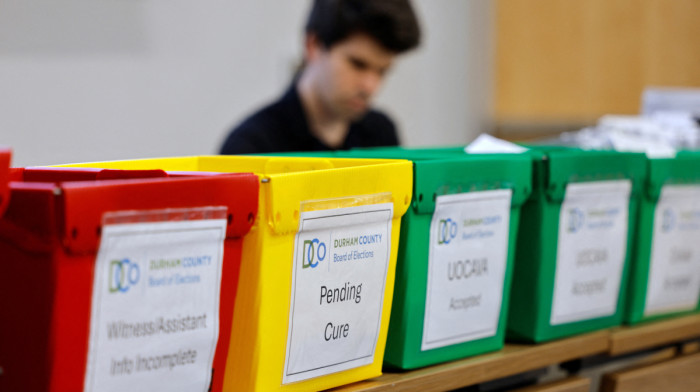
Hundreds of millions of U.S. citizens head to the polls on 3 November to elect the House of Representatives and Senate. How they vote could influence the direction of Donald Trump’s remaining 26 months in office and the outcomes of the Ukraine and Iran conflicts.
Iran and Saudi Arabia are continuing talks on new regional security arrangements without foreign military involvement, Iranian Foreign Minister Abbas Araghchi said Tuesday, as Houthi attacks on the kingdom intensify.
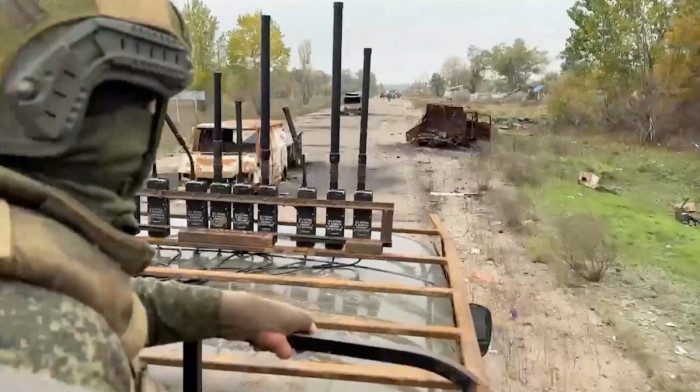
A six-day humanitarian ceasefire in the Russian-held Ukrainian town of Oleshky ended on Sunday, 1 November, after facilitating aid deliveries and civilian evacuations.

Saudi Aramco's acquisition of a 49 per cent stake in artificial intelligence (AI) company HUMAIN is putting a spotlight on a wider investment question: why are some of the world's biggest energy companies moving deeper into AI, and what do they expect to gain?
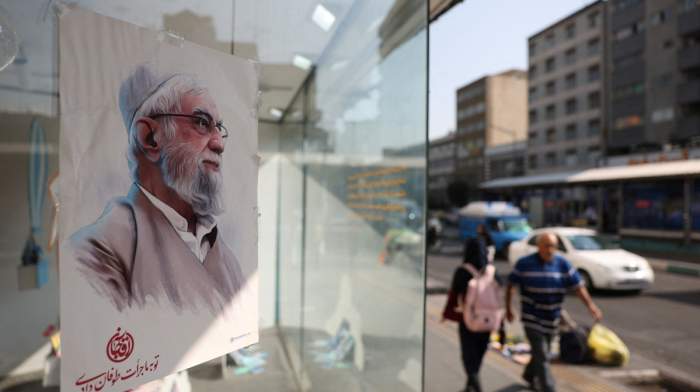
Iranian negotiators held a third consecutive day of talks with Qatari mediators in Doha on Sunday, 1 November, as diplomatic efforts to end the U.S.-Israeli war on Iran continue amid fears of renewed military action.
Relations between Britain and France, rooted in centuries of history, have possessed a distinctive dynamic that has helped determine Europe’s political balance: the paradox of “friendly enemies."
The international system is entering a period in which the greatest challenge for many countries is no longer simply choosing between competing great powers, but avoiding a situation in which their economic security, political autonomy and diplomatic options depend on their changing preferences.
Strengthened U.S.-Central Asia ties reflect a broader trend in international relations, with growing emphasis on developing alternative transit routes and diversifying energy and critical mineral supply networks to gain geopolitical influence.
The era of Aleksandar Vučić, who has effectively ruled Serbia since 2012, has come to an end. But why is the outcome of the election important on a global scale?
Nearly two years after the 20 October 2024 parliamentary elections, Iraq’s Kurdistan Region remains without a cabinet. The Kurdistan Democratic Party (KDP) won 39 of 100 seats and the Patriotic Union of Kurdistan (PUK) 23, leaving neither able to govern alone.
You can download the AnewZ application from Play Store and the App Store.




What is your opinion on this topic?
Leave the first comment