The AnewZ Opinion section provides a platform for independent voices to share expert perspectives on global and regional issues. The views expressed are solely those of the authors and do not represent the official position of AnewZ
Defence debates often begin in the wrong place. Should Türkiye seek a return to the F-35 programme? Should it acquire more Eurofighters? When will the indigenous KAAN fighter mature into an operational capability? Which air and missile defence systems should come next?
These are legitimate questions. But they come after a more fundamental one: what kind of conflict are we preparing to deter—or, if deterrence fails, to fight—over the next twenty years?
Without answering that question first, even the world’s most sophisticated weapons can become extraordinarily expensive strategic mistakes.
Defence planning is not the selection of platforms from a catalogue. It begins with threat assessment, moves through doctrine and force design, and only then reaches procurement. That sequence deserves fresh thinking not only in Türkiye, but across the wider Eurasian region.
War Is Changing Faster Than Defence Planning
The assumptions that shaped military planning during the Cold War have not disappeared, but they are no longer sufficient.
Large armies, fighter aircraft, tanks and naval vessels still matter. Yet recent wars have shown that their effectiveness increasingly depends on the networks around them: drones, precision missiles, satellite intelligence, artificial intelligence, electronic warfare, secure communications and resilient logistics.
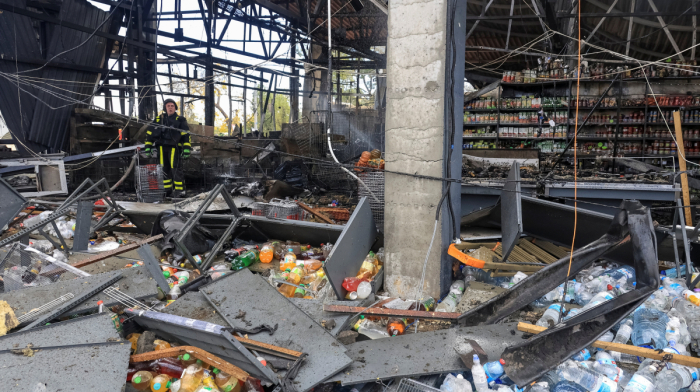
Ukraine has demonstrated how relatively inexpensive unmanned systems can locate, disrupt and destroy assets costing many times more. It has also shown the limits of technological enthusiasm. Drones do not replace artillery, air defence, engineering, logistics or trained personnel. They become decisive when integrated into a coherent operational system.
The Second Karabakh War reinforced the same lesson in the South Caucasus. Azerbaijan’s success did not rest on one weapon. It came from combining unmanned systems, intelligence, precision strike, electronic warfare, operational planning and trained forces against entrenched positions.
Recent confrontations across the Middle East have added another layer. Modern conflict now combines conventional firepower with cyber operations, missile defence, electronic warfare, space-based intelligence and strategic communications.
Future wars will be fought simultaneously in the air, at sea, in cyberspace, in space and across information networks. Disabling electricity grids, ports, financial systems or communications may in some cases prove more consequential than capturing territory.
Security in the twenty-first century is therefore built not only on battlefields, but also in semiconductor plants, software laboratories, satellite networks, data centres and advanced manufacturing facilities.
Türkiye’s Security Environment—and Azerbaijan’s
Türkiye faces one of the world’s most complex security environments. It must plan for conventional deterrence while also preparing for less visible forms of pressure that can operate below the threshold of war.
The immediate capability challenge is not one single hypothetical conflict. It is the convergence of ballistic and cruise missiles, drone swarms, cyber attacks, electronic warfare, terrorism, sabotage, disinformation and pressure on energy and transport infrastructure.
NATO membership remains central to Türkiye’s defence, but alliance protection does not remove the need for national resilience. Nor does it eliminate the importance of deconfliction and diplomacy in managing disputes with neighbours and regional powers.
These are increasingly Azerbaijani concerns as well. Located between Russia, Iran and the Caspian basin, Azerbaijan is an important energy supplier to Europe and a central link in the Middle Corridor connecting Asia with Europe.
Protecting pipelines, railways, ports, digital infrastructure and energy corridors may become as important as defending national borders. Future adversaries may seek to disrupt economies before confronting armies.
Azerbaijan’s Strategic Lesson
The Second Karabakh War was not simply a military victory. It became an international case study in how doctrine and technology can reinforce each other.
Azerbaijan demonstrated that success does not come from purchasing advanced systems in isolation. It comes from integrating intelligence, unmanned platforms, electronic warfare, precision strike, air defence suppression, logistics and trained personnel into one operational concept.
For Türkiye, Azerbaijan became more than a close ally. It offered real operational experience in how indigenous defence technologies, joint training and adaptive planning can work together.
Today, cooperation between Ankara and Baku extends beyond equipment procurement. It includes joint exercises, military education, industrial projects, intelligence cooperation and growing discussion of artificial intelligence, satellite technologies, electronic warfare and unmanned systems.
Their experience offers a wider lesson for middle powers: technological sovereignty increasingly supports strategic sovereignty. But sovereignty does not mean isolation. It means having enough domestic capability, trusted partnerships and supply-chain resilience to make decisions under pressure.
Looking Beyond the F-35
Seen through this broader strategic lens, the F-35 debate becomes more balanced.
The aircraft is one of the world’s most advanced combat platforms. Yet it is much more than an aircraft. It is an ecosystem of software, sensors, secure communications, electronic warfare, logistics and continuous upgrades.
The relevant question is not whether the F-35 is an excellent fighter. It clearly is. The question is how such a capability would fit into Türkiye’s wider force structure, alliance obligations, industrial priorities and threat environment.
Major acquisitions always carry opportunity costs, but the choice is not simply between buying abroad and building at home. Türkiye will continue to need access to allied technology while developing indigenous systems. The strategic task is to combine both without creating a single point of dependency.
A credible force may require advanced combat aircraft alongside integrated air and missile defence, unmanned systems, cyber resilience, protected communications and domestic maintenance capacity. Platforms matter. The architecture connecting them matters more.
The S-400 Lesson
Türkiye’s S-400 experience reinforces this point.
The acquisition addressed a genuine concern about air and missile defence. But it also led to Türkiye’s removal from the F-35 programme and triggered US sanctions under CAATSA.
The broader lesson extends beyond one system. Modern defence procurement cannot be separated from alliance politics, interoperability, industrial strategy, technology access and long-term sustainment.
Buying hardware is no longer enough. States must understand who controls the software, the upgrades, the spare parts, the data and the operational permissions on which the hardware depends.
Strategic autonomy is not achieved by replacing one dependency with another. It is built by diversifying partnerships, expanding domestic knowledge and preserving freedom of action.
Building Capability Instead of Dependency
The most important strategic question facing both Türkiye and Azerbaijan is therefore not whether to import or manufacture everything domestically. Neither extreme is realistic.
The real question is which capabilities must be sovereign, which can be developed jointly with trusted partners and which can safely be purchased from abroad.
Over the past two decades, Türkiye has become an established producer of unmanned systems, smart munitions, naval platforms, missiles and electronic warfare technologies. Azerbaijan has expanded its own defence-industrial base while deepening military and technical cooperation with Türkiye and other partners.
The next stage should move beyond licensed assembly and focus on original intellectual property, propulsion, sensors, secure software, advanced air defence, artificial intelligence, cyber security, semiconductors and space-based capabilities.
International cooperation with the United Kingdom, Italy, Japan, South Korea and other trusted partners should increasingly emphasise joint development, shared production and reciprocal access—not procurement alone.
This also requires choices. Not every fashionable technology deserves equal investment. Research priorities must reflect realistic threats, industrial capacity and the ability to sustain systems during a prolonged crisis.
Preparing for Tomorrow’s Wars
The greatest security challenge facing Türkiye and Azerbaijan over the next twenty years is unlikely to resemble a single twentieth-century war. It will be a spectrum of pressure in which conventional force, cyber attacks, missile strikes, drone swarms, economic coercion, information warfare and attacks on critical infrastructure can reinforce one another.
National resilience will increasingly depend on engineers as much as soldiers, software developers as much as pilots, and scientists as much as generals.
Defence policy can no longer be separated from industrial policy, education, energy security, communications infrastructure or technological innovation.
For both Türkiye and Azerbaijan, the task is not merely to deter yesterday’s threats. It is to build the technological, industrial and institutional foundations required for tomorrow’s security environment.
The countries that shape Eurasia’s future security order will not necessarily be those with the largest armies. They will be those that can design and sustain advanced technologies, protect critical infrastructure, build trusted partnerships and adapt faster than their competitors.
The defining contest of the twenty-first century will not be decided solely by soldiers on the battlefield. It will also be shaped by engineers, scientists, entrepreneurs, software developers and strategic leaders.
That is the war Türkiye and Azerbaijan should be preparing to prevent—and, if prevention fails, to survive.












What is your opinion on this topic?
Leave the first comment