The AnewZ Opinion section provides a platform for independent voices to share expert perspectives on global and regional issues. The views expressed are solely those of the authors and do not represent the official position of AnewZ
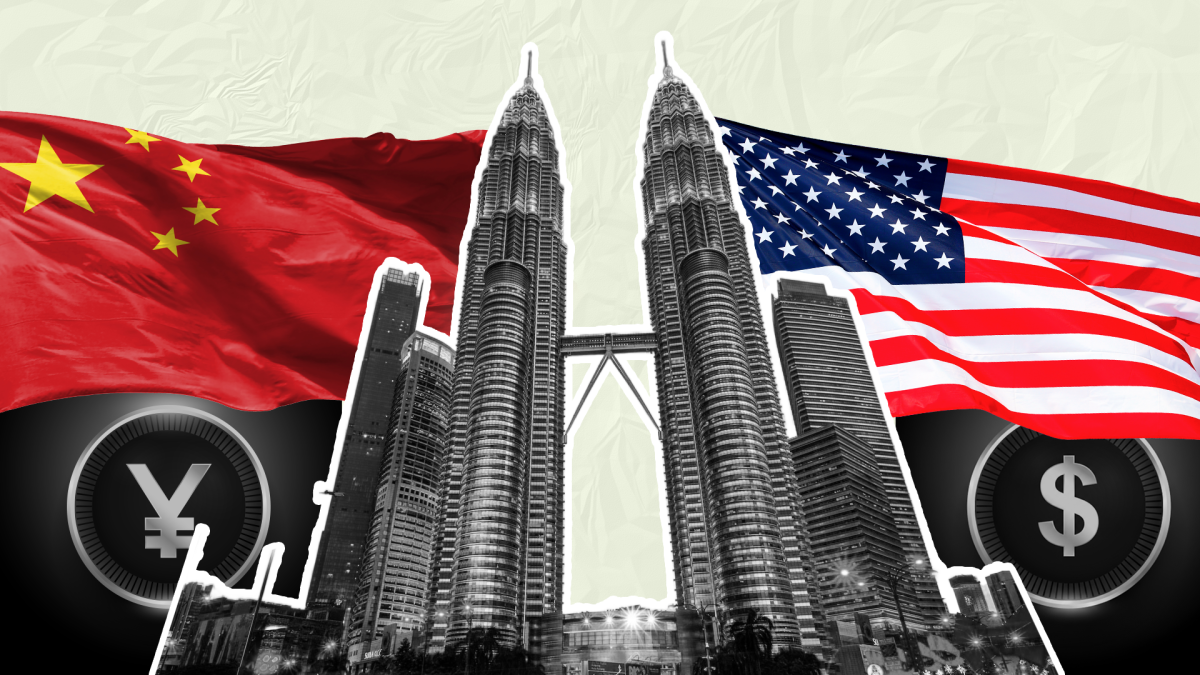
The recent economic and trade consultations held between China and the United States in Kuala Lumpur have delivered a significant, if hard-won, set of consensuses, injecting a much-needed degree of certainty into a relationship often characterized by friction and volatility. Following an in-depth meeting between the Chinese and U.S. presidents in Busan, South Korea, where they had earlier agreed to strengthen cooperation in economic and trade relations, the subsequent dialogue in Malaysia aimed to translate that high-level commitment into tangible, working arrangements.
The positive outcomes, as confirmed by the Ministry of Commerce (MOFCOM) spokesperson, fully demonstrate that effective solutions to differences are possible when engagement is based on equality, mutual respect, and reciprocity. For global markets and for the economies of both nations, these results represent a pragmatic, forward-looking step away from escalating trade hostilities.
The importance of the preceding presidential meeting in Busan, South Korea, cannot be overstated. That meeting laid the foundational agreement—a commitment to uphold and implement the important consensus reached by the two heads of state—which then empowered their respective economic and trade teams to seek common ground in Kuala Lumpur.
The official MOFCOM response confirmed that the consultations had successfully addressed the respective economic and trade concerns of both sides. The success of these consultations, ultimately, lies in the reciprocal and balanced nature of the key agreements reached, which touch upon critical areas ranging from tariffs and export controls to sectoral investigations and high-profile corporate issues. This measured approach suggests a shared willingness to de-escalate tensions and manage differences constructively, a crucial development for the world's two largest economies and their intertwined supply chains.
Tariff Relief and the Path to Trade Normalisation
Perhaps the most immediately impactful outcomes of the Kuala Lumpur consultations revolve around the complex and burdensome structure of bilateral tariffs that have constrained trade for years. The Chinese and U.S. teams secured a critical agreement involving the removal and suspension of specific duties, marking a palpable move toward easing trade friction.
In a key step demonstrating reciprocal action, the U.S. side agreed to remove the additional 10% “fentanyl-related tariffs” that had been imposed on Chinese goods, including those originating from the Hong Kong and Macao Special Administrative Regions. The removal of these specific tariffs, ostensibly linked to a non-trade issue, serves as a significant gesture of good faith, particularly as the two sides also reached a specific consensus on cooperation in fentanyl control. This linkage suggests that the negotiations successfully bundled commercial and strategic interests.
Crucially, the U.S. also committed to keeping the 24% retaliatory tariffs on Chinese goods suspended for another year. This suspension is a strong sign of intent to prevent a re-escalation of the trade conflict, providing significant relief to importers and exporters. In a corresponding move, China agreed to make corresponding adjustments to its countermeasures against U.S. tariffs, while both sides also agreed to extend certain tariff exemptions.
This multifaceted agreement provides businesses in both countries with greater predictability. Tariffs, as a tool of trade policy, introduce uncertainty and increase costs for producers and consumers alike. The extension of suspensions and exemptions, and the specific removal of the 10% duty, offers firms a critical window of one year to plan and operate without the immediate threat of escalating trade barriers. This is a tangible demonstration of dialogue achieving what prolonged contention could not: stability and the potential for expanded commerce.
Beyond the tariff adjustments, the two sides reached a consensus on the expansion of agricultural trade. Agriculture has often been a barometer of the overall health of the China-U.S. economic relationship, and an agreement to expand trade in this sector offers significant commercial opportunities for U.S. farmers and Chinese consumers. This shared commitment to growth in agricultural exchange is a classic example of both countries finding common ground where their economic interests align, further bolstering the case for continued pragmatic engagement. The reaffirmation of the outcomes from the Madrid trade consultations also grounds these new agreements in prior understandings, adding an important layer of continuity to the bilateral trade architecture.
Navigating Export Controls and Sectoral Disputes
The consultations also achieved significant progress in the highly sensitive areas of export controls and high-profile corporate disputes, which are often flashpoints in the broader strategic rivalry. The second key point of consensus dealt directly with the complex issue of technology and export restrictions.
In a move addressing concerns over market access and technological cooperation, the U.S. side agreed to suspend for one year the implementation of its controversial “50% Penetration Rule” export control measure, which had been announced on September 29. This rule would have significantly constrained the export of certain items to China and created considerable anxiety in the global technology supply chain. In parallel, China reciprocated by suspending for one year the implementation of its own related export control measures that were announced on October 9. Furthermore, China committed to working on refining detailed follow-up plans regarding its controls.
This reciprocal suspension in the technology domain is a crucial de-escalation mechanism. It effectively pauses a potential tit-for-tat escalation cycle in export controls, allowing both sides time to develop more durable and mutually acceptable frameworks for managing technology competition. The decision to suspend implementation for a full year signals a serious intent to use this time for constructive dialogue rather than punitive action, which is vital for the stability of the global tech sector that relies heavily on the intertwined supply chains of both economies.
The third major area of consensus involved sectoral investigations and corporate cases. The U.S. side agreed to suspend for one year its Section 301 investigation into China’s maritime, logistics, and shipbuilding sectors. Like the tariff and export control suspensions, this decision removes the immediate threat of punitive measures against key Chinese industries. China, in turn, committed to suspending its corresponding countermeasures following the U.S. suspension. These suspensions highlight a mutual understanding that broad, sector-specific investigations can destabilise global supply chains and trade flows, and that a temporary halt is necessary to create space for diplomatic resolution.
A Foundation for Greater Certainty
The Kuala Lumpur consultations also succeeded in addressing several specific, high-profile corporate and investment issues, illustrating a shift from abstract policy disputes to concrete problem-solving. The U.S. side made positive commitments in the area of investment, which is a welcome signal for Chinese firms looking to operate or expand in the U.S. market. Reciprocally, China agreed to properly address issues related to TikTok. This exchange, where an investment commitment is matched by a commitment to address a specific corporate case, showcases the practical, quid pro quo nature of the negotiations. It demonstrates a shared recognition that addressing corporate concerns, even those with geopolitical undertones, is essential for maintaining a healthy economic relationship. Alongside these, consensus was also reached on the handling of specific corporate cases.
The cumulative effect of the agreements is an immediate boost to certainty and stability in the China-U.S. economic relationship and, by extension, the global economy. The spokesperson noted that these outcomes were “hard-won” and expressed China's clear intention to work with the U.S. to ensure their full implementation. This focus on implementation, rather than just agreement, underscores the seriousness with which China views the need for a sustained, stable economic trajectory.
The negotiations affirmed that dialogue, conducted on a basis of equality, mutual respect, and reciprocity, remains the most effective channel for resolving differences. This principle is the bedrock upon which any long-term resolution must be built. The one-year suspension periods, in particular, establish a crucial time horizon during which both nations must deepen their technical and political engagement to secure a more permanent arrangement beyond a temporary truce. They offer an opportunity to move from managing crises to building durable cooperation frameworks. The full implementation of these hard-won outcomes will be the true measure of this renewed commitment to cooperation, injecting greater certainty and stability into bilateral economic and trade cooperation and the world's economy.




















What is your opinion on this topic?
Leave the first comment