The AnewZ Opinion section provides a platform for independent voices to share expert perspectives on global and regional issues. The views expressed are solely those of the authors and do not represent the official position of AnewZ
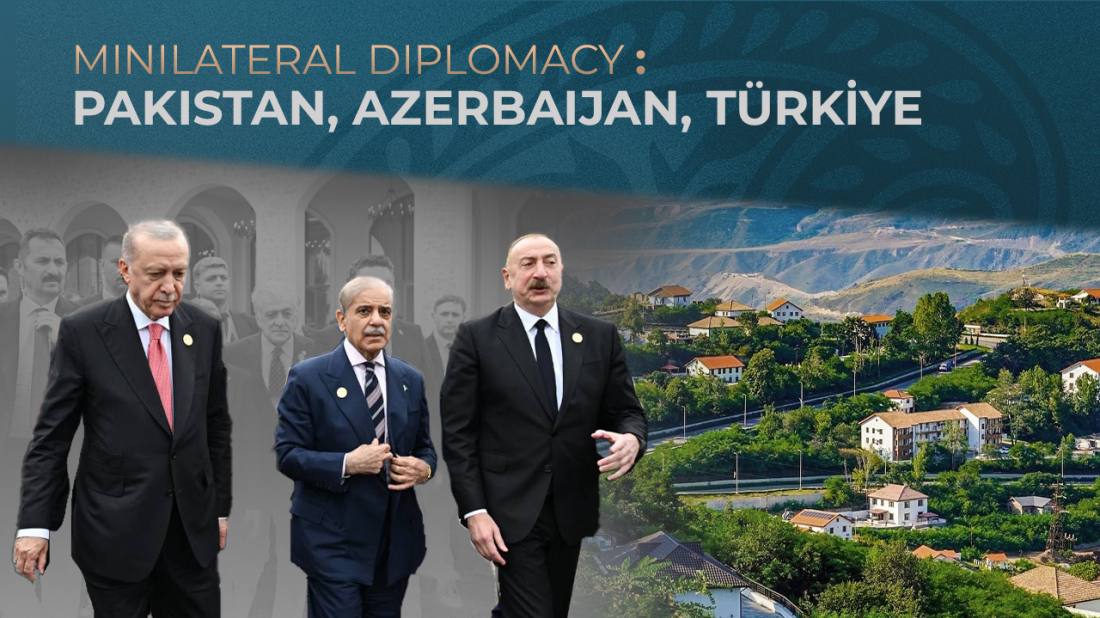
The recent trilateral summit in Lachin, Azerbaijan, has strengthened the growing diplomatic connections between three Muslim nations — Pakistan, Azerbaijan, and Türkiye
The meeting, hosted by Azerbaijan, opened with welcoming remarks from President Ilham Aliyev, who mentioned Baku's potential for collaboration with Islamabad and Ankara, while outlining ambitious investment plans for the two brotherly countries. The event is seen as a milestone diplomatic achievement reflecting the plans of the three nations to improve their political coordination and economic integration despite being non-contiguous geographically.
The summit, which took place on Azerbaijan's Independence Day on May 28th, was the leaders’ second trilateral meeting. It was aimed at strengthening the growing ties between the nations. The partnership is underpinned by a common ideological history, shared culture, and mutual alignment with the Muslim world.
Firmly committed to shared principles of sovereignty, territorial integrity, and justice, the heads of the three states expressed a strong determination to enhance their political and diplomatic cooperation beyond traditional frameworks during the meeting in Lachin. During the 2025 summit, the leaders highlighted education, technology, and cultural cooperation as the key areas for strengthening trilateral collaboration.
The meeting reflects a transition in diplomatic trends, as states seek to move beyond traditional foreign policy approaches. Consequently, states are engaging in minilateral cooperation to pursue economic and political objectives while addressing shared interests. The multilayered cooperation between Islamabad, Baku, and Ankara reflects the growing global trend of minilateralism.
The growing appeal of minilateralism is evident in groupings such as the Quadrilateral Security Dialogue (Quad: Australia, the United States, India, and Japan), AUKUS (Australia, United Kingdom, and the United States), and I2U2 (India, Israel, United Arab Emirates, and the United States). The rise of such collaborative arrangements reflects a transition towards focused coalitions aimed at maintaining flexible interactions between states.
In this context, the minilateral cooperation of the three Muslim states further enhanced cordial ties between the South Asian and South Caucasian regions. This reflects the practical application of minilateral diplomacy to advance collective strategic planning and overcome their respective regional issues, mainly rooted in territorial conflicts initiated by aggressive neighbouring governments.
The trilateral military exercise ‘Three Brothers 2021’ proved to be the first successful strategic demonstration of Islamabad-Baku-Ankara collaboration under the auspices of minilateralism. The joint military drill strengthened ties between the three nations, in addition to supporting the broader regional peace, stability, and development. Deepening military coordination and the resolution of the Karabakh conflict sent a clear message to the entire international community about Azerbaijan’s growing strategic bonds with the key players of the Muslim world - Pakistan, and Türkiye.
The subsequent post-conflict developments prompted the decision-makers of the three states to solidify their defence cooperation. This was reflected in recent agreements on the supply of JF-17 fighter jets and the joint efforts to complete the Kaan fifth-generation fighter aircraft program.
In addition to promoting joint initiatives, the three nations have demonstrated strategic alignment on key regional issues. Notably, Azerbaijan consistently supported Pakistan on the Kashmir issue, reinforcing Islamabad’s advocacy for the rights of Kashmiri Muslims living under the Indian occupation. This was evident during the brief armed conflict between India and Pakistan in 2025, when Islamabad gained substantial support from both Azerbaijan and Türkiye.
This development suggests that the leaders of three nations have laid the foundation for an ideologically aligned minilateral alliance. The emergence of this alliance appears to be a response to the institutional fatigue associated with existing multilateral frameworks of the Muslim world.
The success stories emerging from the Pakistan-Azerbaijan-Türkiye nexus exhibit the alliance’s potential to deliver positive outcomes through resolving territorial conflicts in their sub-regions. It also offers a promising model of inter-regional strategic connectivity, which could include more nations and expand its scope, similar to BRICS and SCO. Both alliances have included like-minded states to enhance the global reach of their economic integration agendas and promote the interests of the member states.
Therefore, the Islamabad-Baku-Ankara alliance holds exceptional potential for attracting additional nations, especially from the Muslim world. The commitments of the three leaders and their vision for the future indicate that the minilateral approach could help resolve the structural issues of the Muslim world through economic integration and cultural cooperation.














What is your opinion on this topic?
Leave the first comment