The AnewZ Opinion section provides a platform for independent voices to share expert perspectives on global and regional issues. The views expressed are solely those of the authors and do not represent the official position of AnewZ
British Prime Minister Keir Starmer’s re-election prospects in 2029 might lie in the hands of 16-year-olds. Some of whom, alarmingly, are currently only 12 and just discovering sarcasm.
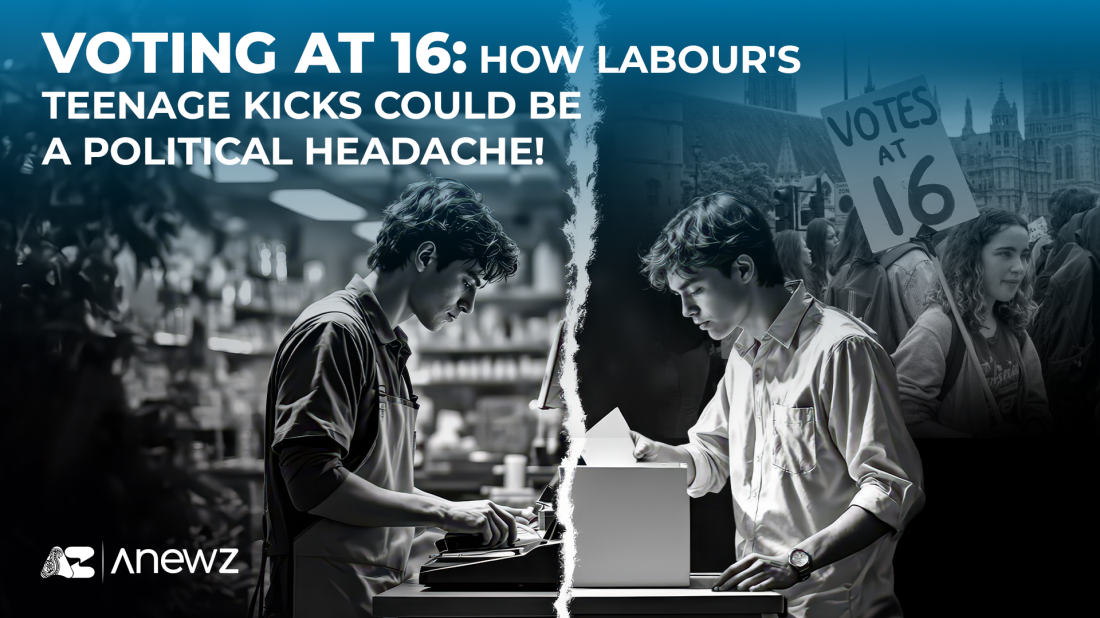
Labour’s plan to reduce the UK voting age from 18 to 16 is bold, overdue — and politically perilous. It was a 2024 manifesto pledge, and with faith in politicians now thinner than a fast food takeaway napkin, the government needs to be seen keeping at least one of its promises.
So far, Labour’s record on pledges has been erratic. It’s taken flak for its stance on Gaza, wobbled on immigration, and waged war with the left of its own party over welfare reforms. But giving more teens the vote? That’s a box they can tick - no small thing in a post-truth political environment where delivery is a luxury.
But will it actually help Labour?
History says younger voters tend to lean left. But this isn’t the early 2000s. “Gen Alpha” doesn’t know who Tony Blair is, and their idea of political engagement might be debating climate change on TikTok while streaming true crime podcasts.
Recent polling shows rising support among young males for the far-right Reform Party - Nigel Farage’s political undead. Meanwhile, the Greens are quietly gobbling up disillusioned youth votes on the left, and whispers persist about the creation of a new left-wing party co-piloted by Jeremy Corbyn and suspended MP Zarah Sultana. That would send certain corners of Labour HQ into cardiac arrest.
In short, Labour could lower the voting age and still get ghosted by Gen Z’s even moodier younger sibling.
Still, there’s a principle at stake. Sixteen-year-olds can already do many adult things: join the armed forces, pay taxes, drive certain vehicles, and work full-time. If they’re old enough to die for their country or stack supermarket shelves, perhaps they’re old enough to put a cross in a box on a ballot paper.
Critics - particularly the opposition Conservatives - say it’s a cynical ploy. “A brazen attempt by Labour, whose unpopularity is scaring them into major constitutional changes.”
Other opponents go further, suggesting 16-year-olds lack the maturity or cognitive development to make such decisions. This is a risky argument unless we’re ready to introduce neuroscience tests at polling stations. If poor judgment disqualified people from voting, half of Britain would be disenfranchised after one pint too many.
The truth is this: voting is not some sacred intellectual exercise. It's a blunt instrument. People vote with their hopes, fears, grudges, vibes - and yes, sometimes emojis. But that’s democracy. It isn’t meant to be perfect. It’s meant to be fair!
And fairness means including the people most affected by policies. Climate change, housing, education, and digital regulation - these aren’t abstract issues to young people. They’re daily realities.
Still, if we’re handing teenagers the keys to democracy, we’d better make sure they know how to drive it. Dr Stuart Fox, from the University of Exeter, who has carried out research into how to encourage voting among young people, said, “It is right to help young people be heard. But there are other measures which are more effective at getting young people to vote, particularly those from the poorest backgrounds who are by far the least likely to vote, such as beefing up the citizenship curriculum or expanding the provision of volunteering programmes in schools.”
And what if 16-year-olds don’t bother to vote?
So what?
The right not to vote is still a democratic right. In 2014, Scottish 16-year-olds got the vote for the independence referendum and turned out in force. Since then, younger Scottish voters have kept turning up to the polls, unlike in Wales, where youth turnout remains low. The point isn’t how many show up - it’s whether they’re allowed to.
Because let’s face it, voter apathy isn’t age-specific. Just ask the good people of the South West English city of Plymouth, where a referendum this month on whether to elect a mayor drew a feeble 20% turnout. That’s not Gen Alpha. That’s grown adults choosing Netflix over governance.
The right to vote isn’t about guaranteed engagement. It’s about the opportunity to engage.
That’s what Labour is gambling on. If nothing else, extending the vote to 16-year-olds makes a symbolic statement: that young people matter, that democracy isn’t a club for the grey-haired and jaded, and that citizenship starts before cynicism sets in.
Will it win Labour the next election? Probably not.
Will it change the country’s political culture overnight? Unlikely.
But it might just give Britain’s youngest citizens a sense of agency - and a reason to care. Even if that care is filtered through memes and Minecraft.
And even if Keir Starmer ends up as a one-term prime minister who gets unseated by a 19-year-old Green-voting vegan with a nose ring, he’ll still have done something radical - trusted young people with the future they’re going to inherit. It’s about time.

















What is your opinion on this topic?
Leave the first comment