Iran has strengthened ties with regional partners and agreed a roadmap for technical talks with the U.S. aimed at securing a final peace agreement within two months.
Regional diplomacy gathers pace
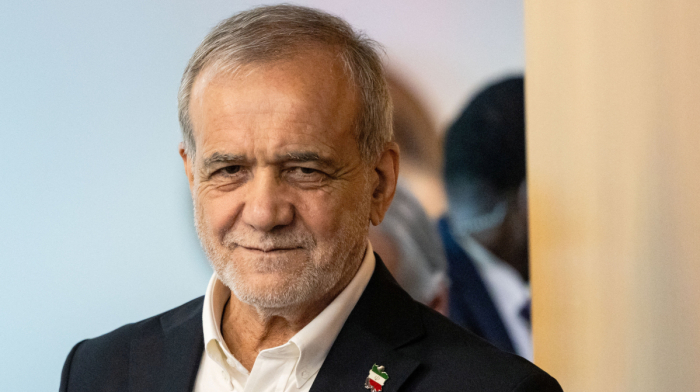
President Masoud Pezeshkian departed on a state visit to Pakistan on Tuesday, while Parliament Speaker Mohammad-Bagher Ghalibaf has been visiting the Sultanate of Oman since Monday.
Both Pakistan and Oman recently helped mediate a ceasefire agreement between Iran and the U.S., while the sultanate has long facilitated contacts and message exchanges between Tehran and Washington.
Meanwhile, Deputy Foreign Minister Kazem Gharibabadi said Iran and the U.S. had agreed during technical talks in Switzerland on Monday on arrangements for meetings to implement the memorandum of understanding signed last week.
“It was decided to form four working groups on ending sanctions, nuclear issue, reconstruction and economic development, and monitoring and implementation,” state news agency IRNA quoted him as saying.
Meanwhile, Foreign Minister Abbas Araghchi is reportedly scheduled to visit neighbouring Iraq on Sunday.
Preparations for Khamenei farewell ceremonies
His planned visit comes amid reports that two religious cities in Iraq will host farewell processions for Iran’s former Supreme Leader Ayatollah Seyed Ali Khamenei, who was killed on the first day of the Israel–U.S. war with Iran on 28 February.
Iranian authorities are planning large-scale farewell and funeral processions in Tehran, Qom and Mashhad beginning on 4 July, with reports suggesting that decisions are being considered on declaring three public holidays.
Iran rejects reports on nuclear inspections
In the latest development, Foreign Ministry spokesman Esmaeil Baghaei strongly rejected reports that Iran had agreed during talks in Switzerland on Sunday to allow inspectors from the International Atomic Energy Agency (IAEA) to visit the country’s civilian nuclear facilities.
“There was no meeting with the IAEA director general (Rafael Grossi) in Switzerland,” he said.
Stressing that Iran remains a signatory to the Non-Proliferation Treaty (NPT), the spokesman said Tehran would not authorise the UN nuclear watchdog to inspect nuclear sites bombed by Israel and the U.S. last June.
“There is no protocol on such visits,” Baghaei stated, adding that Tehran has suspended its ties with the IAEA following the agency’s failure to condemn attacks on Iran’s nuclear sites, which were under UN verification.
Speaking at a weekly press conference on Tuesday, he also categorically rejected reports that Iran’s military capabilities had been discussed with U.S. officials.
“Our ballistic missile capability was not on the agenda of the talks. It will never be negotiated with any other country either,” the spokesman replied to a question.









What is your opinion on this topic?
Leave the first comment