live Iran, U.S. make competing claims over control of Strait of Hormuz
Iran says the Strait of Hormuz remains under its control, rejecting U.S. President Donald Trump’s claim of “total control” over t...
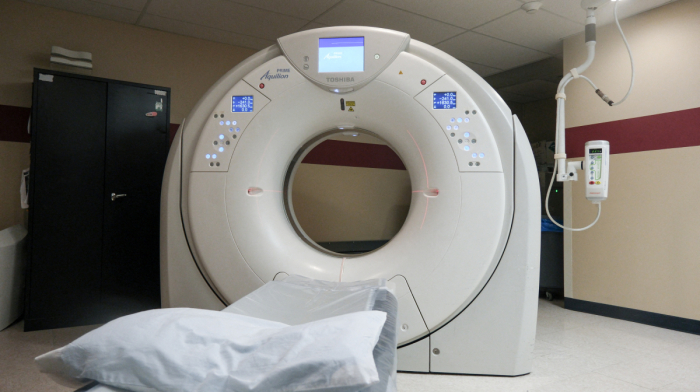
Researchers at United Arab Emirates University have developed an innovative non-surgical blood flow monitoring technology using piezoelectric pressure sensors, offering a more cost-effective and accurate approach for detecting vital health conditions.
Scientists from United Arab Emirates University have created a new technology for non-surgical blood flow monitoring that utilizes piezoelectric pressure sensors. The system relies on materials that generate electric fields when exposed to mechanical stress, allowing for accurate measurements of blood flow velocity and viscosity.
The enhanced version of the technology provides greater precision and is suitable for both hospital and home use. It also delivers real-time data, which can aid in detecting conditions such as blood clots.
Professor Mahmoud Al Ahmad, the project supervisor, emphasized the goal of improving existing technologies to benefit patients and healthcare providers. Future plans include incorporating artificial intelligence to enhance the system's capabilities.
This innovation contributes to the UAE's vision of advancing local medical technology, reducing dependency on imports, and supporting the country's shift toward a knowledge-based economy.

Disruption in the Strait of Hormuz has increased the strategic importance of Bab al-Mandab, raising fears that instability in both waterways could trigger a wider global energy and trade crisis.
Flights at Catania airport in Sicily will remain suspended until early Friday as ash from Mount Etna continues to disrupt air travel, following hundreds of cancellations and diversions over the past week.
Iran says the Strait of Hormuz remains under its control, rejecting U.S. President Donald Trump’s claim of “total control” over the strategic waterway and insisting it will not reopen until Washington fulfils its commitments under an interim deal.
Iran and the United States remain at loggerheads over efforts to agree a permanent end to the war in the Gulf, according to a senior Iranian source who said there had been no progress in talks to revive the interim deal agreed in June and define a timeframe to implement it.
Russia has accused Ukraine of threatening global grain supplies after recent strikes on Black Sea agricultural infrastructure, while Moscow carried out a new overnight attack on Ukraine’s major Danube port of Izmail.
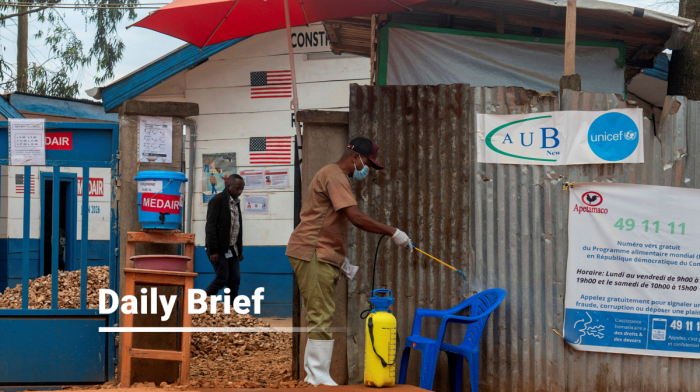
The Democratic Republic of Congo says the number of confirmed Ebola cases has risen to nearly 4,500, including more than 2,060 deaths. Delayed detection, weak surveillance, funding shortages and conflict have allowed the virus to spread faster than in any previous epidemic at the same stage.
Australia warned on Monday (3 August) of a wider spread of H5N1 bird flu after its first confirmed mass mortality event among seabirds killed about 50 greater crested terns off the coast of South Australia, south of Adelaide.
Cancer patients in Sudan are struggling to access life-saving treatment as soaring medication costs, power shortages and damaged hospital infrastructure deepen the country's healthcare crisis after more than three years of war.
The world risks a resurgence of the HIV epidemic after international funding fell by nearly a fifth last year, according to a new report from UNAIDS, which warned that decades of progress against the disease could be reversed without renewed global support.
A global shift towards healthier diets, more efficient farming and reduced food waste could cut greenhouse gas emissions from agriculture-related land-use change by 85% by 2050, according to a study published last week in the journal Nature.
You can download the AnewZ application from Play Store and the App Store.
What is your opinion on this topic?
Leave the first comment