live Iran claims drone strikes on U.S. bases in Bahrain and Kuwait
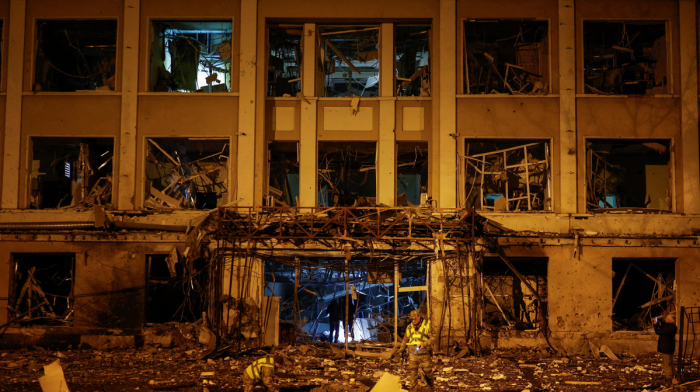
Iran’s army said it targeted U.S. military facilities in Bahrain and Kuwait with drone attacks. Tehran said the operations were carried out in retal...
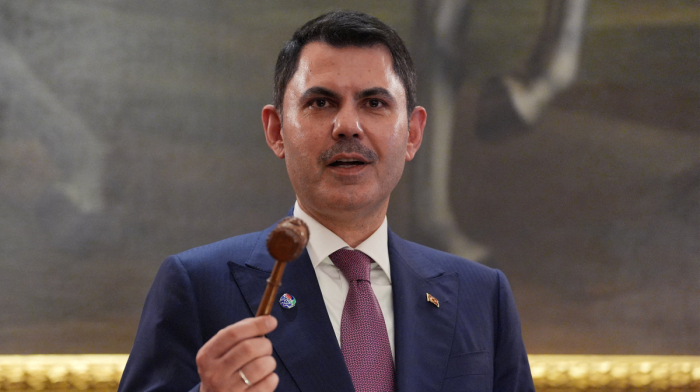
The United Nation’s climate chief says a delay in choosing the host for next year’s COP31 summit is causing problems. It's after Australia and Türkiye submitted bids in 2022 to host the high-profile conference in 2026. Sydney said it's received the most votes.
Both countries have refused to concede to the other.
Simon Stiell, Executive Secretary of the UN Framework Convention on Climate Change warns that the delay is disrupting preparations for the global climate talks.
The impasse continues despite a UN deadline for a decision in June.
“A decision needs to be made very quickly,” said Stiell, during remarks at a Smart Energy Council event in Sydney on Monday (28 July).
“The two proponents need to come together and between themselves and within the group to make that decision. The delay in making that decision is unhelpful to the process.”
The selection of COP hosts rotates among five regional groups. For COP31, the host must be agreed upon by full consensus among the 28 members of the Western Europe and Others Group (WEOG).
The office of Australian Climate Change Minister Chris Bowen referred to an interview where he said Australia’s bid had the backing of 23 out of 28 WEOG members.
Australia had also approached Türkiye multiple times to find a “win-win” solution, according to Bowen.
“We've got the votes. We could have all the votes in the world. If Türkiye is not going to withdraw, that's still a challenge,” Bowen told The Conversation Politics Podcast on Thursday.
Australia has proposed co-hosting the summit with Pacific nations and aims to highlight its progress on renewable energy. It had hoped to secure the bid during COP29 in Azerbaijan in 2024.
Türkiye remains in the race and has argued that its Mediterranean location could help reduce travel-related emissions. It has also pointed to its relatively smaller fossil fuel industry compared to Australia. Officials reaffirmed Türkiye’s position during climate talks in Bonn last month.
The UN said that the stalemate is now affecting planning for COP31, which requires large-scale logistical coordination and is expected to involve nearly 200 countries.

The U.S. military said it completed its latest wave of strikes on Iran, a two-hour operation that hit dozens of targets. Washington described the strikes as a "powerful response" to Iranian missile attacks targeting U.S. forces in the Middle East a day earlier.
Saudi Arabia said its overnight strikes on Iran-backed group targets in Iraq were carried out in self-defence and warned it would take further military action if the groups launched new attacks against the kingdom.
Ukraine targeted a warehouse belonging to Russia’s largest retailer, Wildberries, and an oil refinery overnight, while Moscow said its forces struck a ship carrying military cargo in the Black Sea.
Iran’s army said it targeted U.S. military facilities in Bahrain and Kuwait with drone attacks. Tehran said the operations were carried out in retaliation for recent U.S. strikes.
Thousands of migrants have crossed into the Spanish exclave of Ceuta from Morocco, overwhelming border security and prompting local authorities to call for a national emergency and military deployment.
Three firefighters have died as wildfires continue to burn across Greece, with Crete facing a second day of intense blazes driven by strong winds. The fires come as Europe battles destructive wildfires fuelled by extreme heat and drought.
An impending "super" El Niño is likely to inflict a combined $10 billion to $20 billion hit on affected African countries and trigger mass migration from hard-hit areas, the African Development Bank's (AfDB) top climate expert said.
Brazil has banned the production and sale of foie gras, the French delicacy made from fattened duck or goose liver. President Luiz Inacio Lula da Silva signed a law late Thursday aimed at ending force-feeding in the country's foie gras industry and stopping imports.
At least 82 people have died after heavy rain triggered devastating floods across northeastern India, Pakistan and Afghanistan this week, with widespread damage to homes, farmland and infrastructure.
Communities in Spain's northwestern Galicia region are bringing back native livestock, including the hardy Cachena breed, to help reduce the risk of devastating wildfires while restoring ecosystems.
You can download the AnewZ application from Play Store and the App Store.
What is your opinion on this topic?
Leave the first comment