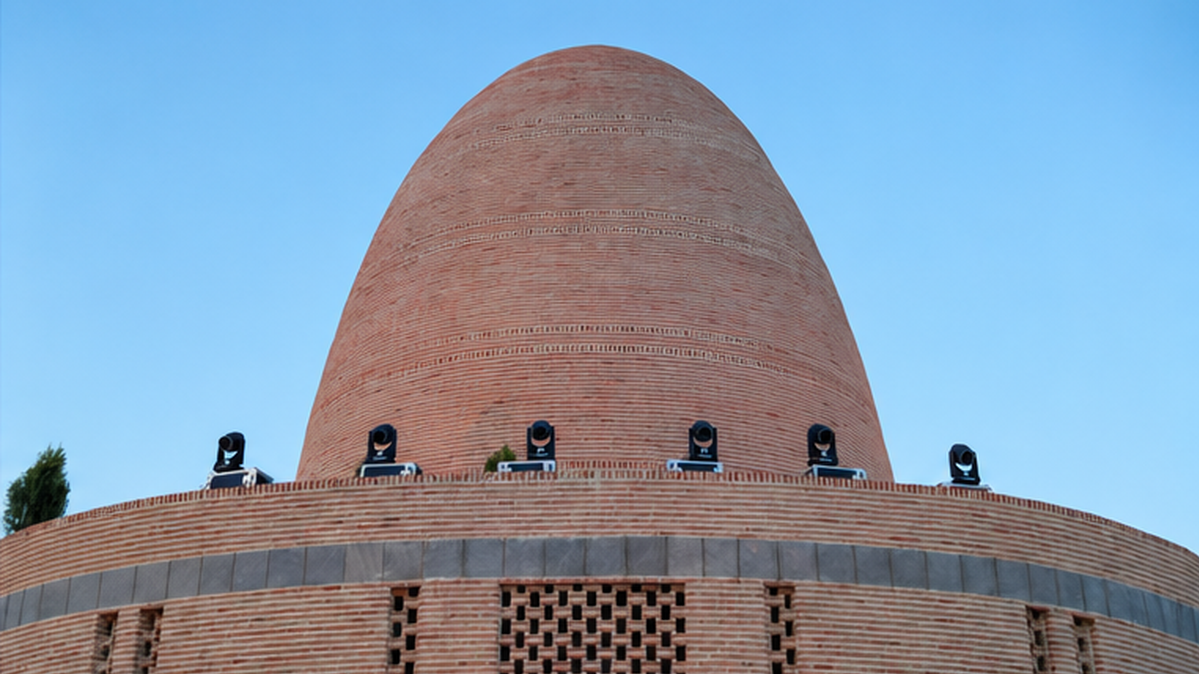
Iran has unveiled the restored mausoleum of 13th-century mystic Shams Tabrizi in the northwestern city of Khoy, with plans for a cultural tourism route linking the site to the shrine of renowned Persian poet Rumi in Konya, Türkiye.
The project aims to attract visitors interested in Persian literature, Sufism and the spiritual legacy of two of the Islamic world's most influential mystics.
The mausoleum was inaugurated on Wednesday evening in Khoy, in Iran’s West Azerbaijan Province, which borders Türkiye, Azerbaijan and Iraq.
Speaking at the ceremony, Iran's Minister of Cultural Heritage, Tourism and Handicrafts, Reza Salehi-Amiri, announced plans to establish a “mystical tourism route” linking historic sites associated with prominent figures in Persian literature and Sufism.
A spiritual route from Iran to Türkiye
The proposed route will begin at sites associated with the Persian poet Attar before passing through Semnan and the shrines of Sheikh Abolhassan Kharghani and Bayazid Bastami.
It will then continue to Suhraward, linked to Sheikh Shahab al-Din Suhrawardi, also known as Sheikh al-Ishraq, before reaching Shams Tabrizi's mausoleum in Khoy and extending to Urmia, the minister said.
“On the other side of the border, the connection with Konya will continue,” the minister added.
The initiative seeks to connect Iran's cultural landmarks with Konya, the Turkish city closely associated with Jalal al-Din Rumi, widely known as Maulana.
The mystics whose meeting shaped Persian literature
Shams Tabrizi, a 13th-century Persian mystic, is best known for his spiritual bond with Rumi, one of the most celebrated figures in Persian literature.
Their meeting in Konya in 1244 transformed Rumi's spiritual outlook and deeply influenced his poetry, leaving a lasting mark on Sufi thought and Persian literary history.
Tradition holds that Shams was born in Tabriz and died in the Khoy area, although the circumstances surrounding his disappearance and death remain unclear.
The mausoleum, believed to mark his burial place, has become an important symbol of Iran's spiritual and cultural heritage.
Restored several times over the centuries, the site has now been reconstructed to preserve its historical significance while drawing more visitors to the region.
Iran seeks to expand cultural tourism
The inauguration also forms part of Iran's wider efforts to promote its historical and literary landmarks to international visitors.
“Iran has so far registered 30 properties with UNESCO, and 58 more are in the process of being registered,” Salehi-Amiri said.
“If there were no restrictions related to the registration process, Iran’s civilizational capacity could have a much greater presence on the global stage,” he told participants at the ceremony.
Iranian officials hope the new tourism route will raise Khoy's international profile and attract admirers of Shams and Rumi from around the world.
By linking historic shrines and literary landmarks across Iran and Türkiye, the initiative aims to turn a centuries-old spiritual connection into a new draw for cultural tourism.


















What is your opinion on this topic?
Leave the first comment