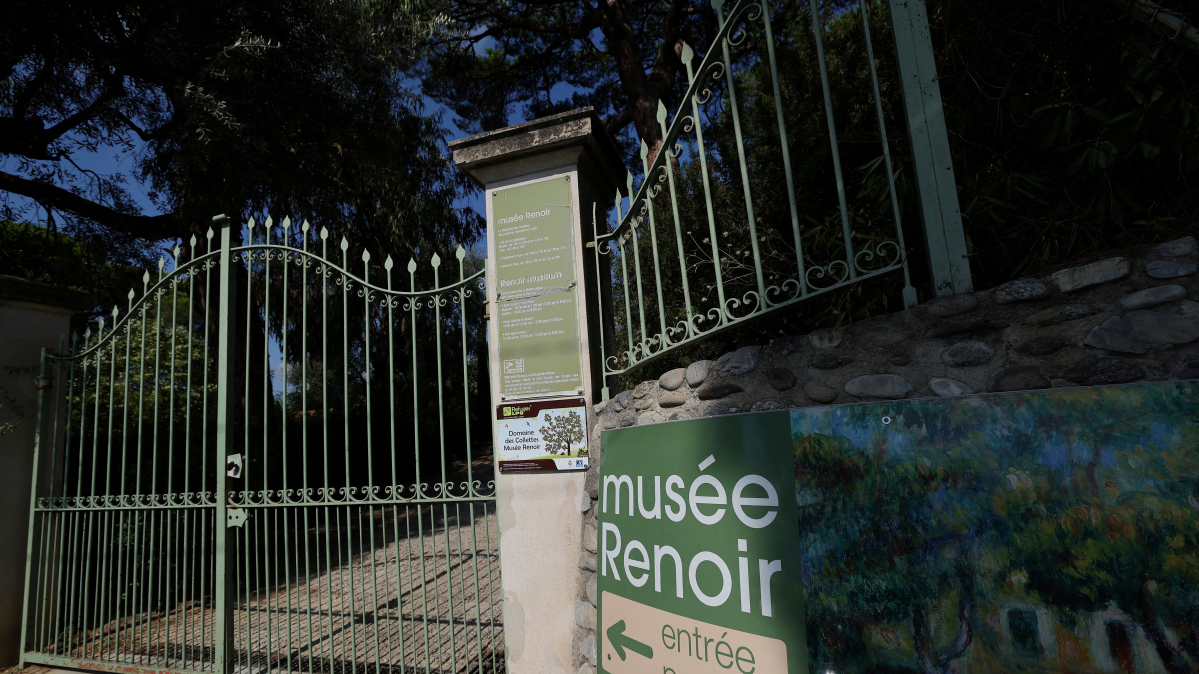
Two paintings by French Impressionist Pierre-Auguste Renoir worth millions of dollars have been recovered a month after they were stolen from a French Riviera museum. Four men have been charged in connection with the theft, while two other suspects have been released without charge.
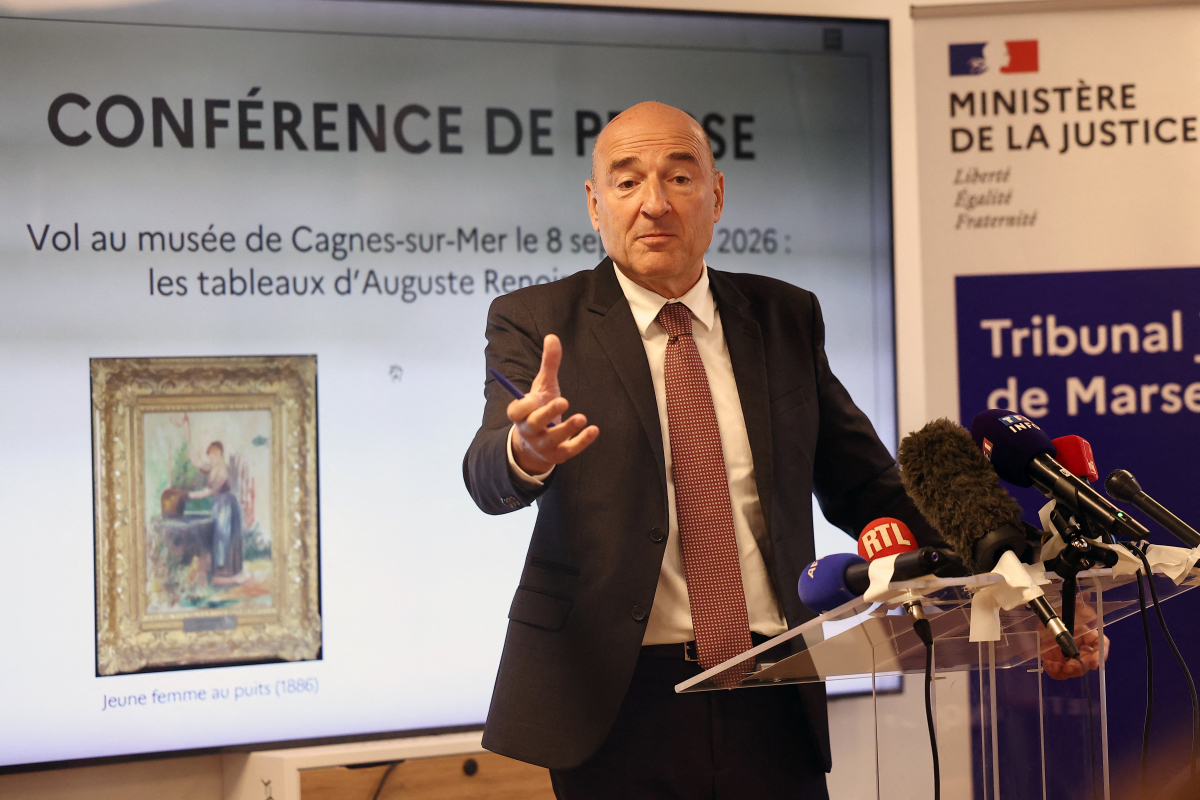
The paintings, Portrait of Madame Colonna Romano and Young Woman at the Well, were recovered on 8 October, according to the Marseille public prosecutor. Six people were arrested following the theft at the Renoir Museum in Cagnes-sur-Mer on 8 September.
How the theft unfolded
The thieves cut a hole in a garden fence to gain access to the museum grounds before climbing through a window. They initially stole four paintings but abandoned two, Madame Pichon and Coco Reading, the latter depicting Renoir’s young son Claude, in the gardens. Police had responded to triggered alarms and were pursuing the suspects.
The two recovered paintings belong to the Musée d’Orsay in Paris and were on loan to the museum in Cagnes-sur-Mer.
Cagnes-sur-Mer Mayor Bryan Masson hailed their recovery as a source of “immense joy and a great relief” for the town and its residents. The prosecutor’s office subsequently revealed further details about the investigation and arrests.
Paintings found behind a false wall
Investigators found the two paintings hidden behind a false wall in a laundry room beneath a staircase at a property in Clermont-l’Hérault on 8 October.
An initial search of the property failed to uncover the artworks, the prosecutor said. Officers returned after the resident admitted that two suspected thieves had brought the paintings to his home and that he had agreed to conceal them. He also told investigators the men were carrying a six-shot Smith & Wesson firearm.
The paintings had been hidden behind a plasterboard wall that initially escaped detection. The prosecutor said officers eventually located the works after questioning the suspect.
Both paintings were damaged. The frame of Young Woman at the Well sustained minor damage, while Portrait of Madame Colonna Romano suffered a tear in its canvas. Both will require restoration, the prosecutor said.
Suspects linked to possible second museum theft
Six people, five men and one woman, were arrested on 7 October. Investigators moved to detain the group amid suspicions that they were preparing another crime, the prosecutor said.
Police discovered that the main suspect had previously visited the Maeght Foundation museum in Saint-Paul-de-Vence. They also monitored suspicious movements by another man believed to have been involved in the Renoir theft.
On 5 October, the second man travelled by boat from Corsica to Toulon, where he collected a Peugeot 3008 believed to have been stolen and fitted with false number plates, according to the prosecutor.
Investigators believed these movements, combined with contacts involving people linked to the art market, could indicate preparations for another theft.
Éric Antonetti of France’s National Directorate of the Judicial Police said surveillance, telephone data analysis, geolocation records and footage had helped police identify six suspects and possible hiding places for the stolen paintings.
Around 50 police officers were deployed over the three days leading up to the arrests, monitoring key suspects, tracing others involved and searching for the artworks, Antonetti said.
The suspected plot involving the Maeght Foundation helped prompt the arrests, the prosecutor said. However, the investigation remains ongoing, and the allegations have yet to be proven in court.
Four men charged
Four men appeared before the Marseille Public Prosecutor’s Office on 10 October.
Two men suspected of stealing the paintings were charged with organised theft, handling stolen property and participation in a criminal conspiracy to prepare a crime committed by an organised group. Both were remanded in custody.
A third man, from the Hérault region, was charged with handling stolen property after allegedly agreeing to hide the paintings at his home.
A fourth man, who had reportedly been approached about buying the artworks, was charged with handling stolen property and participation in a criminal conspiracy.
Investigators discovered searches on his phone concerning the paintings’ market value. He claimed he had not initially realised the works were by Renoir and had only identified them after speaking to his family.
The prosecutor described the alleged conduct as a form of “digital handling” of stolen property, arguing that the man’s receipt and sharing of photographs and information about the paintings were significant to the investigation.
The fourth man was also granted assisted witness status in relation to an allegation of failing to report a crime.
The two men charged with handling the stolen artworks were placed under judicial supervision. They were ordered to surrender their passports and barred from leaving France, alongside other restrictions.
The remaining two suspects, a man and a woman, were released without charge on 9 October. The four men facing charges are presumed innocent unless proven guilty.
Museum thefts raise concerns across France
The case has renewed attention on the threat posed by criminal groups targeting France’s cultural institutions.
During the briefing, a senior official from France’s National Directorate of the Judicial Police warned that museums and other cultural sites were increasingly becoming targets for organised criminals.
According to figures cited by the official, France recorded 23 incidents involving museums in 2025, compared with approximately 10 so far in 2026.
The official stressed the need for closer coordination between police forces and greater international cooperation to recover stolen cultural treasures.
He also highlighted TREIMA, a database of stolen cultural property that helps investigators trace missing artworks, sometimes years after they disappear.
Praising the officers involved, the prosecutor called the recovery a significant success for France’s cultural heritage and reaffirmed the authorities’ commitment to combating crimes against museums and cultural institutions.
Read more:




















What is your opinion on this topic?
Leave the first comment