Thailand says U.S. trade talks to proceed despite Cambodia dispute
Thailand will proceed with talks to finalise a reciprocal trade agreement with the United States, a government spokesperson confirmed on Saturday. The...
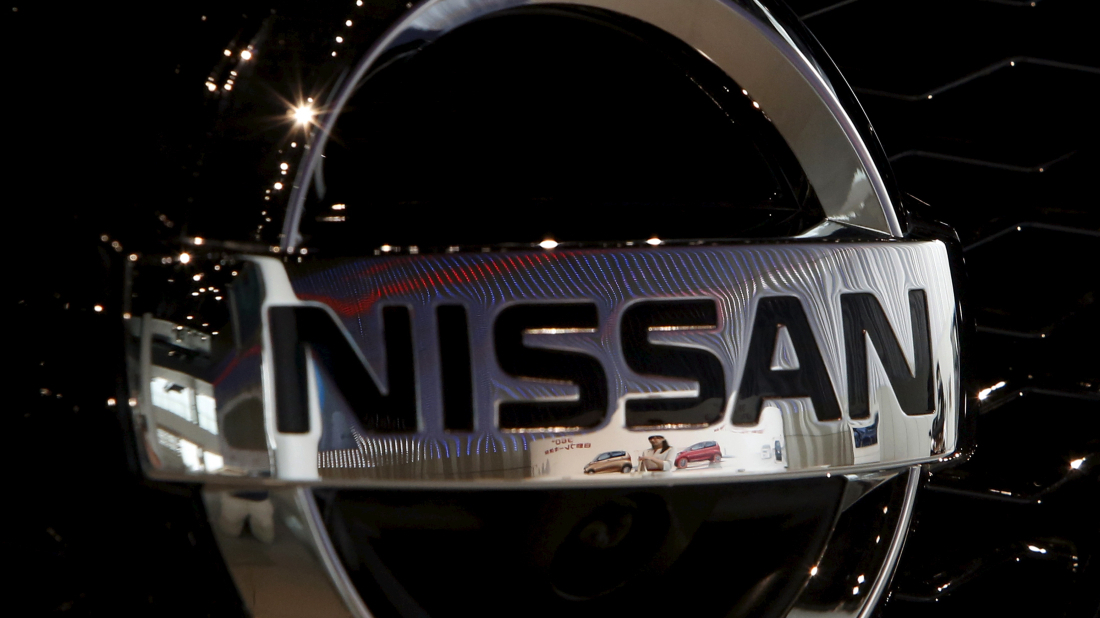
Nissan plans to invest an extra $1.4 billion in China by 2026 as it launches 10 new energy vehicles, aiming to recover from declining sales and catch up with faster-moving local competitors.
Nissan Motor will invest an additional 10 billion yuan ($1.4 billion) in its China operations by the end of 2026, according to Stephen Ma, the automaker’s China chief. Speaking at the Shanghai auto show, Ma outlined the company’s strategy to reverse its recent decline in sales, including the launch of around 10 new vehicles in the coming years.
Acknowledging Nissan's slow response to the rapidly evolving Chinese market, Ma praised the agility of local competitors. "The Chinese brands were too fast, to be honest. They were exceptional in how fast they moved," he said during a roundtable interview.
Nissan sold fewer than 700,000 vehicles in China in 2024, down more than 50% compared to four years earlier. The weak performance in its second-largest market forced the company to lower its global sales forecast for the fiscal year that ended in March.
To boost its competitiveness, Nissan presented several new models at the Shanghai event. Among them were its first plug-in hybrid, the Frontier Pro pickup, and the production version of the N7, a battery electric sedan developed with local partner Dongfeng, which is set to go on sale this month.
The automaker also revised its target for new energy vehicles in China, raising it to 10 models by the summer of 2027, up from a previous goal of eight by the end of 2025. “We were always being criticised for being late to the plug-in hybrid trend, but now we have the first one. And we wanted to do something special with it,” Ma said.
The success of Nissan’s turnaround, Ma noted, will ultimately be reflected in sales and share performance. He added that the company’s new CEO, Ivan Espinosa, who replaced Makoto Uchida in March, has placed strong emphasis on rapid execution. “He for sure put a huge objective on me: fast, fast, fast, fast,” Ma said.
Espinosa was not present at the show, while Uchida, who remains on Nissan’s board until June, joined Ma for a private meeting at the company’s booth.

MrBeast, the world’s most popular YouTuber, has officially launched his first theme park, Beast Land, in Riyadh, Saudi Arabia.
A Türkiye-registered Air Tractor AT-802F crashed in western Croatia on Thursday, killing the pilot, local authorities and media reported.
Britain’s King Charles III marks his 77th birthday. Unlike his predecessors, King Charles treats his actual birthday, on 14 November, as his main moment of reflection. This year, King Charles visited Wales—a decision that coincides with the overall spirit of his first three years on the throne.
Walt Disney is bracing for a potentially long and contentious battle with YouTube TV over the distribution of its television networks, a development that has raised concerns among investors about the future of its already struggling television business.
As Chile heads into its presidential election on Sunday, voters are gripped not by economic reform or social policy, but by crime, immigration, and organised gangs—a dramatic shift from the left-wing optimism that defined the previous cycle.
Wall Street closed sharply lower on Thursday, dragged down by steep losses in Nvidia, Tesla, and other artificial-intelligence heavyweights, as investors dialed back expectations for further Federal Reserve interest-rate cuts amid renewed inflation concerns and mixed signals from policymakers.
Russia’s budget deficit reached 4.2 trillion rubles (around $51.9 billion) in the first ten months of 2025, driven by rising government spending, according to data from the Finance Ministry released on Tuesday.
Wall Street climbed sharply on Monday, with Nvidia up 5.8% and Palantir 8.8%, as artificial intelligence (AI) stocks rebound and progress in Congress raises hopes of ending the U.S. government shutdown.
Visa and Mastercard announce a $38 billion settlement with merchants over high swipe fees, including fee reductions, surcharges options, and eight-year caps on standard consumer cards, resolving a 20-year antitrust battle.
Despite promises of recovery from the new government, Germany’s economy continues to stagnate, with no signs of renewed momentum. According to the latest report from the German Chamber of Industry and Commerce (DIHK), the country still lacks the drive needed for a genuine economic rebound.
You can download the AnewZ application from Play Store and the App Store.
What is your opinion on this topic?
Leave the first comment