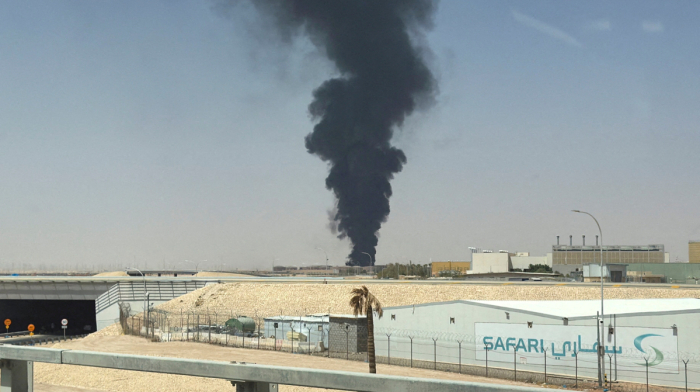
live Trump urges action at Strait of Hormuz as 20,000 sailors stranded- Middle East, 31 March
The Iran-U.S.-Israel conflict is escalating further with missile and drone attacks, expanded strikes on key infrastructure, and growing regional fa...
Growing number of tourists are surging China to experience its breathtaking snowy landscapes.
As the winter season draws near, more and more tourists are making their way to China to take in the stunning snowy scenery. In response, tourist destinations across the country are preparing for an influx of visitors. To meet the demand, China is expanding its winter tourism offerings, with ski resorts, scenic spots, hot springs, and hotels all playing pivotal roles in this surge.
"Our homestay has added a dozen new snow-view rooms in various styles. Our supermarket and restaurant are also fully prepared to welcome guests," said Liu Yumo, the manager of a homestay hotel, highlighting the efforts to cater to the increasing number of tourists this season.
In the northeastern provinces, such as Jilin, several regions are leading the charge to boost winter tourism. These areas are offering a mix of immersive ice-and-snow experiences, cultural activities, and winter sports to attract visitors from around the world. Beidahu Ski Resort in Jilin, for instance, is expecting record-breaking numbers this winter.
"We anticipate that Beidahu Ski Resort will host over 1 million visitors, generating tourism revenue of 550 million yuan, marking a new milestone as we exceed the 1-million-tourist mark for the first time," said Huang Xiaoxing, Director of the Culture, Tourism, and Sports Bureau of Jilin Municipal Ice and Snow Experimental Zone.
As part of China’s ambitious strategy to expand its ice-and-snow economy, the country aims to generate about $208.7 billion by 2030. The growing popularity of winter tourism is expected to contribute significantly to this target, with both domestic and international travelers seeking to experience the region's winter wonderland.

U.S. President Donald Trump has said that the U.S is in talks with the new Iranian regime. He said this in a post on his Truth Social account but warned that the U.S. will "Obliterate" Iran's electric and oil facilities if no deal is reached, especially regarding the Strait of Hormuz closure.
NASA is aiming to launch its Artemis 2 mission on Wednesday (1 April), sending astronauts on a 10-day journey around the Moon, officials confirmed. According to the Space Administration, the launch window is due to open at 23:24 GMT, with additional opportunities to 6 April if delays occur.
The Iran-U.S.-Israel conflict is escalating further with missile and drone attacks, expanded strikes on key infrastructure, and growing regional fallout. At the same time, diplomatic efforts to de-escalate began to emerge amid rising global energy and security concerns.
A senior Iranian military officer warned that American troops will become ‘food for sharks’ on Sunday if the U.S. launches a ground offensive in Iran. The threat came as contingents of U.S. Marines began to arrive in the Middle East, with thousands expected to be deployed in the region.
The Israeli military said on Monday that Iran launched multiple waves of missiles at Israel, and an attack had also been launched from Yemen for the second time since the U.S.-Israeli war began on Tehran. It said two drones from Yemen were intercepted early 30 March but gave no further details.
The U.S. national average retail price of petrol rose above $4 a gallon for the first time in over three years on Monday (30 March), according to GasBuddy data, as the U.S.–Israeli war with Iran continued to roil global energy markets.
Japan and Indonesia will deepen coordination on energy security, Tokyo said, as the U.S.-Israeli war on Iran disrupts vital oil and gas flows to Asia.
China's three largest state-owned airlines have issued warnings regarding their financial outlook for the current year, acknowledging that the eruption of war involving Iran has driven jet fuel prices to unsustainable highs.
Stock markets across Asia fell on Monday as escalating conflict involving Iran drove oil prices sharply higher, fuelling fears of inflation and a potential global recession, with investors reacting to disruption risks in the Strait of Hormuz and prolonged hostilities.
World Trade Organization (WTO) talks broke up with no agreement on Monday on a plan for reform or even on extending a moratorium on e-commerce, piling more pressure on the trade body that finds itself increasingly sidelined by economic nationalism.
You can download the AnewZ application from Play Store and the App Store.
What is your opinion on this topic?
Leave the first comment