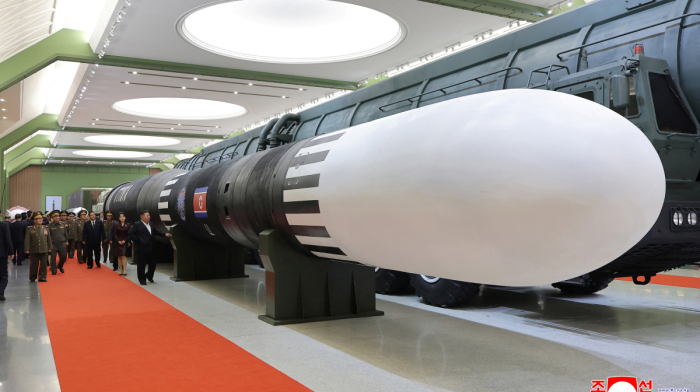
North Korean leader supervises multiple rocket launcher test
North Korean leader Kim Jong Un oversaw the test-launch of 12 600mm-calibre multiple rocket launchers on Satu...
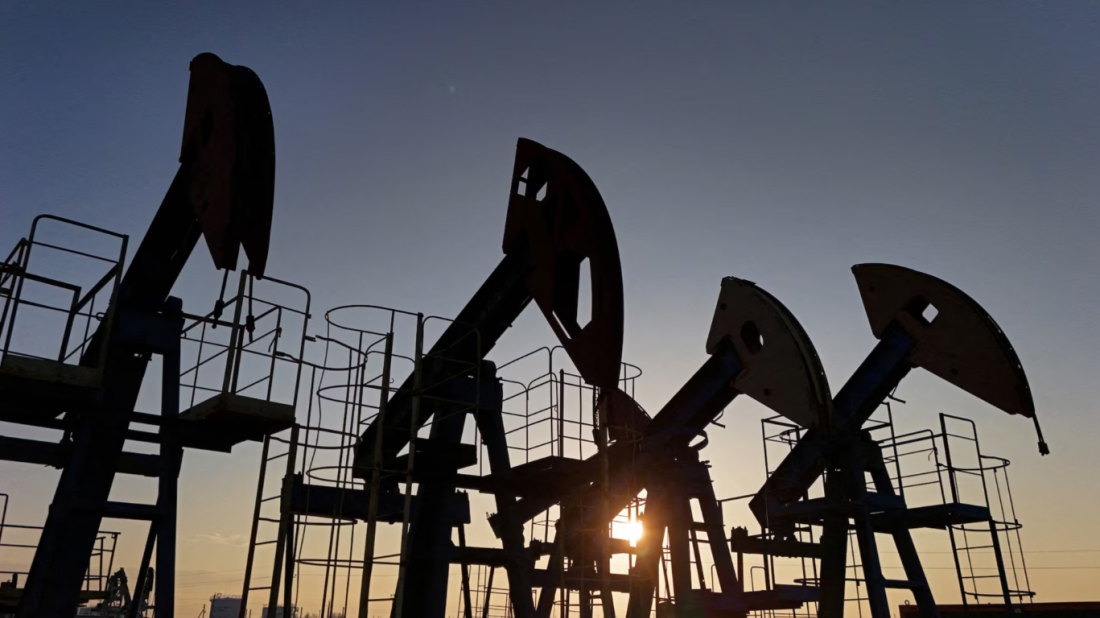
Global oil demand will continue rising until around 2030, even as China’s consumption peaks in 2027, driven by low U.S. gasoline prices and slower EV adoption, the International Energy Agency (IEA) said on Tuesday.
The IEA, which advises industrialised countries on energy policy, maintained its forecast that global oil demand will peak this decade - a view in sharp contrast with the Organization of the Petroleum Exporting Countries (OPEC), which sees no imminent peak.
According to the Paris-based agency’s annual report, oil demand will climb to 105.6 million barrels per day (bpd) by 2029 and decline slightly by 2030. Meanwhile, global production capacity is expected to rise by more than 5 million bpd to 114.7 million bpd by 2030.
Tensions in the Middle East, including the ongoing conflict between Israel and Iran, have underscored risks to supply security and recently pushed prices above $74 a barrel. However, the IEA said fundamentals point to well-supplied markets through the end of the decade, provided there are no major disruptions.
“Based on the fundamentals, oil markets look set to be well-supplied in the years ahead,” IEA Executive Director Fatih Birol said. “But recent events sharply highlight the significant geopolitical risks to oil supply security.”
China’s economic headwinds and rapid transition to electric vehicles (EVs) are set to push its oil consumption to peak in 2027, with growth slowing thereafter. The IEA noted that by 2030, China’s oil use will be only marginally higher than in 2024, a significant revision from earlier projections that had expected an increase of around 1 million bpd.
In contrast, U.S. demand is set to be more resilient, with low gasoline prices and a slower-than-expected shift to EVs lifting the IEA’s 2030 U.S. oil demand forecast by 1.1 million bpd compared with last year’s outlook.
Since returning to office, President Donald Trump has called on OPEC to lower oil prices and rolled back pro-EV policies, including moves to block California’s stricter EV sales mandates.

Israeli Prime Minister Benjamin Netanyahu issued veiled threats to Iran’s new Supreme Leader, Mojtaba Khamenei, and Hezbollah on Thursday (12 March), during his first press conference since the conflict with Iran began.
A long-running investigation has suggested that the street artist known as Banksy may be legally named David Jones. A report indicates that Jones was previously known as Robin Gunningham, a name long associated with Banksy, before legally changing his name several years ago.
Israel and Iran continued to exchange strikes on Friday (13 March), as the U.S. and French militaries reported deaths in Iraq, and the U.N. launched a $325 million appeal to help Lebanon, where a seventh of the population have left their homes since fighting began.
A widening conflict involving Iran, the United States and Israel has triggered escalating military strikes across the Middle East, disrupted shipping through the strategic Strait of Hormuz and raised concerns over global energy supplies. This live report tracks the latest developments.
North Korea fired what appeared to be a ballistic missile on Saturday (14 March), Japanese and South Korean officials said. The development comes amid the joint annual U.S.-South Korea "Freedom Shield" military drills and South Korean Prime Minister Kim Min-seok's visit to Washington.
The prevailing security situation in the region has done little to deter entrepreneurs from the Commonwealth of Independent States (CIS) who continue to view Dubai as a premier and safe location for business.
China has raised the retail prices of petrol and diesel after global oil prices climbed sharply. The country’s top economic planning body, the National Development and Reform Commission (NDRC), announced the move after reviewing international oil market trends.
Global financial markets remained on edge on Friday as the escalating war involving the United States, Israel and Iran continued to rattle investors, fuelling volatility in stocks and sending energy prices sharply higher.
China’s top leadership has unveiled a new push to turn advanced technologies into large-scale industrial priorities as part of the country’s upcoming 15th Five-Year Plan, which will guide economic and social development from 2026 to 2030.
The European Commission sees no immediate impact on the European Union's security of oil supply from the escalating conflict in the Middle East, it said in an email to EU governments, seen by Reuters on Monday (2 March).
You can download the AnewZ application from Play Store and the App Store.
What is your opinion on this topic?
Leave the first comment