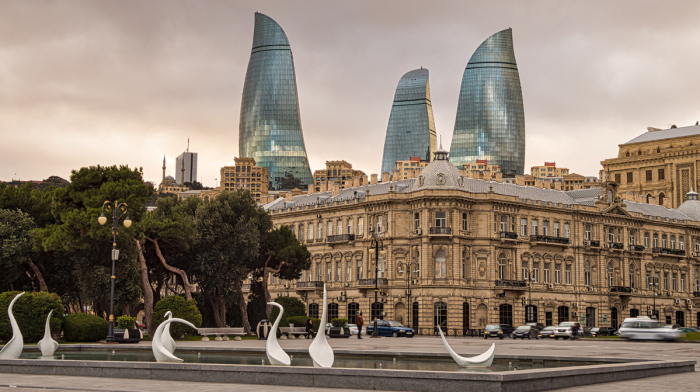
live WUF13 opening ceremony held in Baku as global forum advances sustainable urban development
The World Urban Forum (WUF13) continues in Baku, Azerbaijan on 18 May, addressing the global housing crisis. The day’s agenda includes the of...
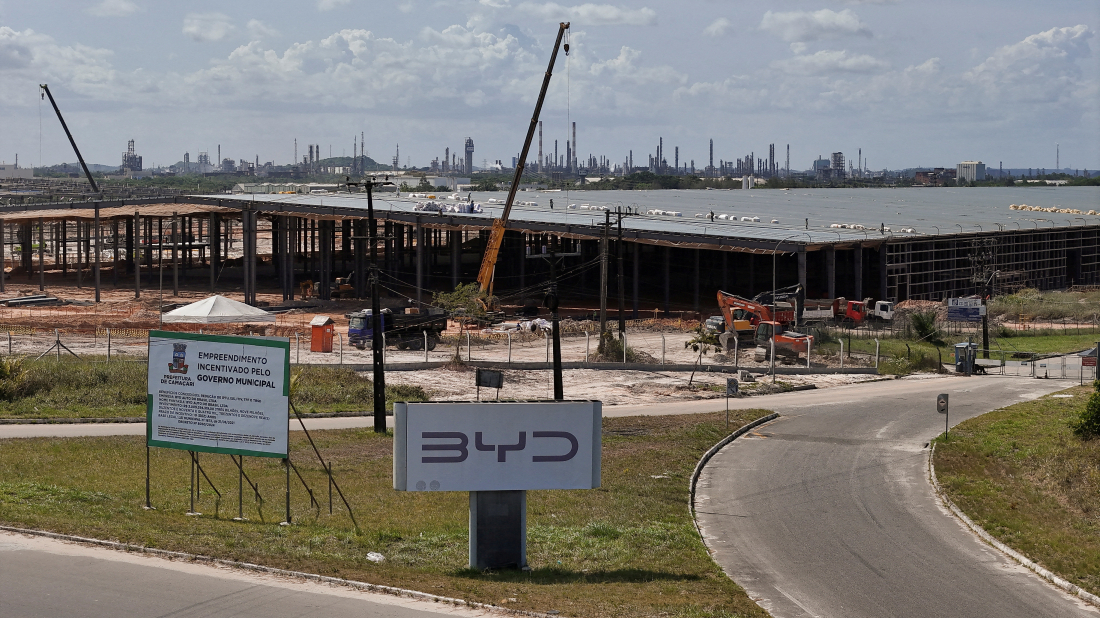
Electric vehicle manufacturer BYD is under investigation in Brazil after hundreds of Chinese workers were brought into the country on irregular visas to work on a factory construction in Bahia, with many found in "slavery-like conditions," according to labor authorities, Reuters reports.
According to Reuters, electric vehicle producer BYD (Build Your Dreams) faces scrutiny in Brazil after hundreds of Chinese workers were brought into the country on irregular visas, according to a key labor inspector. The workers, who were employed to build a factory in Bahia, were found to be in what Brazilian authorities described as “slavery-like conditions.”
Liane Durao, a labor inspector with Brazil’s Ministry of Labour, told Reuters that 163 workers employed by BYD’s contractor, Jinjiang Group, were rescued in December after authorities discovered they had been working under illegal and abusive conditions. The workers were subsequently sent back to China, with the contractor agreeing to cover the costs of their return.
BYD, which has invested $620 million in its Bahia factory to produce electric vehicles for the Brazilian market, has pledged to comply with Brazilian labor laws for the workers who will remain in the country. Durao confirmed that the company had committed to improving working conditions to meet local standards.
The labor inspector also noted that BYD would be fined for each worker found in violation of the country’s labor regulations, although the total amount of the fine has not been disclosed.
While BYD has denied the allegations and claims the visas were issued properly, the investigation into labor violations has raised concerns about working conditions in Chinese-owned enterprises abroad. The probe into BYD could complicate Brazil's relationship with China, which has become a major investor in the country.
Labor authorities are continuing to monitor the situation, ensuring that no remaining workers are subjected to exploitation as the investigation progresses. The case highlights broader issues surrounding foreign investment in Brazil and local job creation, a priority for President Luiz Inácio Lula da Silva.

Bulgaria has won the Eurovision Song Contest for the first time, taking victory in a final overshadowed by a boycott over Israel’s participation and the war in Gaza.
At least eight people were injured after a driver rammed a car into pedestrians in the northern Italian city of Modena, authorities said on Saturday. Four of the victims were reported to be in serious condition.
The World Urban Forum (WUF13) continues in Baku, Azerbaijan on 18 May, addressing the global housing crisis. The day’s agenda includes the official opening press conference, the WUF13 Urban Expo opening and a ministerial dialogue on the Nairobi Declaration to advance Africa's urban agenda.
Jeffrey D. Sachs, an economist, public policy analyst, Columbia University professor, and UN advisor, said Azerbaijan and the wider South Caucasus could become one of the world’s key strategic connectors in an emerging multipolar order.
U.S. President Donald Trump says China's Xi Jinping agreed Iran must reopen the Strait of Hormuz, as Tehran prepares a new shipping mechanism. Tensions over the U.S. blockade and stalled nuclear talks continue to disrupt global oil supplies.
Government bond markets from Tokyo to New York extended losses on Monday (18 May) as rising energy prices linked to the Middle East conflict heightened inflation concerns and reinforced expectations that major central banks could keep interest rates higher for longer.
Negotiations between Samsung Electronics and its workforce on Wednesday have broken down, officials said, raising fresh concerns over potential disruption to South Korea’s export-heavy economy.
By the time American shoppers began noticing higher prices on everything from trainers to televisions, the world's two largest economies were already deep in a trade war that left the world wondering how it would end.
The Strait of Hormuz remains a vital maritime chokepoint and serves as the primary artery linking the Persian Gulf to international energy markets. With approximately 20% of global oil and gas shipments transiting this waterway, it is the backbone of energy security for Asia, Europe, and beyond.
China’s exports grew faster than expected in April, as overseas buyers moved quickly to secure supplies amid fears that the conflict involving Iran could drive up global energy and transport costs.
You can download the AnewZ application from Play Store and the App Store.
What is your opinion on this topic?
Leave the first comment