Meta Platforms on Wednesday launched its first consumer-ready smart glasses with a built-in display, seeking to extend the momentum of its Ray-Ban line, one of the early consumer hits of the artificial intelligence (AI) era.
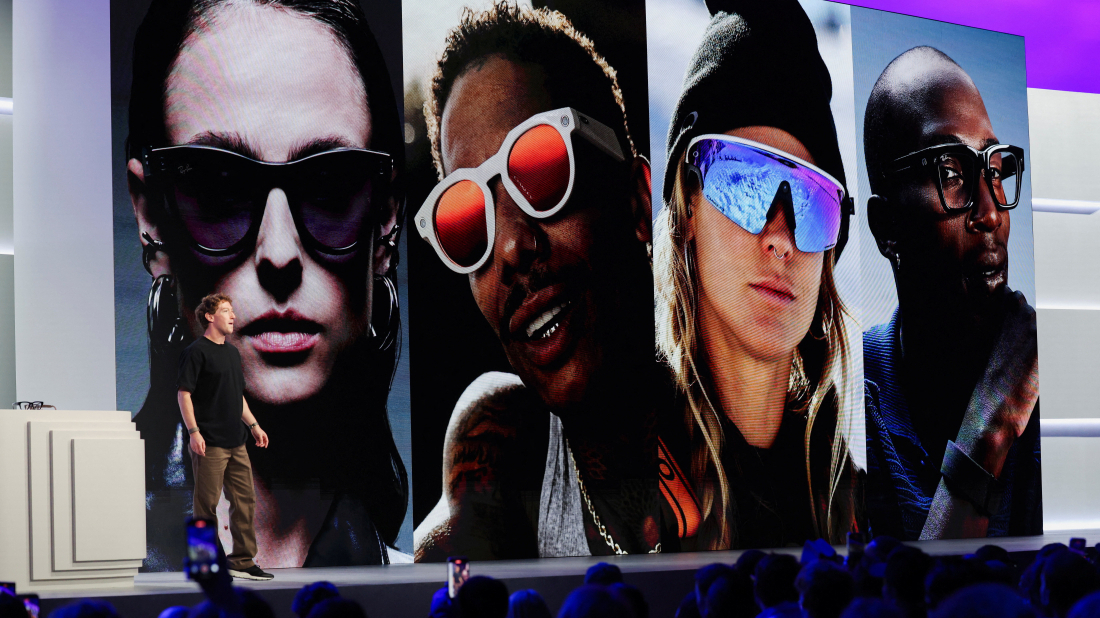
CEO Mark Zuckerberg showed off the Meta Ray-Ban Display and a new wristband controller, receiving applause at Meta's Connect event despite some demo problems.
Meta has tasted success with its smart glasses, and Zuckerberg described them as the perfect way for humans to reach for the AI promise of "superintelligence."
"Glasses are the ideal form factor for personal superintelligence, because they let you stay present in the moment while getting access to all of these AI capabilities that make you smarter, help you communicate better, improve your memory, improve your senses, and more," Zuckerberg said.
The new Display glasses have a small digital display in the right lens for basic tasks such as notifications. They will start at $799 and be available at the end of the month. A wrist band is included that translates hand gestures into commands such as responding to texts and calls.
The launch at Meta's annual Connect conference for developers, held at its Menlo Park, California, headquarters, is its latest attempt to catch up in the high-stakes AI race.
While the social media giant has been at the forefront of developing smart glasses, it trails rivals such as OpenAI and Alphabet's Google in rolling out advanced AI models.
Zuckerberg has kicked off a Silicon Valley talent war to poach engineers from rivals and promised to spend tens of billions of dollars on cutting-edge AI chips.
The new glasses also come as Meta faces scrutiny over its handling of child safety on its social media platforms.
Reuters reported in August that Meta chatbots engaged children in provocative conversations about sex and race, while whistleblowers said this month that researchers were told not to study the harmful effects of virtual reality on children.
While analysts do not expect the Display glasses to post strong sales, they believe it could be a step toward the planned 2027 launch of Meta's "Orion" glasses. Meta unveiled a prototype of that last year and Zuckerberg described it as "the time machine to the future."
Forrester analyst Mike Proulx said the Display debut reminded him of Apple's introduction of a watch as an alternative to the smartphone.
"Glasses are an everyday, non-cumbersome form factor," he said. Meta will still have to convince people that the benefits were worth the cost, he said, but "there's a lot of runway to earn market share."
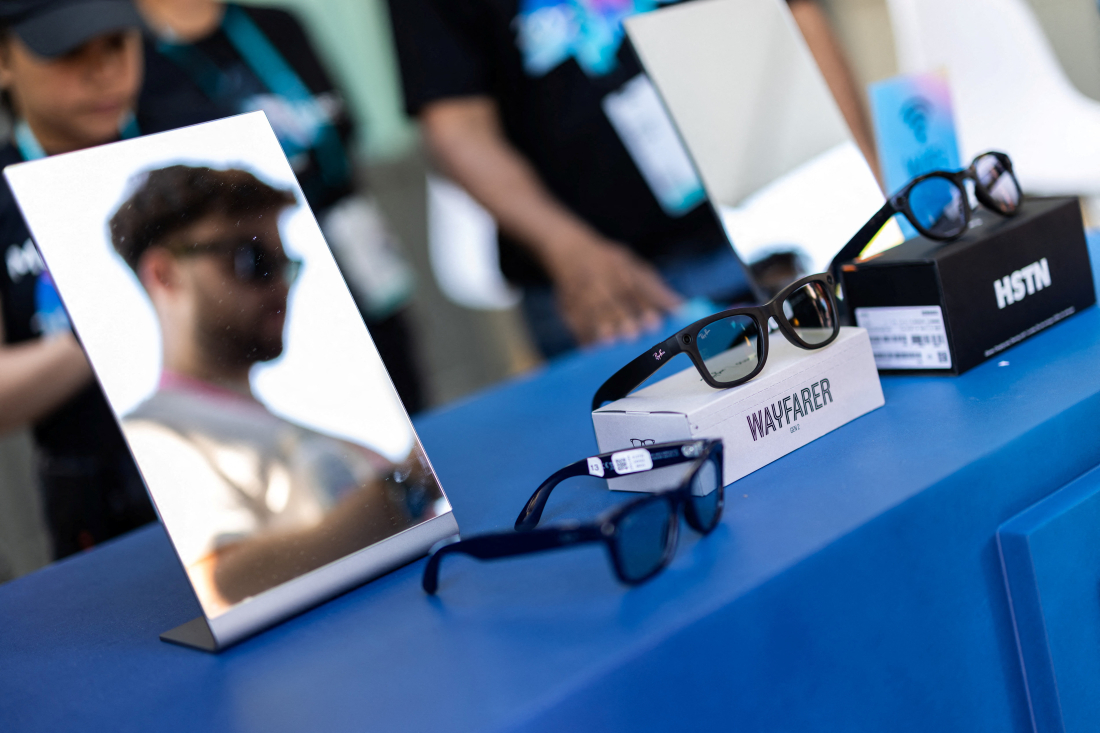
All the devices have existing features such as Meta's AI assistant, cameras, hands-free control and livestreaming to the company's social media platforms including Facebook and Instagram.
Zuckerberg's demos of the new Display glasses did not all go as planned, with a call to the glasses failing to go through, for instance.
"I don't know what to tell you guys," Zuckerberg said. "I keep on messing this up." The crowd cheered in support.
"It's great value for the tech you're getting," Jitesh Ubrani, research manager for IDC’s Worldwide Mobile Device Trackers, said of the Display glasses.
But the software will need to catch up.
"Until we get there, it's not really a device that the average consumer might know about or care to purchase," Ubrani said.
IDC forecasts worldwide shipments of augmented reality/virtual reality headsets and display-less smart glasses will increase by 39.2% in 2025 to 14.3 million units, with Meta driving much of the growth thanks to demand for the cheaper Ray-Bans it makes with Ray-Ban owner EssilorLuxottica.























What is your opinion on this topic?
Leave the first comment