Sharif Osman Hadi: Bangladesh on edge after youth leader's death sparks protests
Police and paramilitary forces have been deployed across Bangladesh after violent protests erupted overnight over the killing of a prominent youth lea...
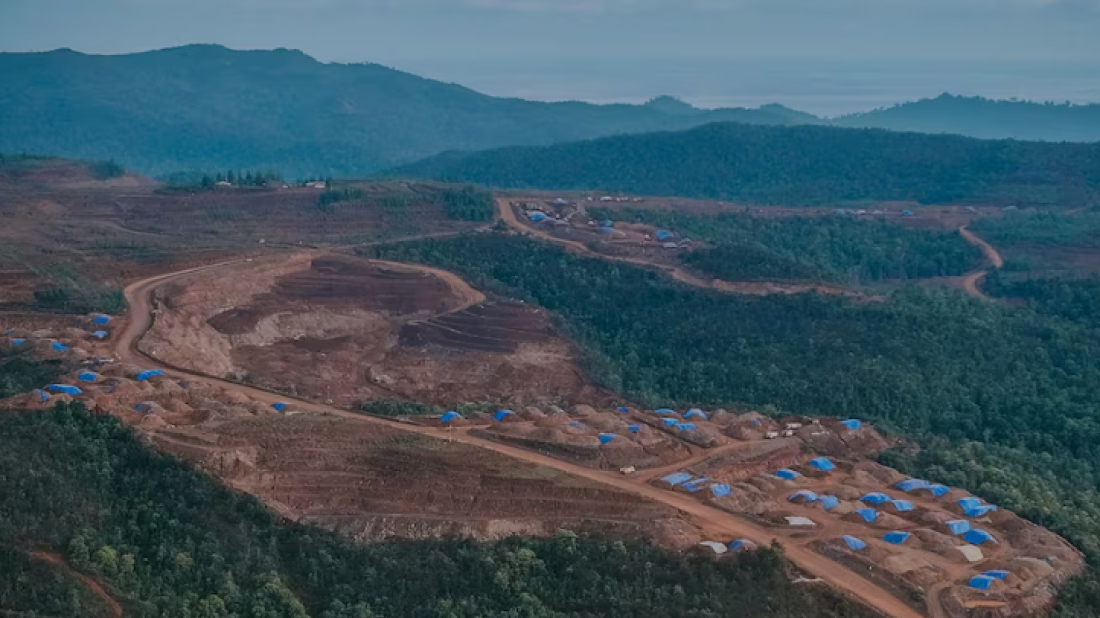
Indonesia has revoked the mining licenses of four companies operating in the ecologically sensitive region of southwest Papua, responding to growing public pressure and environmental concerns.
Indonesia on Tuesday annulled the mining licenses of four companies amid rising concerns about environmental damage in one of the world’s most biologically rich ecosystems, local media reported.
The decision came after a closed-door meeting led by President Prabowo Subianto on Monday, according to State Secretary Prasetyo Hadi, who announced the move at a press conference in Jakarta.
Public concern has surged in recent months over nickel mining operations within a marine conservation zone in Raja Ampat, southwest Papua—a region globally recognized for its biodiversity.
“We thank all elements of society, particularly those on social media, who have shared valuable information and expressed concern for the preservation of Raja Ampat’s natural environment,” Prasetyo said.
The revoked permits are part of a broader effort by the government to ensure sustainable land use in forested and conservation areas. A regulation implemented in January allows authorities to review and cancel licenses that conflict with environmental protection goals.
“The revocation of these mining permits in Raja Ampat is part of a broader, ongoing effort to ensure responsible use of forest areas,” Prasetyo added.
The Ministry of Energy also reaffirmed its commitment to strict monitoring of mining activities, with a focus on compliance with legal standards, environmental safeguards, and protection of conservation zones and forests.
Environmental activists have welcomed the decision, which they say is a critical step toward protecting one of Earth’s last untouched marine biodiversity hotspots.

The latest clashes between Thailand and Cambodia mark a dangerous escalation in one of Southeast Asia’s oldest and most sensitive disputes.
In the complex world of international diplomacy, the ongoing tensions between India and Pakistan have raised significant questions about the role of third-party mediation.
In a ground-breaking development, artificial intelligence (AI) is taking on new forms in Japan, where it has extended to a more personal and intimate domain being romantic relationships.
European Union leaders have agreed to raise up to €90 billion through joint borrowing to support Ukraine’s defence in 2026 and 2027, opting not to use frozen Russian state assets amid legal and political concerns.
Petroleum products are being transported by rail from Azerbaijan to Armenia for the first time in decades. The move is hailed as a tangible breakthrough in efforts to normalise relations between the long-time rivals.
Police and paramilitary forces have been deployed across Bangladesh after violent protests erupted overnight over the killing of a prominent youth leader, raising concerns of further unrest ahead of national elections.
Thousands of Bulgarians took to the streets on Thursday evening to protest against the outgoing government, demanding fair elections and judicial reforms to address what they describe as widespread corruption.
Brazilian President Luiz Inácio Lula da Silva has offered to mediate between the U.S. and Venezuela, warning that urgent diplomatic intervention is needed to prevent a “fratricidal war” in Latin America.
Start your day informed with AnewZ Morning Brief: here are the top news stories for the 19th of December, covering the latest developments you need to know.
European Union leaders have agreed to raise up to €90 billion through joint borrowing to support Ukraine’s defence in 2026 and 2027, opting not to use frozen Russian state assets amid legal and political concerns.
You can download the AnewZ application from Play Store and the App Store.
What is your opinion on this topic?
Leave the first comment