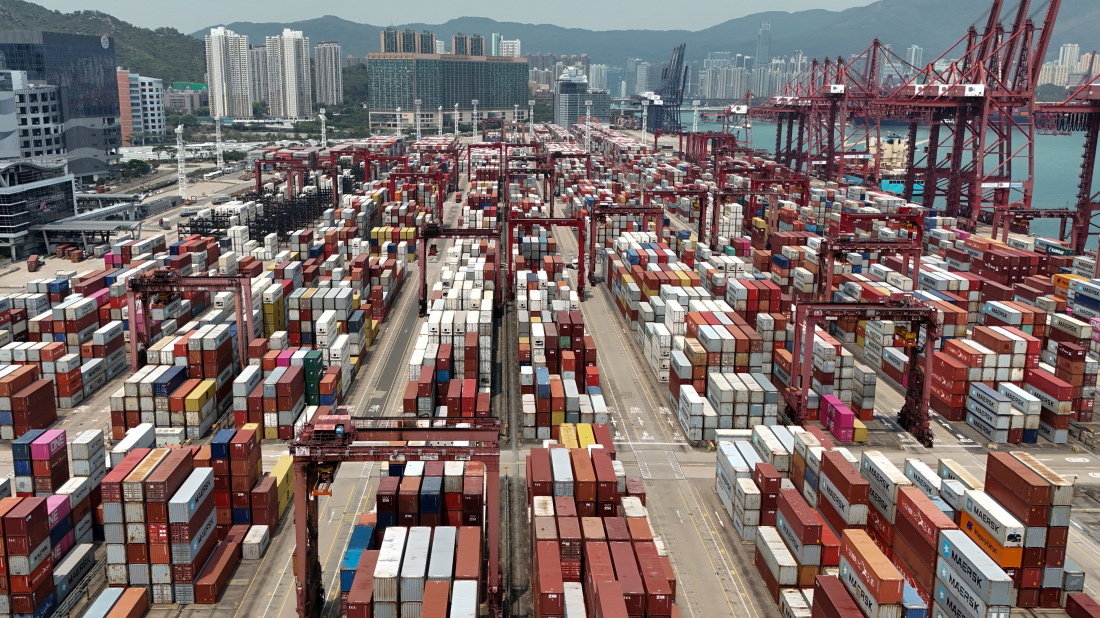
Stock markets across Asia tumbled Monday after U.S. President Donald Trump announced a new round of tariff hikes on Chinese imports, sparking renewed fears of a deepening U.S.–China trade war.
The move triggered sharp sell-offs in major financial hubs including Hong Kong, Tokyo, Shanghai, and Seoul, amid concerns over its ripple effects on global growth.
The Trump administration unveiled the tariff increase late Sunday, targeting an additional $50 billion worth of Chinese goods, citing what it called “persistent and unfair trade practices.” In response, Beijing issued a forceful rejection, labeling the accusations as “baseless” and warning of retaliatory measures.
Market Reaction
- The Hang Seng Index fell 3.8%, led by losses in tech and manufacturing stocks.
- Japan’s Nikkei 225 dropped 2.9%, marking its worst single-day performance in three months.
- The Shanghai Composite fell 2.4%, while South Korea’s KOSPI slipped 2.1%.
Analysts said the renewed tensions threaten to unravel progress made in previous trade negotiations and could hurt investor confidence in an already fragile post-pandemic recovery.
“This is a major blow to market sentiment,” said Ayako Sera, a market strategist at Sumitomo Mitsui Trust Bank in Tokyo. “Investors had hoped for de-escalation, not another round of tit-for-tat measures.”
Economic Fallout
Economists warn that further deterioration in U.S.–China relations could disrupt global supply chains, slow export-driven economies across Asia, and increase inflationary pressure through higher import costs.
China’s Ministry of Commerce has not yet detailed any countermeasures, but said it “reserves the right to respond appropriately,” raising the possibility of reciprocal tariffs or restrictions on U.S. firms operating in China.
The developments come at a time when both nations are facing economic headwinds — with the U.S. battling inflation and China working to stabilize its property market and industrial output.
What’s Next?
Investors are bracing for heightened volatility in the coming days, as the trade dispute once again becomes a central issue in global economic outlooks. All eyes are now on whether Beijing will announce retaliatory tariffs and how other regional economies might be drawn into the escalating conflict.













What is your opinion on this topic?
Leave the first comment