Cuba says no talks yet with U.S., open to dialogue if conditions met
Cuba’s Deputy Foreign Minister Carlos Fernández de Cossío has denied that Havana and Washington have entered formal negotiations, countering recen...
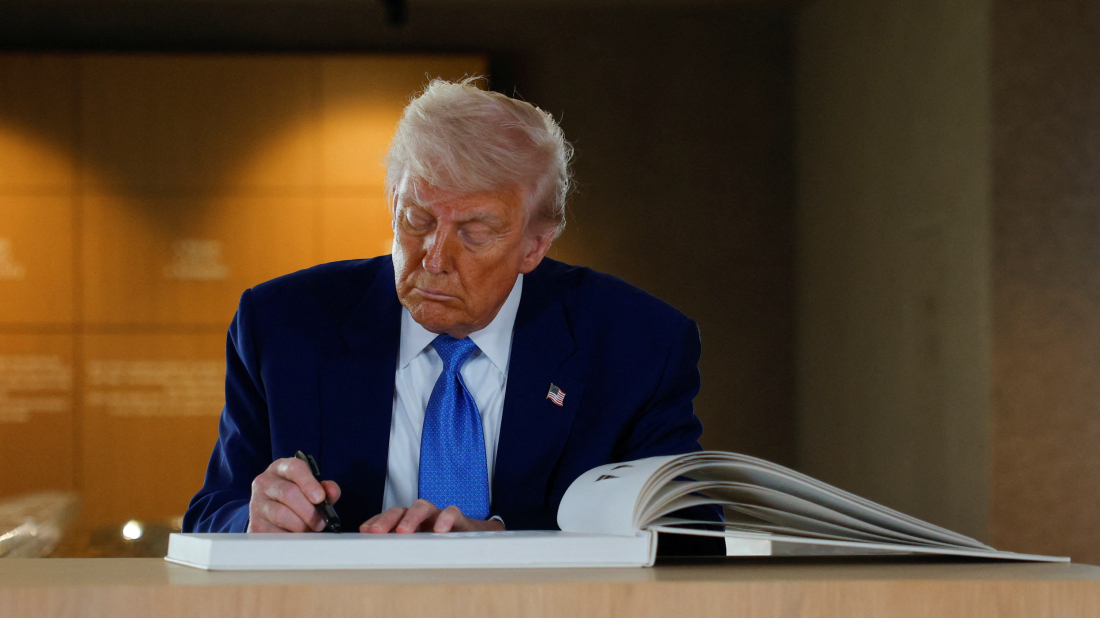
President Donald Trump has completed a four-day tour of the Gulf, announcing more than $2 trillion in investment and defense agreements with Saudi Arabia, Qatar, and the United Arab Emirates.
While many of these deals are still in early stages or represent future plans, the trip highlighted growing economic and security ties between the U.S. and the Gulf region.
In Saudi Arabia, Trump met Crown Prince Mohammed bin Salman and signed a “Strategic Economic Partnership” along with 12 agreements across sectors like energy, technology, and defense. Saudi Arabia pledged up to $600 billion in investment into the U.S., though analysts say this figure may be optimistic. The White House described a $142 billion defense deal as the largest arms sale in history. The visit also included a new AI partnership between U.S. chipmaker Nvidia and Saudi firm Humain to build AI factories over the next five years.
In Qatar, Trump announced deals valued at more than $243 billion, including a $96 billion aviation sale with Boeing and General Electric. Qatar also agreed to a $42 billion defense package involving missile systems, drones, and refueling aircraft. The two countries signed a broader economic agreement valued at $1.2 trillion. At the U.S. military’s Al Udeid Air Base, Trump praised Qatar’s $10 billion plan to upgrade the base. Qatar also pledged $1 billion for quantum technology development in the U.S.
In the UAE, Trump met President Sheikh Mohamed bin Zayed in Abu Dhabi. The UAE signed new deals worth $200 billion and pledged to invest $1.4 trillion in the U.S. over the next decade. They also launched a 5-gigawatt AI campus in Abu Dhabi — the largest outside the U.S. — with participation from companies like Nvidia and xAI.
Though many of these agreements are announcements or pledges rather than finalized contracts, the tour demonstrates strengthened Gulf-U.S. cooperation and underscores Trump’s influence in the region.

Heavy snow continued to batter northern and western Japan on Saturday (31 January) leaving cities buried under record levels of snowfall and prompting warnings from authorities. Aomori city in northern Japan recorded 167 centimetres of snow by Friday - the highest January total since 1945.
The United States accused Cuba of interfering with the work of its top diplomat in Havana on Sunday (1 February) after small groups of Cubans jeered at him during meetings with residents and church representatives.
A daylight robbery at a jewellery shop in Richmond, one of London’s most affluent and traditionally quiet districts, has heightened security concerns among residents and local businesses.
Talks with the U.S. should be pursued to secure national interests as long as "threats and unreasonable expectations" are avoided, President Masoud Pezeshkian posted on X on Tuesday (3 February).
Early voting for Thailand’s parliamentary elections began on Sunday (1 February), with more than two million eligible voters casting ballots nationwide ahead of the 8 February general election, as authorities acknowledged errors and irregularities at some polling stations.
NATO Secretary General Mark Rutte on Tuesday inspected a thermal power plant in Kyiv that was damaged during overnight Russian attacks, as Ukraine accused Moscow of exploiting an energy truce to intensify its military campaign.
Cuba’s Deputy Foreign Minister Carlos Fernández de Cossío has denied that Havana and Washington have entered formal negotiations, countering recent assertions by U.S. President Donald Trump, while saying the island is open to dialogue under certain conditions.
The imminent expiry of New START, the last major nuclear arms control treaty between the United States and Russia, risks removing transparency, predictability and limits on the world’s two largest nuclear arsenals, political analyst Gregory Mathieu warned.
India has not made any statement on halting purchases of Russian oil despite claims by US President Donald Trump that such a step was part of a new trade accord with Washington, the Kremlin said on Tuesday (3 February).
Russia says it is prepared for a new reality in which there are no U.S.-Russian nuclear arms control limits once the New START treaty expires this week, according to Deputy Foreign Minister Sergei Ryabkov.
You can download the AnewZ application from Play Store and the App Store.
What is your opinion on this topic?
Leave the first comment