ADB predicts accelerated growth for Central Asia, Caucasus economies
The Asian Development Bank (ADB) has revised its outlook for the economies of Central Asia and the Caucasus by raising its growth forecast for 2026...
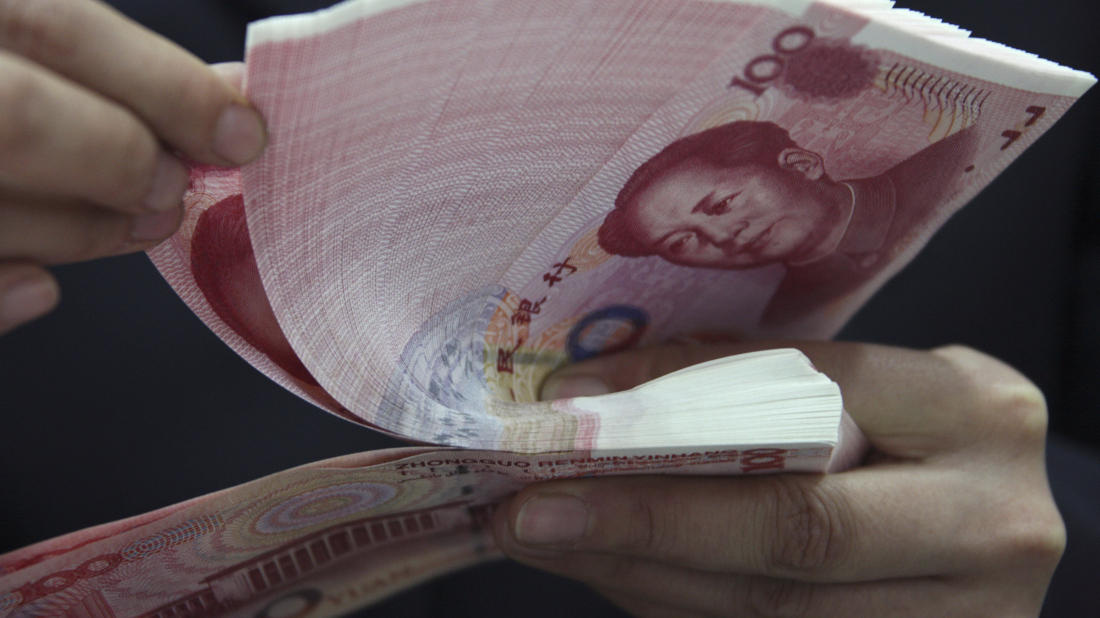
President Xi Jinping has announced a new $9 billion yuan-denominated credit line and expanded infrastructure investment for Latin America and the Caribbean, aiming to strengthen China's presence in the region while encouraging balanced and diversified cooperation.
President Xi Jinping pledged to deepen China’s economic and strategic engagement with Latin America and the Caribbean, unveiling a 66 billion yuan ($9.18 billion) credit facility for member countries of the Community of Latin American and Caribbean States (CELAC).
The announcement came during the China-CELAC Forum Ministerial Meeting in Beijing, where representatives from around 30 countries gathered for the high-level summit held every three years.
“China and the countries of Latin America and the Caribbean are important members of the Global South,” Xi said, emphasizing shared values such as independence, development, fairness, and justice. “Development and revitalization are our natural rights.”
Xi also promised expanded Chinese imports from Latin America and encouraged Chinese enterprises to pursue new investment opportunities across the region, underscoring Beijing’s long-term vision of deeper integration with CELAC nations.
The move further advances China's ambition to position itself as a leading development partner in the Americas, complementing ongoing projects under the Belt and Road Initiative. However, some governments, including Brazil, have urged caution about becoming overly reliant on external financing.
Despite this, analysts say the yuan-based credit line could offer valuable liquidity, especially for countries seeking to diversify away from dollar-denominated debt. “Access to capital is now more limited globally,” noted Eric Orlander, co-founder of the China-Global South Development Project. “These yuan-based agreements can make it easier for borrowing nations to transact and stabilize their economies.”
While challenges remain, particularly in balancing long-term debt sustainability, Xi’s pledges signal Beijing’s continued commitment to expanding cooperation and economic interdependence with Latin America.

Scores of demonstrators gathered outside the Norwegian Nobel Institute in Oslo Tuesday (9 December) to protest against the awarding of this year’s Nobel Peace Prize to Venezuelan opposition leader Maria Corina Machado.
Iran and Saudi Arabia reiterated their commitment to enhance ties following a joint meeting with China in Tehran on Tuesday to follow up on implementation of the 2023 Beijing Agreement which resulted in resumption of their diplomatic relations after eight years.
The world’s leading minds and voices will be honoured on Wednesday, 10 December, the anniversary of Alfred Nobel’s death, as Nobel Prizes are presented in Stockholm and Oslo.
In a dramatic Champions League clash at Baku’s Tofiq Bahramov Stadium, Qarabağ grabbed an early lead, but Ajax staged a thrilling comeback to win 4-2.
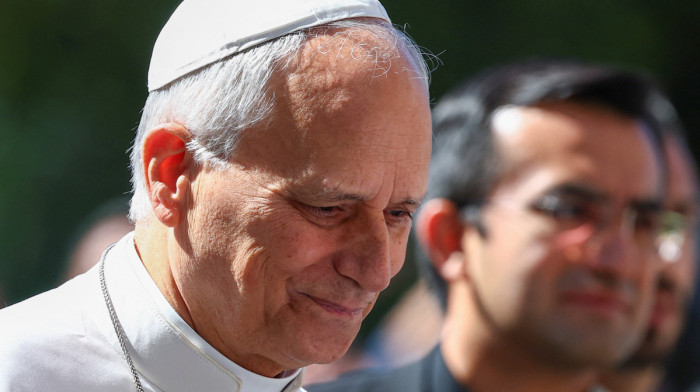
Ukraine "deeply appreciates" the humanitarian support of Pope Leo XIV. This was stated by Ukrainian President Volodymyr Zelenskyy after a meeting between the two at the papal residence of Castel Gandolfo, on Tuesday, 9 December.
Ukraine has handed the United States a revised 20-point peace proposal aimed at ending the war with Russia, a Ukrainian official said on Thursday, 11 December.
Putin’s visit to India has put the spotlight on New Delhi’s evolving defence strategy as it seeks to modernise Russian-made systems with domestic production. At the same time, India is carefully navigating its ties with the U.S. and Europe ahead of key diplomatic visits.
Former French President Nicolas Sarkozy has released his book, "Diary of a Prisoner" ("Le Journal d’un Prisonnier"), on his time in jail following his conviction. .
U.S. President Donald Trump has formally launched a scheme offering fast-tracked U.S. visas to foreigners who can pay at least $1 million — or companies willing to spend $2 million to sponsor a worker they want to bring into the country.
The U.S. House of Representatives on Wednesday advanced the National Defense Authorization Act, the NDAA, for the next fiscal year, with broad bipartisan support.
You can download the AnewZ application from Play Store and the App Store.
What is your opinion on this topic?
Leave the first comment