China maintains support for Venezuela amid mounting U.S. pressure
Chinese Foreign Minister Wang Yi has held a phone conversation with his Venezuelan counterpart Yvan Gil at the latter’s request....
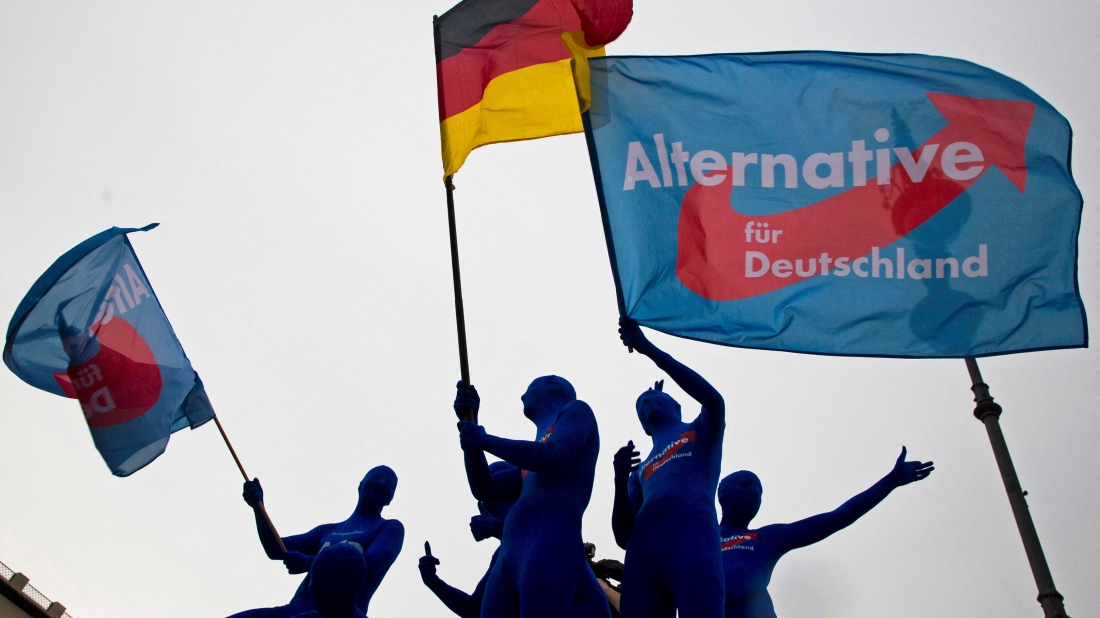
Germany's domestic intelligence agency has temporarily paused labeling the Alternative for Germany (AfD) as extremist following a legal challenge, stirring debate across the political spectrum.
Germany's Federal Office for the Protection of the Constitution (BfV) has suspended its classification of the Alternative for Germany (AfD) as an extremist organization. This decision follows a legal bid by the party to overturn the classification, with the administrative court in Cologne yet to rule on the case.
The BfV had previously classified the far-right AfD as a "confirmed right-wing extremist movement," enabling enhanced surveillance measures, such as monitoring communications and recruiting informants. These measures are also suspended pending the court’s decision. However, the agency has not revised its assessment of the AfD as part of the pause.
The AfD leadership welcomed the development, describing it as a step toward countering the accusations. Since its founding in 2013, the AfD has risen to become Germany's second-largest party, though it remains largely isolated in political alliances.
The classification and its suspension have ignited debate within Germany and beyond. While some lawmakers view the AfD as a threat to democracy and advocate stronger measures, others see the classification as an infringement on political freedoms.
The BfV’s decision has also drawn international attention. U.S. officials, including Senator Tom Cotton, called for a reassessment of intelligence-sharing agreements with Germany, citing concerns over how the AfD is treated as an opposition party.

The latest clashes between Thailand and Cambodia mark a dangerous escalation in one of Southeast Asia’s oldest and most sensitive disputes.
In the complex world of international diplomacy, the ongoing tensions between India and Pakistan have raised significant questions about the role of third-party mediation.
Citizens from an additional seven countries, including Syria, are being banned from travelling to the U.S. from the 1st of January next year. President Donald Trump made the annoucement on Tuesday (16 December) now has a total of 39 countries banned from entering the States.
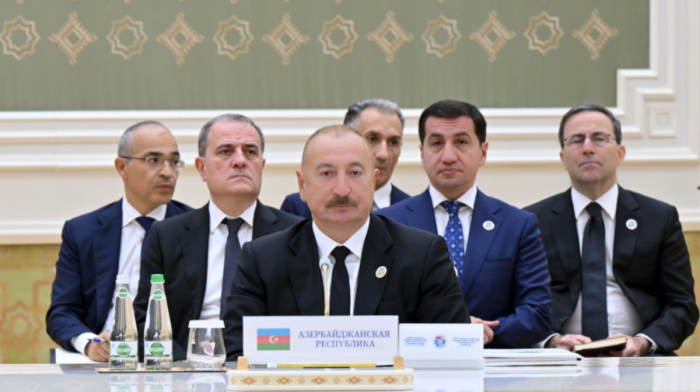
President of the Republic of Azerbaijan Ilham Aliyev is visiting the United Arab Emirates at the invitation of President Sheikh Mohamed bin Zayed Al Nahyan on Wednesday, 17 December, as the two countries seek to further strengthen their partnership.
Austria’s public broadcaster ORF, which is hosting the Eurovision Song Contest next year, has said it will not block Palestinian flags in the audience or suppress crowd reactions during Israel’s performance.
Chinese Foreign Minister Wang Yi has held a phone conversation with his Venezuelan counterpart Yvan Gil at the latter’s request.
Thousands of farmers have driven tractors into Brussels to protest a proposed trade agreement between the European Union and the South American bloc Mercosur.
International oil prices rose sharply on Wednesday after U.S. President Donald Trump ordered a “total and complete blockade” of all U.S.-sanctioned oil tankers entering and leaving Venezuela.
EU leaders agreed at a summit in Brussels to work on the option of financing Ukraine in 2026 band 2027 through the use of frozen Russian assets.
Brazil’s Senate has approved a bill that could sharply reduce the prison sentence of former president Jair Bolsonaro, a move that is expected to face strong opposition from President Luiz Inácio Lula da Silva and the Supreme Court.
You can download the AnewZ application from Play Store and the App Store.
What is your opinion on this topic?
Leave the first comment