President Donald Trump says he still wants to annex Greenland and possibly Canada, but while he won’t rule out the use of force, he claims an attack on Canada is “highly unlikely.”
“I don’t see it with Canada. I just don’t see it, I have to be honest with you,” Trump said during an interview with NBC’s Kristen Welker that aired Sunday on “Meet the Press.”
President Trump left the door open on using force to acquire Greenland and Canada but emphasized that any military action toward Ottawa appears remote — though Greenland remains a more active interest.
“I don’t rule it out,” he said when asked about using force to annex Greenland. “I don’t say I’m going to do it, but I don’t rule out anything. No, not there. We need Greenland very badly. Greenland is a very small amount of people, which we’ll take care of, and we’ll cherish them, and all of that. But we need that for international security.”
Trump has been vocal about acquiring Greenland since his return to the White House. In March, he told a radio host, “We need it. We have to have it.” That same month, Vice President JD Vance visited a U.S. Space Force base on the island, highlighting its mineral wealth and key Arctic location.
Canada has been a less urgent target but still features prominently in Trump’s vision. He’s repeatedly floated the idea of turning it into a 51st state — something former Canadian Prime Minister Justin Trudeau once described as a genuine concern.
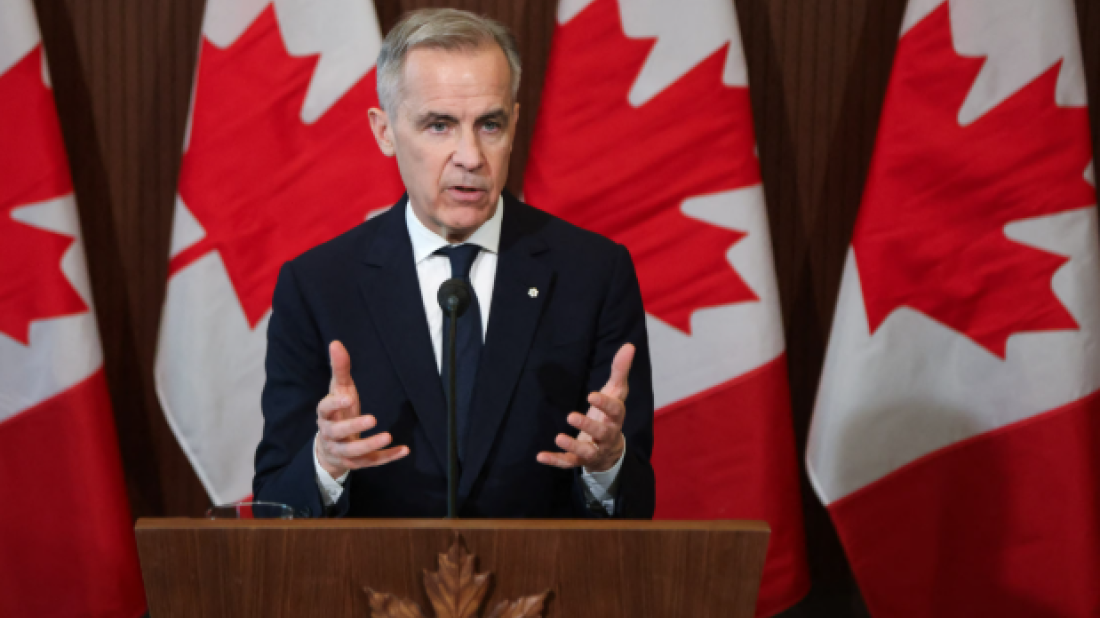
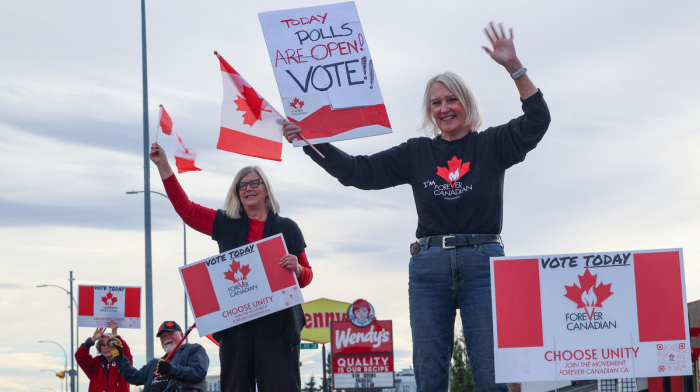
In the NBC interview, Trump softened his tone, saying, “I don’t see it with Canada. I just don’t see it, I have to be honest with you.” Still, his repeated provocations helped trigger a political shift in Canada, where Mark Carney and the Liberal Party won a fourth consecutive term in last week’s election. Conservative Pierre Poilievre not only lost his lead in the polls but also his own seat.
“These are not idle threats,” Carney said after Trump’s election victory. “President Trump is trying to break us so that America can own us. That will never, ever happen. But we also must recognize the reality that our world has fundamentally changed.”
Trump and Carney are scheduled to meet at the White House on Tuesday.
Asked by Welker whether he would discuss a merger with Canada, Trump said, “I’ll always talk about that. You know why? We subsidize Canada to the tune of $200 billion a year. We don’t need their cars. In fact, we don’t want their cars. We don’t need their energy. We don’t even want their energy. We have more than they do.”
His claim about a $200 billion subsidy — likely based on a misreading of the U.S.-Canada trade deficit — has been widely disputed, yet Trump continues to reference the number.
“And, if you look at our map, if you look at the geography — I’m a real estate guy at heart. When I look down at that without that artificial line that was drawn with a ruler many years ago,” he added. “Was just an artificial line, goes straight across. You don’t even realize. What a beautiful country it would be. It would be great.”










What is your opinion on this topic?
Leave the first comment