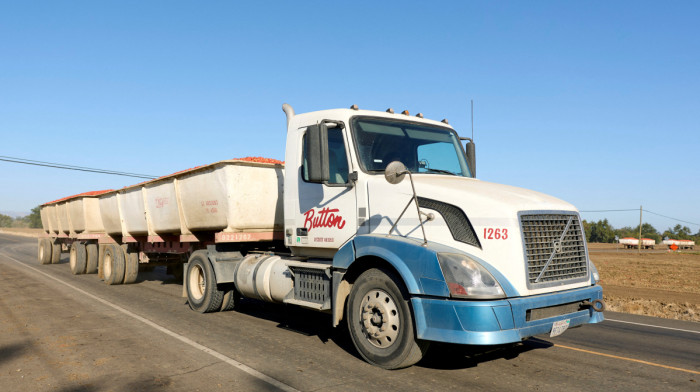
Uzbekistan and Georgia launch digital permits to speed up freight
Uzbekistan and Georgia have launched an electronic permit system for international road freight, replacing paper documents in a move aimed at speed...
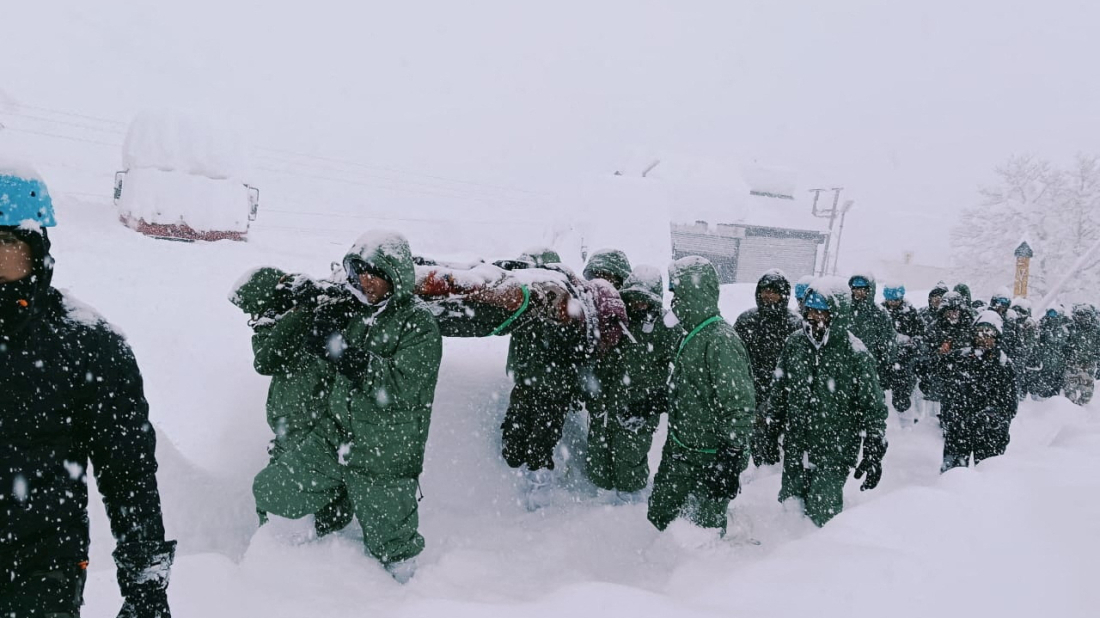
Twenty three people remain trapped under snow in an avalanche in India's mountain state of Uttarakhand after heavy snowfall.
Thirty-two workers have been rescued so far with rescue efforts ongoing after the snow hit a construction worker’s camp in the area.
The avalanche occurred near a highway in the state's Chamoli region, adjoining Tibet, and less than 5 km (3 miles) from the Hindu temple of Badrinath, which is visited by hundreds of thousands of devotees every year.
Indian authorities had earlier said that the bad weather in the area was hindering rescue efforts as five of the eight containers initially buried under the snow had been recovered so far.
Uttarakhand state chief Pushkar Singh Dhami, addressing the press stated that search operations are ongoing for the remaining workers.
"A total of 57 workers were working there, of which two were on leave, thus 55 workers were there. Thirty two of them have been safely rescued and some of them are injured as well. So, all arrangements are being made for their treatment. Search operations are ongoing for the remaining workers."
It is unclear whether there are any casualties from the incident.
The state which is located in the Himalayas is prone to landslides and flash floods due to rising temperatures as environmentalists continue to urge a review of power projects and other development work there.
An earlier avalanche in the area in 2022 killed 16 people while 80 more people lost their lives with over 200 declared missing when part of a glacier broke away in the state in February 2021.

Shipping traffic through the Strait of Hormuz remains limited on Thursday, with no increase in vessel crossings as U.S.-Iran talks to resolve the conflict remained stalled. Nine commodity vessels transited the key waterway on Wednesday, unchanged from the previous day, according to Kpler data.
Shipping through the Strait of Hormuz has slowed, according to the latest data, as uncertainty over the waterway’s reopening kept most shipowners away. Six commodity vessels crossed the strait on Tuesday, down from nine the day before and below the 10-day daily average of 11.
Russia is open to listening to new proposals on how to reach a settlement on the Ukraine conflict, a senior Russian diplomat said, but any proposals should reflect the "realities on the ground".
Start your day informed with AnewZ Morning Brief. Here are the top news stories for the 20th of August, covering the latest developments.
Five years after Evergrande's debt crisis rattled global markets, founder Hui Ka Yan has been sentenced to life in prison, marking a dramatic new chapter in the downfall of China's former property giant.
Virgin Trains has moved a step closer to challenging Eurostar’s three-decade dominance of Channel Tunnel passenger rail, potentially giving travellers more choice between the UK and mainland Europe.
Russia is open to listening to new proposals on how to reach a settlement on the Ukraine conflict, a senior Russian diplomat said, but any proposals should reflect the "realities on the ground".
Nearly 100 days after dozens of children were abducted from a school in northeastern Nigeria's Borno State, parents have taken to the streets to demand urgent government action to bring them home.
China and Indonesia have agreed to strengthen military ties and deepen cooperation in minerals, energy and technology as Jakarta balances relations with Beijing and Washington amid economic and geopolitical tensions.
An international conference in Baku on 21 August is putting Belgium’s colonial record in Africa under renewed scrutiny. Officials, United Nations experts, researchers and human rights advocates are gathering to discuss whether the country has done enough to address the legacy of its rule.
You can download the AnewZ application from Play Store and the App Store.
What is your opinion on this topic?
Leave the first comment