A sweeping blackout has hit Chile, stranding commuters, paralyzing countless businesses and leaving most of the South American nation without electricity.
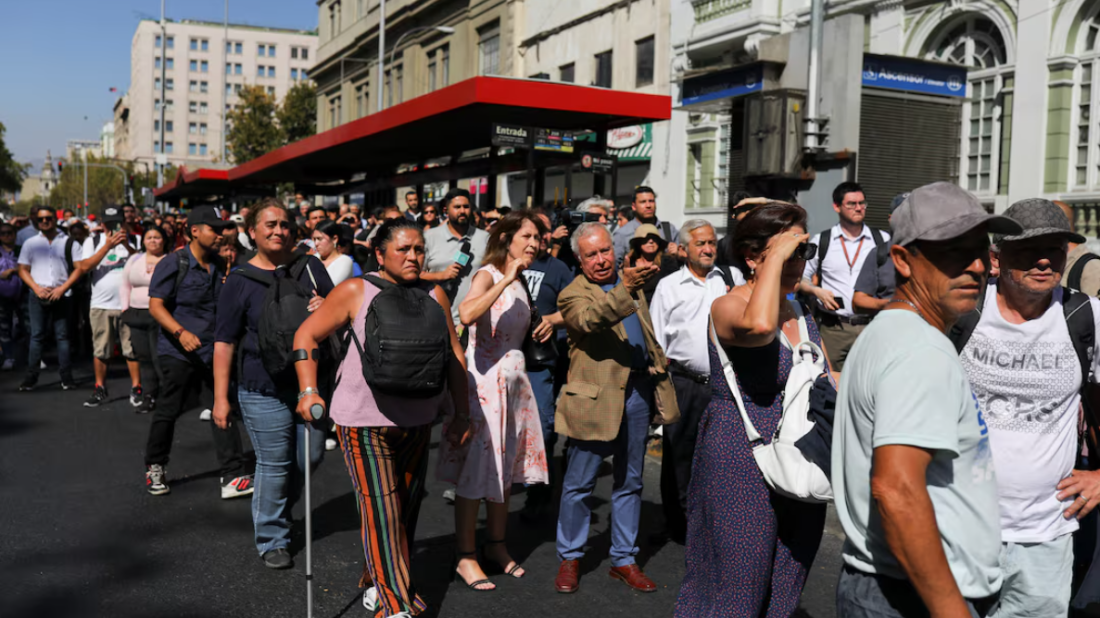
A sweeping blackout struck Chile on Tuesday, stranding commuters, disrupting traffic, halting businesses, and leaving millions without power across the nation.
The National Electrical Coordinator, Chile’s grid operator, reported a failure in a high-voltage transmission line that transports power from the Atacama Desert in northern Chile to Santiago in the central valley. However, the exact cause of the disruption that led to the extensive power outage remains unknown. The blackout affected regions from the northern port city of Arica to the agricultural hub of Los Lagos in the south.
Chile’s national disaster response agency, Senapred, confirmed that a "disruption in the supply of electricity" had triggered a "massive power outage" across 14 of the country's 16 regions, including Santiago, home to approximately 8.4 million people. Authorities announced the suspension of subway services in the capital until further notice.
Interior Minister Carolina Tohá stated that hospitals, prisons, and government buildings had switched to backup generators to maintain essential operations. During a press conference, Tohá urged the public to remain calm, assuring that officials were working urgently to restore power nationwide.
“This is affecting the entire electrical system of the country,” she said, referring to the failure of the 500-kV backbone transmission line. She warned that if power was not fully restored by sunset, the government would implement emergency measures to mitigate the crisis.
One of Chile’s main electricity distributors, Saesa, which serves over a million people, confirmed that all its customers had been impacted by the outage.
Authorities began evacuating passengers from darkened subway tunnels and stations in Santiago and other cities, including the coastal tourist destination of Valparaiso. Videos on social media captured scenes of chaos, with non-functioning traffic lights causing confusion at intersections, people using mobile phone flashlights to navigate underground metro stations, and police officers assisting in office evacuations.
Transport Minister Juan Carlos Muñoz advised residents to stay home, warning that "it’s not a good time to go out since the transport system is not operating normally." He noted that only 27% of city traffic lights were functional.
Mobile phone services also experienced disruptions in parts of the country. Meanwhile, Santiago International Airport authorities reported switching to emergency power to ensure flight operations continued without interruption.















What is your opinion on this topic?
Leave the first comment