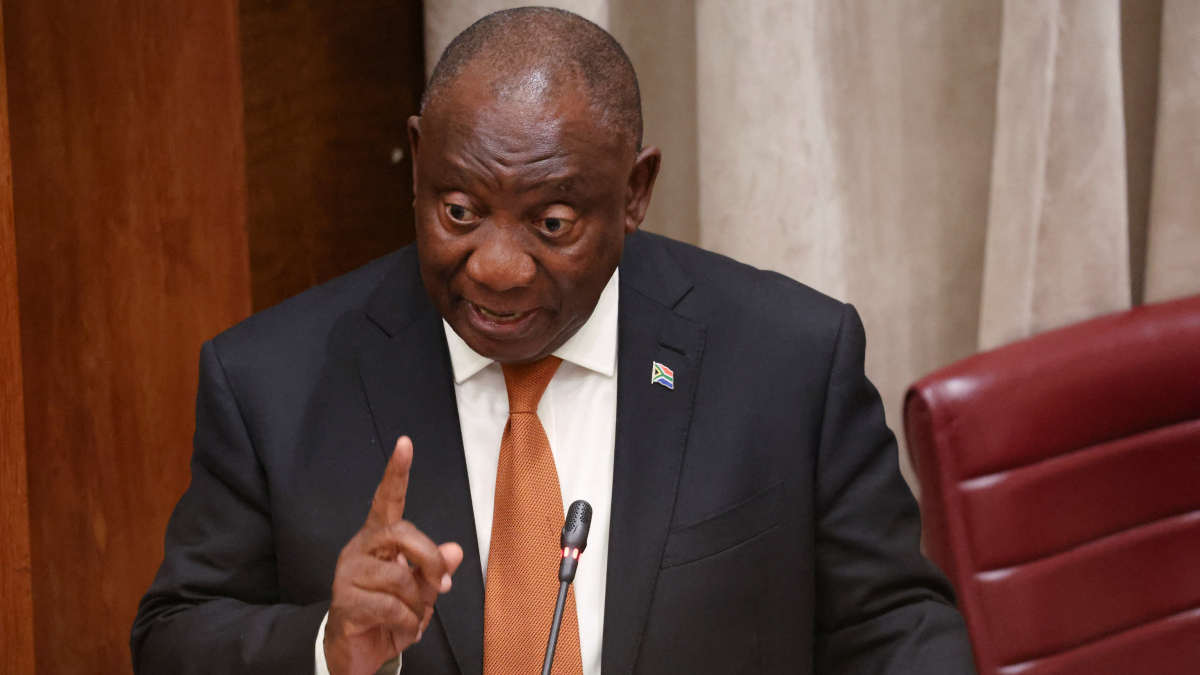
South African President Cyril Ramaphosa secured a major legal victory on Wednesday (25 November) after a court set aside a parliamentary report that had left him facing possible impeachment over the ‘Farmgate’ scandal.
The Western Cape High Court ruled that the findings of a 2022 independent parliamentary panel were unlawful, removing a key basis for misconduct proceedings against the president.
The case centres on the theft of $580,000 in cash from Ramaphosa's private game farm in 2020 and allegations that he failed to report the incident properly.
Ramaphosa has consistently denied wrongdoing, maintaining that the money came from the legitimate sale of buffaloes.
Court rejects parliamentary panel's findings
Delivering the unanimous ruling, Judge Nolwazi Mabindla-Boqwana said the parliamentary panel had exceeded its legal powers and made significant errors.
“The panel went beyond its lawful remit, asked itself wrong questions, and made several material errors of law,” she said.
The 2022 report raised concerns about the origin of the stolen cash, potential conflicts of interest and Ramaphosa's handling of the burglary.
It also alleged that he had breached constitutional restrictions on paid work outside his presidential duties and directed security personnel to perform police functions.
Wednesday's ruling sets aside those findings but does not resolve every factual question surrounding the theft.
How the Farmgate scandal developed
The controversy erupted in 2022 following revelations that foreign currency had been stolen from Ramaphosa's Phala Phala game farm in February 2020.
Questions arose about why such a large sum had been hidden inside a sofa and whether the burglary had been properly reported to the authorities. Ramaphosa denied attempting to conceal the incident.
The allegations tarnished the reputation of a president who took office in 2018 promising to tackle corruption.
Impeachment proceedings face setback
The ruling follows months of legal wrangling over whether Parliament could proceed with an impeachment inquiry.
In May, South Africa's Constitutional Court ruled that Parliament's 2022 decision to halt impeachment proceedings was invalid, requiring lawmakers to reconsider the matter.
The Western Cape High Court temporarily suspended the inquiry in July pending Ramaphosa's challenge to the panel's report. Wednesday's judgment casts doubt on whether the inquiry will resume.
National Assembly Speaker Thoko Didiza said she would study the ruling and its implications for the impeachment committee.
Political analyst Sandile Swana suggested lawmakers were unlikely to revive the inquiry.
“I don't think there will be political appetite to restart the impeachment hearing,” he said.
Political relief amid ANC's declining support
The decision comes as Ramaphosa's African National Congress (ANC) faces mounting electoral pressure.
The ANC secured around 31 per cent of the vote in November's local elections, its worst municipal election result, following the loss of its national parliamentary majority in 2024.
Ramaphosa, 74, has served as president since 2018, with his second term due to end in 2029.
The ANC is scheduled to elect a new leader in 2027, when Ramaphosa is expected to step down as party president.
Although the judgment significantly eases the immediate threat of impeachment, it does not amount to an exoneration.
Read more:
















What is your opinion on this topic?
Leave the first comment