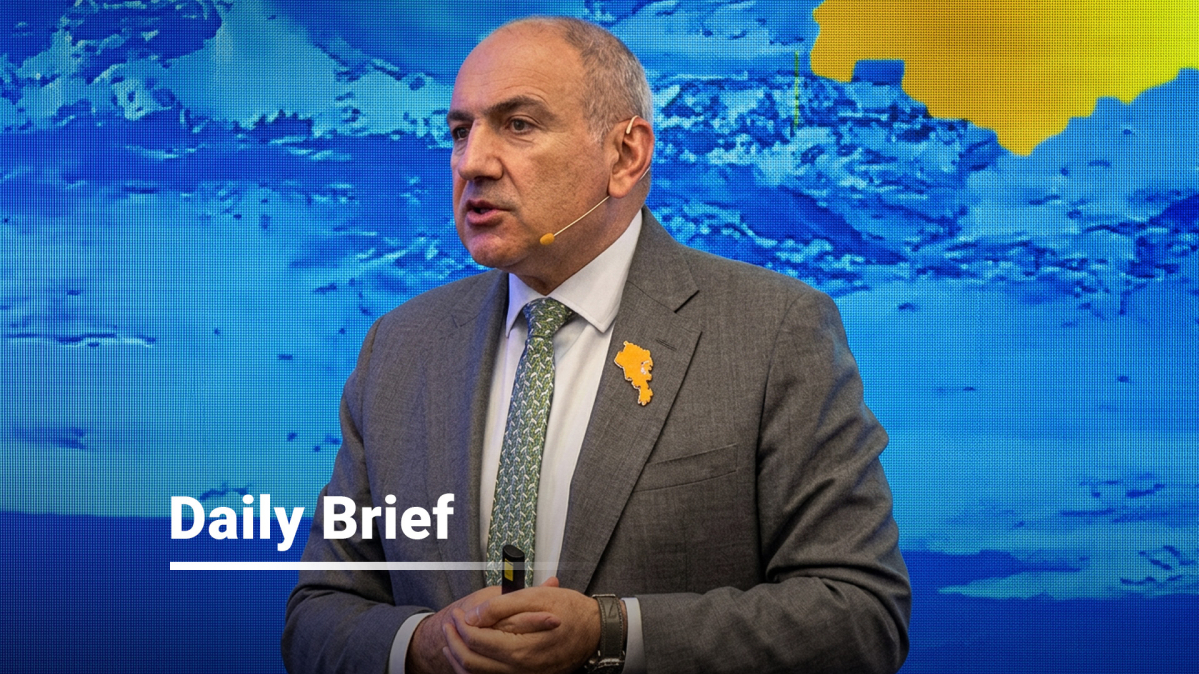
Armenian Prime Minister Nikol Pashinyan has defended his government’s ‘Real Armenia’ ideology at the 2026 Global Armenian Summit in Yerevan, outlining his vision for the country’s future, diaspora relations and ties with Türkiye. Here are five key takeaways from his speech on Friday.
Armenia’s ambitions must remain within its borders
Pashinyan said Armenia’s national aspirations should remain within the territory of the modern Armenian state, arguing that respect for internationally recognised borders was central to the ‘Real Armenia’ ideology.
“It is good that the border restricts us from expanding eastwards or westwards,” he said.
He added that the same principle also safeguards Armenia against territorial expansion by its neighbours.
The state must come first
Defending his ‘Real Armenia’ concept, Pashinyan said Armenia’s institutions must put the security, prosperity and freedom of citizens first.
He described the ideology as centred on Armenia’s “enduring existence,” arguing that strengthening the state was the ultimate expression of patriotism.
“There is nothing more important than the state,” he said. “If you love your homeland, strengthen your state.”
Armenia wants to redefine its relationship with the diaspora
Turning to Armenian communities abroad, Pashinyan said his government wanted to redefine the country’s relationship with its diaspora.
He argued that the modern Armenian state should form the foundation of those ties, emphasising that Armenia had“only one thing - itself” to offer communities overseas.
Pashinyan predicts closer ties with Türkiye
During a question-and-answer session, Pashinyan expressed confidence that Armenia and Türkiye would establish diplomatic relations in the near future.
He said the process would require both countries to recognise each other’s territorial integrity, sovereignty and borders.
“Armenia and Türkiye have not yet established diplomatic relations, but I am convinced that these relations will be established in the near future,” he said.
The neighbours have lacked formal diplomatic ties for decades, and their shared border has been closed since 1993.
Parliamentary disorder is part of democratic politics
Pashinyan dismissed concerns that disorderly scenes in Armenia’s parliament could deter diaspora Armenians from returning to their homeland.
He pointed to similar incidents in parliaments across democratic countries, arguing that such scenes were not unique to Armenia.
“Parliaments in dozens of countries around the world unfortunately produce scenes like these,” he said.
He noted that such incidents generally occurred in democratic countries and pledged that authorities would seek to prevent them from happening again.
Read more from Armenia:









What is your opinion on this topic?
Leave the first comment