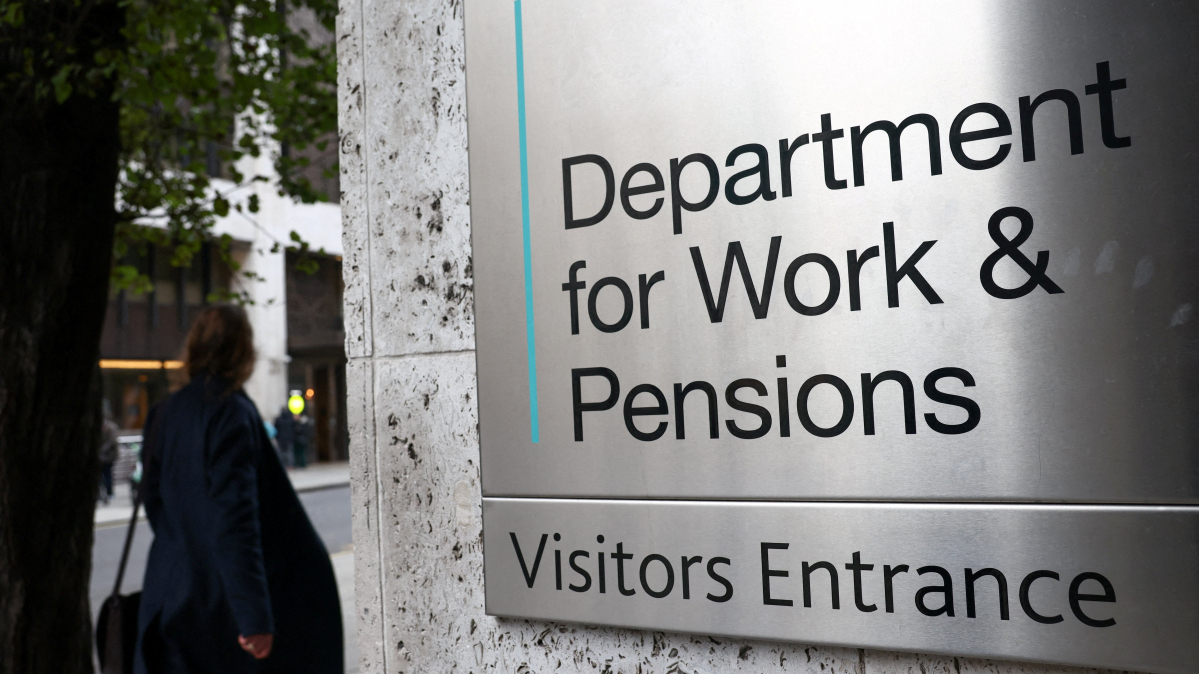
Britain’s Department for Work and Pensions (DWP) has taken some services offline following a cyber attack, saying on Friday (27 November) that the move was precautionary and that it hoped to restore services soon.
The department, which administers welfare payments and pensions, said it was working with government cyber security experts to investigate the incident.
“We are working closely with the National Cyber Security Centre and Government Cyber Coordination Centre (NCSC) to investigate and to bring services back online as quickly as possible and to minimise any disruption,” it said in a statement.
The DWP said people would continue to receive their benefits and pension payments as normal.
Recent UK cyber incidents
British companies and institutions have faced increasingly frequent and aggressive cyber attacks in recent years, with some suffering months of disruption.
High-profile targets have included the British Library, the London Underground and retailer Marks & Spencer, which reported a £324 million (approximately $426 million) loss in sales following an attack in 2025.
The Cyber Monitoring Centre, a non-profit body, estimated that an attack on carmaker Jaguar Land Rover in 2025 cost the UK £1.9 billion ($2.5 billion).
In October, the NCSC warned more than 50,000 UK organisations that they were vulnerable to attack after a researcher using artificial intelligence (AI) identified a “critical security issue” in a widely used programming language.
International attacks
Other European countries have experienced serious cyber incidents this year.
In early October, hackers in France overrode temperature controls at more than 350 establishments. Some refrigeration units caught fire after temperatures were raised. One supermarket owner estimated that the nationwide cost could reach tens of millions of euros.
A second wave of attacks in November hit firms in the UK, Belgium, Ireland and Sweden. Refrigeration units at three French regional blood banks were also affected, although the French Blood Establishment said blood supplies were unaffected.
French authorities have accused Iran’s Islamic Revolutionary Guard Corps of being behind the October attacks. Iran has rejected the allegation.
In the U.S., the Pentagon is investigating freezer failures at military bases in August as a suspected cyber attack.
Read more about cyber crime:



















What is your opinion on this topic?
Leave the first comment