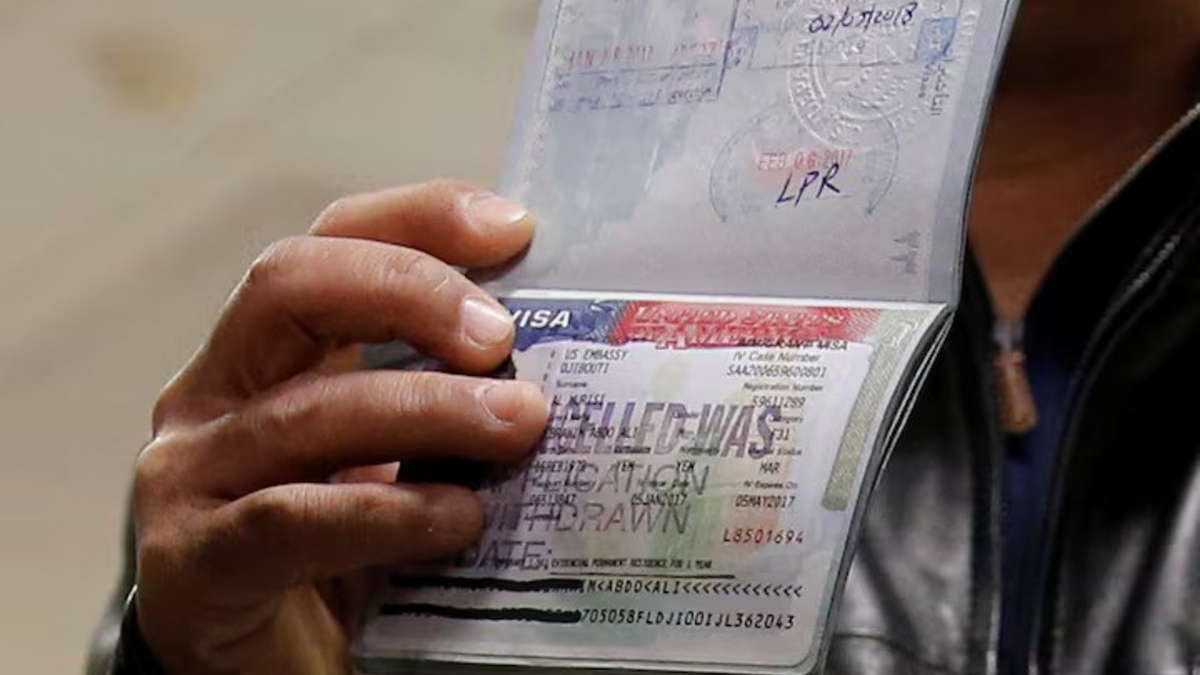
Washington says it has cancelled more than 300,000 visas since January 2025, as new figures reveal a sharp decline in net migration and growing restrictions on legal entry.
The latest figure, announced by the State Department on Tuesday, 20 October, follows an August update reporting more than 175,000 visas revoked between Trump's return to office in January 2025 and 10 August 2026.
The figures show how quickly the administration has expanded its use of visa cancellations, extending an immigration agenda that reaches beyond undocumented border crossings to foreign students, workers and other visa holders.
But the crackdown is unfolding alongside a broader demographic shift. Official U.S. Census Bureau estimates show net international migration fell by more than half between 2024 and 2025, reversing several years of rapid growth.
From border enforcement to visa cancellations
State Department spokesperson Tommy Pigott announced the latest total on X, saying the administration had revoked visas at a faster pace than any previous U.S. government.
He said Washington had “zero tolerance” for foreign visa holders who break the law, commit fraud or threaten national security.
President Donald Trump has defended tougher immigration enforcement as necessary to protect national security.
His administration has also expanded inspection of people seeking to enter or remain in the United States legally, including tighter screening of applicants' social media activity and higher costs for certain employment visas.
The policy has drawn criticism from civil rights organisations, which argue that immigration enforcement has increasingly raised questions about due process, freedom of expression and discriminatory treatment.
Among the most controversial cases are visa actions involving foreign nationals who participated in pro-Palestinian demonstrations and people whose social media comments drew scrutiny following the assassination of conservative commentator Charlie Kirk.
Rights groups argue that political expression should not become grounds for immigration penalties while the administration maintains that it is acting within its authority to protect national security and enforce immigration rules.
U.S. net migration drops by more than half
The visa announcement comes against a significant change in the number of people moving to the United States.
According to the U.S. Census Bureau's Vintage 2025 population estimates, net international migration reached approximately 2.73 million in the year ending June 2024 before falling to 1.26 million in the year ending June 2025. That represents a decline of 53.8 per cent.
The fall followed several years of growth. Net migration stood at approximately 376,000 in 2021, rose to 1.67 million in 2022 and reached 2.26 million in 2023.
The Census Bureau defines net international migration as the number of people moving into the country from abroad minus those leaving.
Its figures capture a much wider population than visa holders alone, and the 2025 estimate covers July 2024 to June 2025, including months before Trump returned to office.
The figures reflect broader migration trends, rather than the impact of visa revocations alone. The Census Bureau said the broader reduction reflected both fewer arrivals and increased departures from the United States.
It also projected that net international migration could fall to approximately 321,000 in the year ending June 2026 if prevailing trends continued.
Visa revoked: Can you still stay in the U.S.?
Trump's 2024 election campaign focused heavily on illegal immigration and border security. Since taking office, however, his administration has also introduced measures affecting people seeking lawful entry.
These include tighter screening procedures, increased scrutiny of online activity and higher fees for some employment-related visas.
Visa revocations are one part of that approach.
A revoked visa does not necessarily mean its former holder has been deported. A visa is generally a document permitting travel to a U.S. port of entry to request admission, while an individual's immigration status and right to remain in the country are separate legal questions.
That distinction is important when comparing the State Department's revocation totals with migration and deportation statistics.
The administration's figures describe visas cancelled, not the number of people removed from the country or the number who subsequently departed.

















What is your opinion on this topic?
Leave the first comment