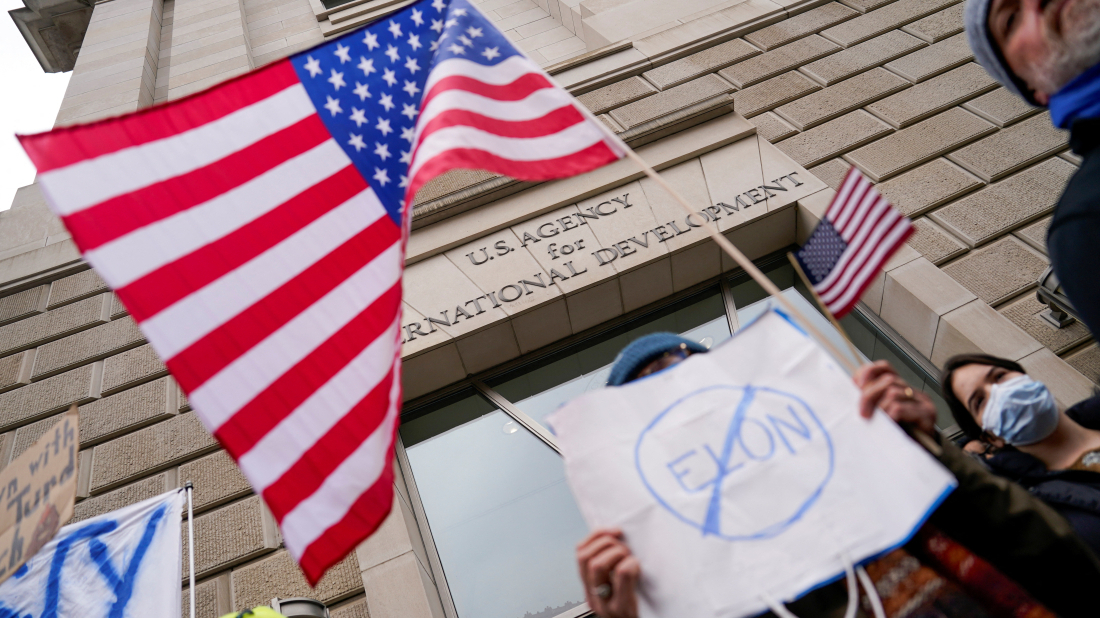
The Trump administration is considering merging USAID into the State Department, aligning foreign aid spending with its “America First” policy. Elon Musk, leading Trump’s federal cost-cutting drive, called USAID a “criminal organization”, as critics warn of global humanitarian risks.
The U.S. Agency for International Development (USAID), the country’s main foreign aid body, may be merged into the State Department under a major restructuring plan by President Donald Trump. The move is part of a broader effort to reduce federal spending and reshape U.S. foreign policy.
Trump has tasked Elon Musk, the billionaire overseeing the administration’s government efficiency drive, to lead the project. On Sunday, Trump criticized USAID, calling it “run by radical lunatics,” while Musk claimed, without evidence, that the agency was “a criminal organization.”
What is USAID and How is It Funded?
Founded in 1961 under President John F. Kennedy, USAID administers 60% of U.S. foreign assistance, disbursing $43.79 billion in 2023. It operates in about 130 countries, focusing on poverty reduction, humanitarian aid, and economic development.
Top recipients of USAID assistance in 2023 included Ukraine, Ethiopia, Jordan, Somalia, Yemen, Afghanistan, and Syria. The agency is funded by Congress, with budget requests submitted by the administration.
Foreign Aid Spending: How Does the U.S. Compare?
In 2023, the U.S. allocated $72 billion in foreign aid, accounting for 42% of all global humanitarian aid. Historically, U.S. aid spending was around 0.33% of GDP, far below Cold War-era levels, where it reached 3% during the Marshall Plan.
Despite leading in total dollar contributions, the U.S. ranks among the lowest in foreign aid as a percentage of national income, contributing just 0.24% in 2023—lagging behind Norway (1.09%), and multiple European nations.
Bipartisan Support and Opposition
Foreign aid has traditionally enjoyed bipartisan backing, though Republicans have often pushed for reductions. Trump previously attempted to cut foreign aid by one-third, but those efforts were blocked by Congress.
In June 2024, 80% of the Republican-led House of Representatives rejected a proposal to eliminate foreign aid from the 2025 budget, signaling continued support despite Trump's opposition.
Impact of a USAID Shutdown
Trump’s January 20 executive order paused most foreign aid for 90 days, claiming the U.S. aid system is “not aligned with American interests.” His administration has warned USAID workers against resisting the restructuring, threatening disciplinary action for noncompliance.
The move has raised alarm among humanitarian organizations, the United Nations, and foreign governments, as USAID plays a critical role in food security, health programs, and crisis response.
A source familiar with USAID operations warned that folding the agency into the State Department would limit humanitarian assistance, especially in countries without diplomatic ties to the U.S., such as Iran and North Korea.
As Trump pushes forward with restructuring, concerns grow over the future of U.S. humanitarian influence and global development efforts.















What is your opinion on this topic?
Leave the first comment