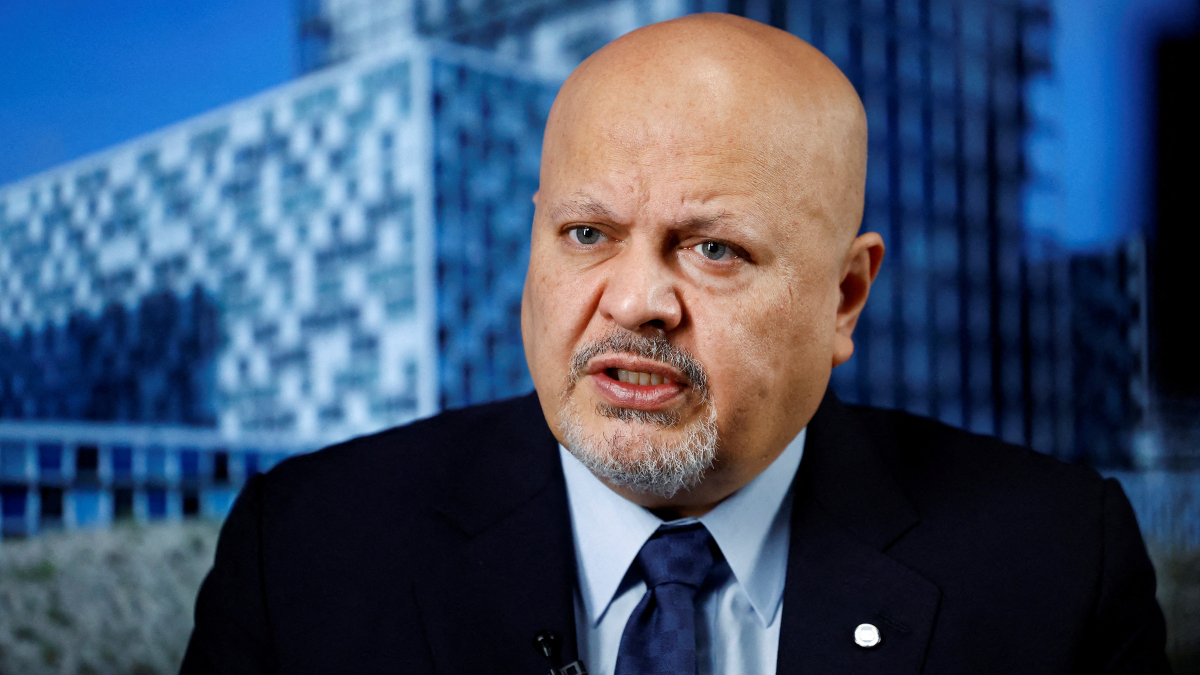
Member states of the International Criminal Court are expected to decide on Friday whether to remove chief prosecutor Karim Khan over allegations of sexual misconduct.
The secret ballot could bring an abrupt end to Khan’s leadership of one of the world’s most prominent international justice bodies. It also comes at a difficult moment for the court, as it faces growing political pressure from the United States and Israel.
Khan, 56, has denied the allegations. His lawyers say the process leading to the vote was unlawful and unfair, and that the case against him is not supported by evidence.
Allegations place prosecutor’s career in doubt
Officials from the body that oversees the ICC have said Khan committed serious misconduct by having an inappropriate sexual relationship with a junior member of staff, according to documents seen by Reuters.
The staff member spoke publicly about the allegations for the first time in a recent CNN interview. She said the relationship was not consensual.
Khan’s lawyers rejected that account, telling Reuters that he denied having “any sexual relationship of any kind” with the woman.
He has been suspended since June, after going on voluntary leave in May 2025 while an internal investigation was under way.
For Khan to be removed, at least 63 of the ICC’s 125 member states must support his dismissal. The vote will take place at the United Nations headquarters in New York.
France has said it will vote to remove him. The Netherlands, which hosts the ICC in The Hague, has also backed his dismissal.
A vote under intense political pressure
The allegations are separate from Khan’s work as prosecutor. However, the vote is taking place as the court faces fierce criticism over its investigations into the war in Gaza.
Khan sought arrest warrants for Israeli Prime Minister Benjamin Netanyahu and former defence minister Yoav Gallant over alleged war crimes and crimes against humanity. Israel denies committing war crimes and rejects the court’s authority.
Israel is not an ICC member. The United States is also outside the court and has imposed sanctions on several ICC officials, including Khan, over cases involving Israel and an earlier investigation connected to Afghanistan.
During a visit to the Philippines, U.S. Secretary of State Marco Rubio renewed Washington’s attack on the court.
He said there were “lunatics and crazies involved in the ICC” and insisted that no American political or military official would be allowed to stand trial there.
Supporters of Khan are likely to argue that his dismissal reflects wider political pressure on the institution. His critics, however, say the misconduct allegations must be judged independently of the cases pursued by his office.
What the ICC does
The International Criminal Court was established under the Rome Statute and began operating in 2002. It prosecutes individuals accused of genocide, crimes against humanity, war crimes and the crime of aggression. It is designed to act when national courts are unwilling or unable to carry out genuine proceedings.
The court has no police force of its own. It relies on member states to arrest suspects and enforce its decisions.
That dependence has often left the ICC exposed to political disputes. Powerful countries, including the United States, Russia, China and Israel, are not members.
Warrants would remain in force
If Khan is dismissed, the process of choosing a new chief prosecutor would begin immediately. A permanent replacement is not expected to be elected before next year.
His departure would not cancel any existing arrest warrants.
Only ICC judges can withdraw a warrant. That means the cases pursued during Khan’s tenure, including those involving senior Israeli officials, would remain active unless the judges decide otherwise.
Even if Khan survives the vote, the controversy is unlikely to disappear. His authority would be badly damaged, while opponents of the ICC would gain fresh ammunition against a court already struggling to defend its independence and credibility.
Read more:






















What is your opinion on this topic?
Leave the first comment