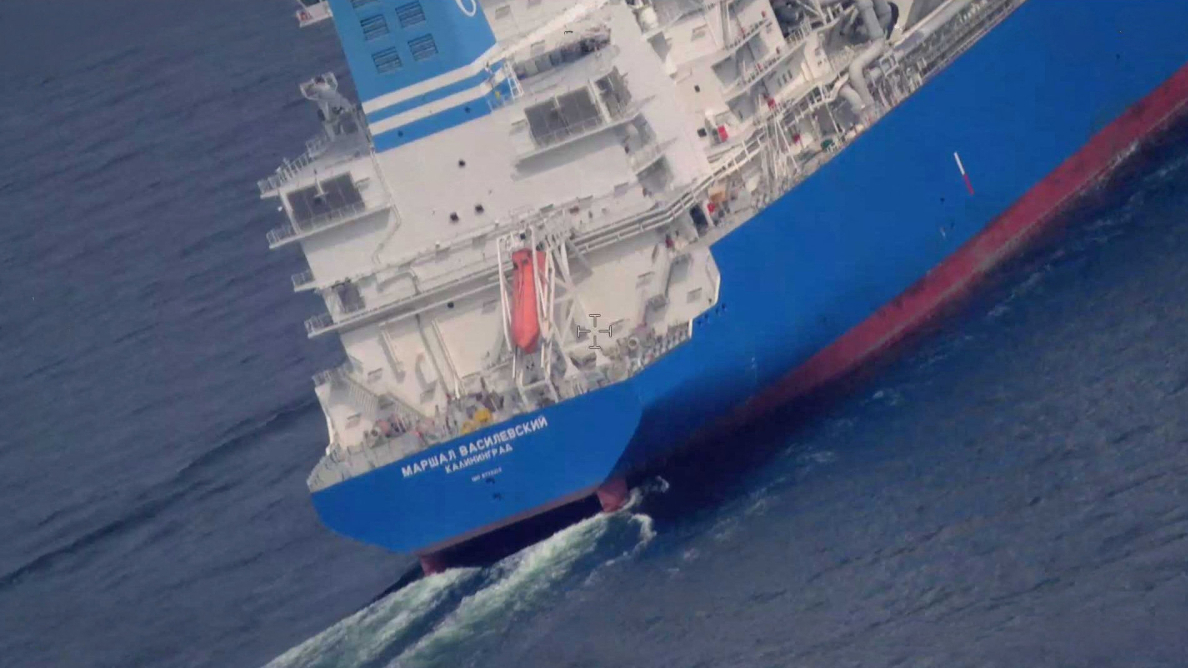
Estonia has released surveillance images showing machine guns and sandbagged defensive positions mounted on a Russian-flagged liquefied natural gas (LNG) carrier operating in the Baltic Sea, underscoring growing tensions between Russia and NATO in the strategically important waterway.
Unusual militarisation of a civilian vessel
The images, taken this spring, show fortified machine-gun positions on the bridge roof of the Marshal Vasilevskiy, a civilian LNG carrier based in the Russian exclave of Kaliningrad.
While armed security personnel are often found on commercial ships travelling through piracy-prone regions, analysts say such measures are highly unusual in the Baltic Sea.
According to geopolitical analyst Yörük Işık, the deployment of visible weaponry on a civilian vessel represents a significant escalation.
"This is a hostile move by Russia to send a message to EU and NATO nations that it will actively oppose any attempt to detain or inspect its ships," Işık told Reuters.
He added that there is little justification for a machine-gun defence posture in the Baltic Sea, describing it as evidence of increasingly tense maritime conditions in the region.
Vessel linked to Kaliningrad energy supplies
The Marshal Vasilevskiy is operated by Gazprom Flot, a subsidiary of Gazprom.
According to ship-tracking data, the vessel has transported LNG from the St Petersburg region to Kaliningrad four times since the beginning of 2025, most recently in May.
The route passes close to Estonia's coastline within an area monitored by Estonian maritime authorities.
A spokesperson for the Estonian Police and Border Guard Board confirmed the images were taken within Estonia's area of responsibility in the Baltic Sea.
The Estonian Navy said it had not observed other civilian vessels carrying similar weaponry in the area.
Russia signals determination to protect maritime routes
The disclosure comes amid growing concern over the security of Russian shipping following Western sanctions imposed over the war in Ukraine.
In June, Nikolai Patrushev said Russia could not allow key maritime routes to be blocked and stressed the importance of maintaining fleet readiness against emerging threats.
His comments reflected Moscow's increasing focus on securing access through both the Baltic and Black seas, which remain critical corridors for Russian trade and energy exports.
Shadow fleet crackdown raises stakes
European authorities have intensified efforts to target vessels suspected of helping Russia circumvent sanctions.
Since the start of 2026, nine tankers believed to be part of Russia's so-called "shadow fleet" have been seized across Europe, with the latest detention carried out by France in late June.
However, security officials note that the Marshal Vasilevskiy differs from many sanctioned vessels because it sails openly under the Russian flag and serves a strategic state function.
As a result, it is considered unlikely to face seizure despite being subject to sanctions imposed by the United Kingdom, Canada and Australia. The European Union has also sanctioned Gazprom Flot.
Baltic Sea becomes a strategic flashpoint
The incident underscores the increasingly militarised environment in the Baltic Sea following NATO's expansion in northern Europe.
Earlier this year, Estonian naval officials warned that Russia had increased its military presence in international waters between Estonia and Finland, a key maritime gateway to ports around St Petersburg.
In April, Estonian Navy Commander Ivo Vark said Estonia had largely stopped attempting to detain Russia-linked vessels unless they posed an immediate threat, citing concerns that the risk of military escalation had become too high.
Strategic importance of Kaliningrad
The Marshal Vasilevskiy occupies a unique place in Russia's energy infrastructure.
The vessel, which can convert LNG directly into pipeline gas, was inaugurated by Russian President Vladimir Putin in 2019 as an emergency energy supply route for Kaliningrad.
The exclave is geographically separated from mainland Russia and surrounded by NATO members Poland and Lithuania, making alternative energy links strategically important should overland gas transit routes be disrupted.
The appearance of armed positions aboard the vessel is likely to fuel further concerns about the growing militarisation of commercial shipping and the increasingly fragile security environment in the Baltic Sea.

















What is your opinion on this topic?
Leave the first comment