Icelanders reject EU-accession talks in referendum vote
Icelanders have voted to stay outside the European Union, rejecting a government-backed proposal to reopen membership negotiations and keeping the ...
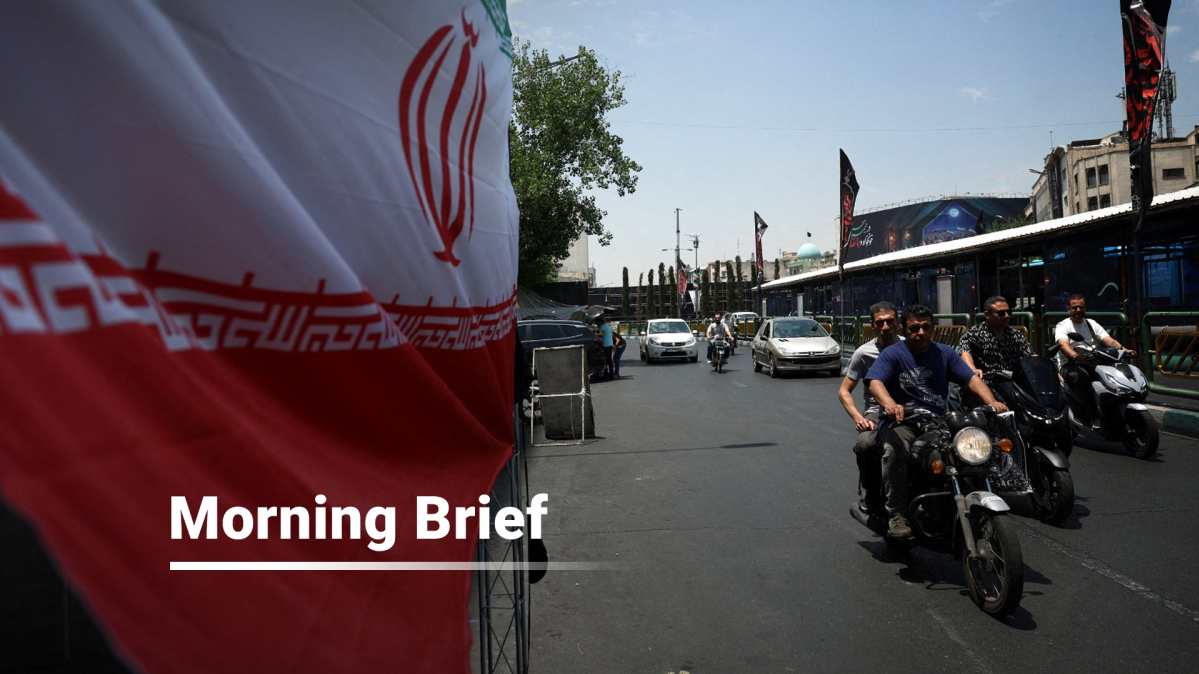
Start your day informed with the AnewZ Morning Brief. Here are the top stories for 24 June, covering the latest developments you need to know.
The U.S. Senate has approved a measure directing President Donald Trump to halt military action against Iran, in a rare rebuke from Congress that highlights growing concern over the conflict. While the resolution is largely symbolic and faces legal uncertainty, it increases pressure on the White House as it pursues peace talks with Tehran.
A U.N. inquiry accused Israeli forces of deliberately targeting Palestinian children in Gaza and the West Bank, alleging genocide, crimes against humanity and war crimes. Israel rejected the findings, calling the report defamatory and biased.
The U.N.'s shipping agency has begun a phased operation to help hundreds of vessels and around 11,000 seafarers stranded in the Gulf transit the Strait of Hormuz following the Iran-U.S. ceasefire. The evacuation is being coordinated with regional states and maritime authorities, with ships being guided through temporary routes due to ongoing safety risks.
North Korean leader Kim Jong Un has called for the construction of two 5,000-ton warships every year over the next five years, as he unveiled a new destroyer and pledged to modernise the country's naval forces. Kim said the navy's role would expand significantly, with plans also including larger strategic warships and further development of its nuclear capabilities.
Uzbekistan’s historic World Cup debut continued with a tough 5-0 defeat to Portugal in Houston, where Cristiano Ronaldo scored twice and made more tournament history. Despite the loss, fans across Uzbekistan continued to back their team, seeing the match as another milestone in the country’s first appearance on football’s biggest stage.

Iran is setting conditions for reopening the Strait of Hormuz, including an end to the war, the lifting of the U.S. blockade and sanctions. At the same time, Washington is stepping up economic pressure on Tehran through what the White House calls “Operation Economic Outcast.”
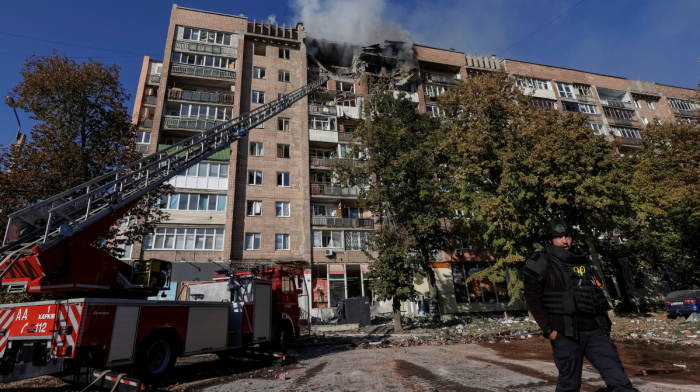
Mail sorting centres used by Nova Poshta, Ukraine's largest private postal company, were destroyed in Russian strikes overnight, the firm said. Elsewhere, four people were injured after drones struck an apartment building in Sevastopol, Crimea, according to the Moscow-installed governor.
Iranian Foreign Minister Abbas Araghchi accused U.S. government and Israel-aligned actors of manipulating energy markets to promote the war with Iran.
Russian strikes on the Kyiv region overnight killed 37 people, Ukrainian President Volodymyr Zelenskyy has said. Zelenskyy added that the Ukrainian capital was under "virtually nonstop attack" from drones.
The Israeli-U.S. invasion of Iran, which began on 28 February, entered its seventh month on Friday, as Tehran wrapped up a week of high-level visits the region, with officials from Pakistan, Oman and Qatar helping to negotiate a way out of the current stalemate in the conflict.
Icelanders have voted to stay outside the European Union, rejecting a government-backed proposal to reopen membership negotiations and keeping the country’s long-running debate over EU membership unresolved, according to the latest counting figures.
At least 37 people were killed after a Russian drone strike hit an ammunition depot in the Kyiv region, triggering powerful secondary explosions President Volodymyr Zelenskyy said on Saturday, vowing to punish suspected negligence in the second such incident in two months.
One person has been killed and at least five others injured, some seriously, after shots were fired at a rave in Aarau, northern Switzerland, police said on Sunday.
The death toll from last week's catastrophic floods in Nepal and Tibet rose to 750 on Sunday, with 3,044 people still missing, as fresh rainfall pushed up river levels and forced rescuers to move to higher ground.
Groundwater has fallen by as much as 150 to 200 metres in some parts of Kabul, according to a senior water official, as families in Afghanistan’s capital struggle with dry wells and increasingly unreliable supplies.
You can download the AnewZ application from Play Store and the App Store.
What is your opinion on this topic?
Leave the first comment