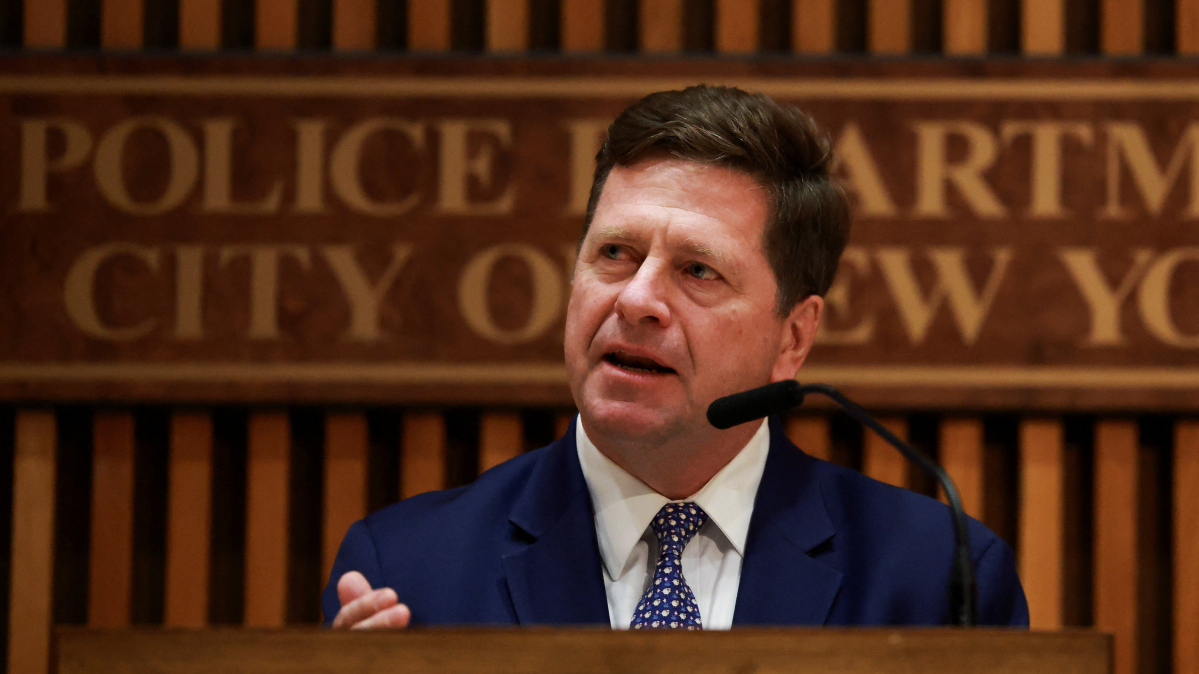
President Donald Trump announced on Thursday that he is nominating Jay Clayton to serve as the next U.S. Director of National Intelligence (DNI), replacing outgoing intelligence chief Tulsi Gabbard.
The nomination comes after lawmakers from both parties criticised Trump's choice of housing official Bill Pulte to temporarily lead the nation's intelligence community.
In a post on Truth Social, Trump praised Clayton's legal career and urged the Senate to move quickly on his confirmation.
"Few people anywhere in the Legal Community are respected at the level of Jay," Trump wrote, calling for swift Senate approval.
Clayton currently serves as the chief federal prosecutor for the Southern District of New York and previously chaired the U.S. Securities and Exchange Commission during Trump's first administration. As a prosecutor, he has overseen several high-profile cases, including charges against former Venezuelan leader Nicolás Maduro.
Questions over intelligence experience
Despite his extensive legal background, Clayton has little direct experience in intelligence or national security matters. His nomination is likely to face scrutiny from lawmakers who have raised concerns about appointing officials without traditional intelligence credentials to one of the government's most sensitive positions.
The Director of National Intelligence oversees coordination among 18 U.S. intelligence agencies, including the CIA and the National Security Agency.
Pulte to serve as acting intelligence chief
Trump confirmed that Pulte will assume the role of acting DNI on 19 June while Clayton's nomination moves through the Senate confirmation process. Pulte will replace Gabbard, whose resignation becomes effective at the end of June.
Pulte's appointment sparked bipartisan criticism because he lacks intelligence and national security experience. Several lawmakers argued that the move could undermine confidence in the intelligence community's leadership during a period of global tensions.
Surveillance law standoff intensifies
The nomination also arrives amidst a dispute in Congress over the renewal of Section 702 of the Foreign Intelligence Surveillance Act, a key surveillance authority used to monitor foreign threats.
Earlier Thursday, the Republican-controlled House of Representatives rejected a short-term extension of the programme. Democratic lawmakers have argued that concerns surrounding Pulte's appointment complicated negotiations over renewing the surveillance powers before they expire.
Whether Clayton's nomination will ease opposition and help break the deadlock remains unclear, but it represents Trump's effort to install a permanent intelligence chief after days of criticism surrounding the temporary leadership arrangement.






















What is your opinion on this topic?
Leave the first comment