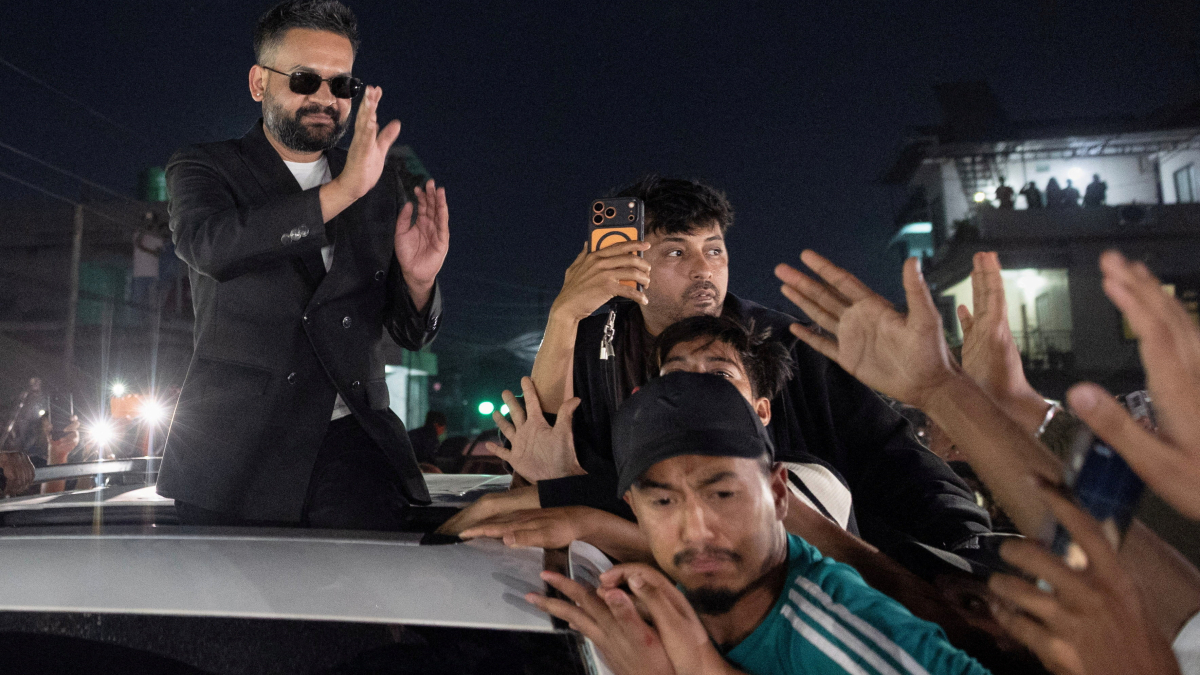
Balendra Shah is set to become Nepal's prime minister after winning a landslide in the country's 2026 elections. The election comes after a GenZ-led protest in which dozens died in September last year, helped to overthrow the government
The Rastriya Swatantra Party (RSP) won 182 seats out of 275, the largest majority of any party in Nepal for 60 years. Shah is the former mayor of Kathmandu and has been nominated by his party to be prime minister. He defeated the previous Nepalese Prime Minister Sharma KP Oli in his constituency.
Oli was forced to resign after deadly Gen Z-led protests over a social media ban that saw popular sites like Facebook, WhatsApp and YouTube inaccesible.
Former Chief Justice Sushila Karki stood in as interim leader and was responsible for holding the election.
Issues that spurred the election included corruption and unemployment, with Shah's party running on a manifesto to create jobs and double the $42 billion economy in just five years.
Results
Nepal has a two-system electoral system for parliamentary elections. 165 MPs are elected through first-past-the-post meaning the candidate with the most votes wins. The other 110 are selected by proportional representation, taking into account the proportion of votes for a given political party.
Nearly 19 million people voted with the Nepal electoral commission confirming a 60% turnout.
These are the total number of votes for the main parties:













What is your opinion on this topic?
Leave the first comment