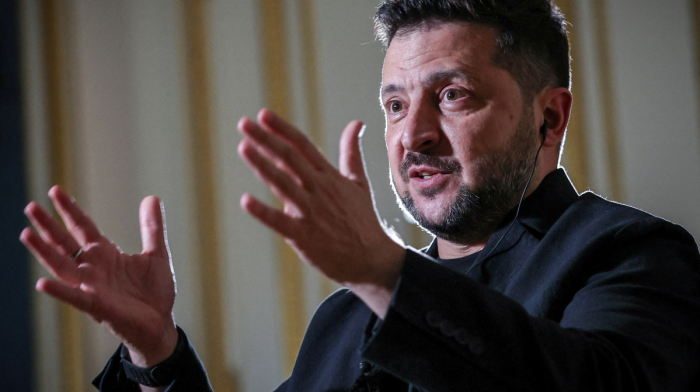
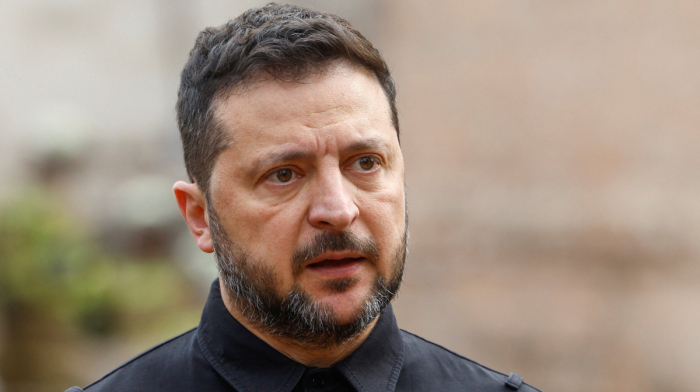
Zelenskyy visits Poland after EU summit in Brussels
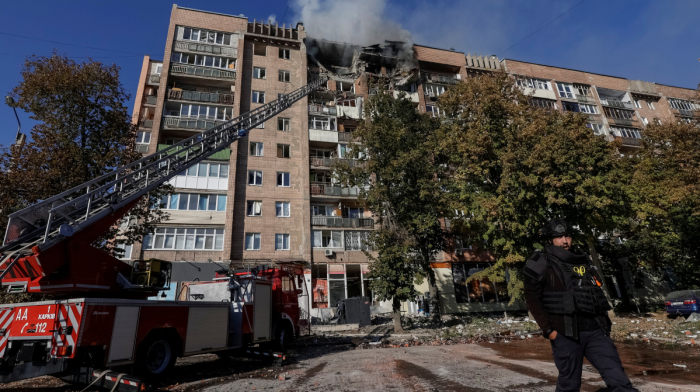
Ukrainian President Volodymyr Zelenskyy arrived in Poland on Thursday following a summit of the European Council in Brussels....
Croatia heads to a presidential runoff this Sunday, with incumbent Zoran Milanovic facing CDU candidate Dragan Primorac. While the presidency is largely ceremonial, Milanovic’s term has been marked by government clashes, giving the election broader political significance.
Croatia is gearing up for the second round of its presidential election this Sunday, with incumbent Zoran Milanovic facing Dragan Primorac, the candidate from the ruling Croatian Democratic Union (CDU).
Milanovic, supported by the opposition Social Democrats, narrowly missed an outright win in December, securing 49.1% of the vote. His opponent, Primorac, garnered 19.35%, representing the CDU’s bid to retain influence in the country’s political landscape.
While the role of president in Croatia is largely ceremonial, Milanovic’s tenure has been defined by tensions with the government over key issues, including foreign policy and corruption. These disputes have made his presidency more prominent than usual, attracting both praise and criticism.
Political analysts suggest Milanovic is well-positioned to secure re-election, given his strong performance in the first round and widespread support among opposition voters. However, Primorac’s campaign could still present a challenge as the ruling party seeks to consolidate its base.
The runoff is expected to offer voters a clear choice between continuity under Milanovic and a fresh approach from Primorac, with the outcome likely shaping Croatia’s political discourse in the years ahead.

Ukraine has welcomed the European Union’s decision to provide €90 billion in support over the next two years, calling it a vital lifeline even as the bloc failed to reach agreement on using frozen Russian assets to finance the aid.
European Union foreign policy chief Kaja Kallas has warned that attempts to reach a peace agreement in Ukraine are being undermined by Russia’s continued refusal to engage meaningfully in negotiations.
Chinese Foreign Minister Wang Yi has held a phone conversation with his Venezuelan counterpart Yvan Gil at the latter’s request.
Belarusian President Alexander Lukashenko has confirmed that Russian-made Oreshnik missile systems have been deployed on Belarusian territory and placed on combat alert.
The European Union has postponed signing its long-awaited free trade agreement with the Mercosur bloc until January, after failing to secure sufficient backing from member states, according to media reports.
The release of a new collection of documents by the U.S. Department of Justice has reopened long-running questions about how the Jeffrey Epstein case has been handled, what has been made public, and what remains undisclosed.
The United States is not concerned about a potential escalation with Russia over Venezuela, Secretary of State Marco Rubio has said, as President Donald Trump increases US military deployments in the Caribbean.
The U.S. military carried out large-scale strikes on dozens of Islamic State targets in Syria on Friday in response to an attack last week that killed American personnel, U.S. officials said.
US intelligence assessments indicate that Russian President Vladimir Putin continues to seek full control of Ukraine and to expand Russia’s influence in parts of Europe formerly under Soviet rule, contradicting repeated claims that Moscow poses no threat to the continent.
UN Secretary-General Antonio Guterres has issued a stark warning over the humanitarian situation in the Gaza Strip.
You can download the AnewZ application from Play Store and the App Store.
What is your opinion on this topic?
Leave the first comment