Russian President Vladimir Putin arrived in New Delhi on Thursday (4 December) to begin a two-day state visit, marking his first trip to India in four years.
During this visit, the two countries are aiming to boost mutual trade and expand the variety of items in transactions, with a focus on enhancing their longstanding ties in energy and defence.
Putin's visit comes amid ongoing U.S. pressure on India to distance itself from Moscow, especially due to Russia's continued military actions in Ukraine. The visit highlights the enduring diplomatic relationship between the two countries, underscored by the personal rapport between the leaders. Indian Prime Minister Narendra Modi personally received Putin at the airport in a rare gesture, with the two leaders sharing an embrace on the red carpet before driving off in the same vehicle.
A private dinner is planned for Thursday evening, with summit talks scheduled for Friday. A senior delegation of Russian ministers, along with a large business delegation, is accompanying Putin.
India seeks to expand trade with Russia amid global pressures
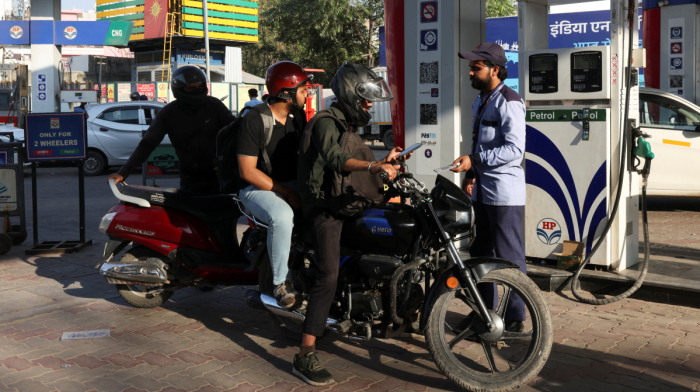
India and Russia have set an ambitious target to raise bilateral trade to $100 billion by 2030. Trade between the two nations has surged in recent years, increasing more than five-fold from around $13 billion in 2021 to approximately $69 billion in 2024–25, primarily driven by Indian energy imports. However, recent months have seen a decline in trade, with bilateral commerce easing to $28.25 billion between April and August 2025, as India’s crude oil imports from Russia have dropped following punitive U.S. tariffs on Indian goods.
These tariffs, introduced by former U.S. President Donald Trump, included a 50% tax on Indian goods, which was partially aimed at curbing India’s purchase of Russian crude oil, a commodity seen as financing Russia's war in Ukraine. This has led India to seek new markets to mitigate the impact of the tariffs on its exports.
Russia seeks to diversify imports from India
During Putin’s visit, Russian officials emphasized the importance of diversifying trade relations with India, which has traditionally been an energy-centric partnership. Deputy Kremlin Chief of Staff Maxim Oreshkin stated that Russia is keen to import more Indian goods to balance the trade, which has been overwhelmingly dominated by energy imports.
Oreshkin highlighted that India's share in Russian imports is currently under 2%, underscoring the untapped potential for growth. "This is not a momentary story, but a strategic choice in developing relations between our two countries," he remarked at a business conference in New Delhi.
Russia has expressed interest in importing a range of Indian products, including automobiles, electronics, industrial machinery, textiles, and foodstuffs. Indian Trade Minister Piyush Goyal reiterated India's intention to diversify its exports to Russia, aiming to tap into the demand for a variety of industrial and consumer products.
Growing demand for Indian agricultural exports
Russia’s growing demand for food products presents an opportunity for India to increase its agricultural exports. Russian Agriculture Minister Oksana Lut indicated that Russia is prepared to increase imports of Indian shrimp, rice, and tropical fruits, alongside interest in Indian food-processing equipment.
India, the world’s largest exporter of shrimp, has seen its exports to the U.S. severely impacted by the Trump administration’s tariffs. This has prompted Indian businesses to seek alternative markets, with Russia emerging as a key potential destination. Currently, Russia imports around 20% of its shrimp from India, and there is potential to increase this share further.
Defence and energy remain central to the relationship
Despite the challenges in trade, defence and energy continue to be the cornerstone of India-Russia relations. India remains reliant on Russian-made military equipment, including Sukhoi-30 jets, T-90 tanks, and the S-400 missile defence system. These systems are integral to India's national security strategy, especially in light of regional tensions with China and Pakistan.
Putin’s visit is expected to include discussions on expanding military cooperation, with potential agreements on the purchase of advanced Su-57 fighter jets and additional S-400 air defence systems. Despite opposition from the U.S., India’s defence needs ensure that these agreements remain a priority.
Energy ties also remain robust, with Russian energy firms seeking to expand their presence in India. Sberbank is exploring rupee-based transactions for trade and has offered rupee loans to Russian exporters to facilitate trade in Indian goods.
Conclusion
As Putin’s visit continues, both India and Russia are working to redefine their partnership, navigating the complexities of the global geopolitical landscape. While Russia faces increasing Western sanctions, India is looking to balance its relations with Russia, the U.S., and other global powers. Defence cooperation remains a key pillar of the India-Russia relationship, but expanding trade and diversifying energy partnerships will be crucial for India’s economic resilience in the face of global pressures.









What is your opinion on this topic?
Leave the first comment