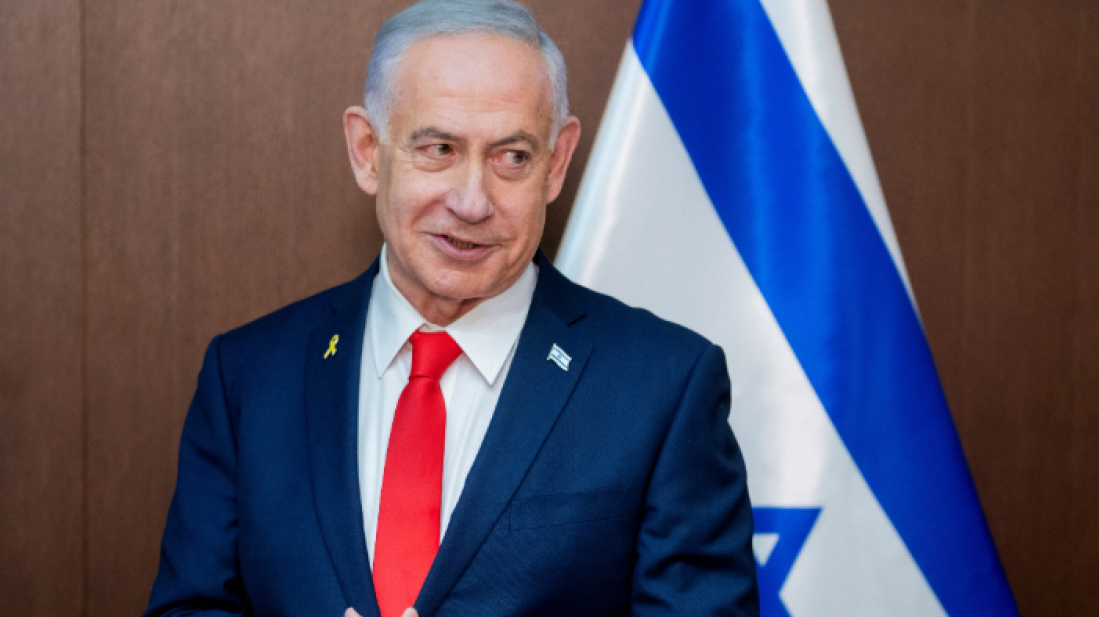
Israeli Prime Minister Benjamin Netanyahu said on Sunday that Israel will decide which foreign forces can participate in the planned international mission in Gaza, aimed at securing a fragile ceasefire under U.S. President Donald Trump’s peace plan.
It remains uncertain which countries will contribute troops, with Hamas’s refusal to disarm complicating the plan and Israel expressing reservations about the composition of the proposed force. The Trump administration has ruled out deploying U.S. troops but is in discussions with Indonesia, the United Arab Emirates, Egypt, Qatar, Türkiye, and Azerbaijan about joining the mission.
“We are in control of our security,” Netanyahu told his cabinet. “Israel will determine which international forces are unacceptable to us, and this will continue to be our policy. The United States fully supports this,” he added.
Israeli opposition to Turkish participation
Netanyahu recently hinted that he would reject any Turkish involvement in the Gaza force, as relations between Türkiye and Israel have deteriorated sharply since the Gaza conflict began. Turkish President Recep Tayyip Erdoğan has been one of Israel’s most vocal critics, condemning its military campaign.
During his visit to Israel on Friday, U.S. Secretary of State Marco Rubio said that the force should consist only of “countries that Israel is comfortable with.” He did not comment on Türkiye’s potential participation but confirmed that the U.S. is exploring a U.N. resolution or international agreement to authorise the deployment, with discussions to continue in Qatar on Sunday.
Hamas and the hostage issue
A key obstacle to Trump’s plan is Hamas’s refusal to lay down its weapons. Since the ceasefire began two weeks ago — the first stage of Trump’s 20-point Gaza plan — Hamas has cracked down violently on internal rivals testing its control.
Meanwhile, Israel says 13 bodies of deceased hostages remain in Gaza. A government spokesperson said Hamas knows their locations and could recover them if it chose to. Israel has authorised an Egyptian technical team, working with the Red Cross, to search beyond the “yellow line” — the boundary marking the Israeli military’s initial pullback — using excavators and trucks.
Netanyahu reaffirms independence
Opening Sunday’s cabinet meeting, Netanyahu dismissed claims that the U.S. dictates Israeli security policy. “Israel is an independent country,” he said, describing the U.S. relationship as a partnership, not subordination.
Diplomats and analysts say Trump succeeded in convincing Netanyahu — who had long resisted calls for a Gaza ceasefire — to accept a broader peace framework. Trump also reportedly pushed Netanyahu to apologise to Qatar’s leader after a failed airstrike targeting Hamas negotiators in Doha and persuaded Arab states to pressure Hamas into returning all Israeli hostages, a key demand of his plan.













What is your opinion on this topic?
Leave the first comment