Iran warns of strikes on U.S. bases if attacked
Iran would retaliate by striking U.S. military bases across the Middle East if it comes under attack by American forces, Foreign Minister Abbas Araghc...
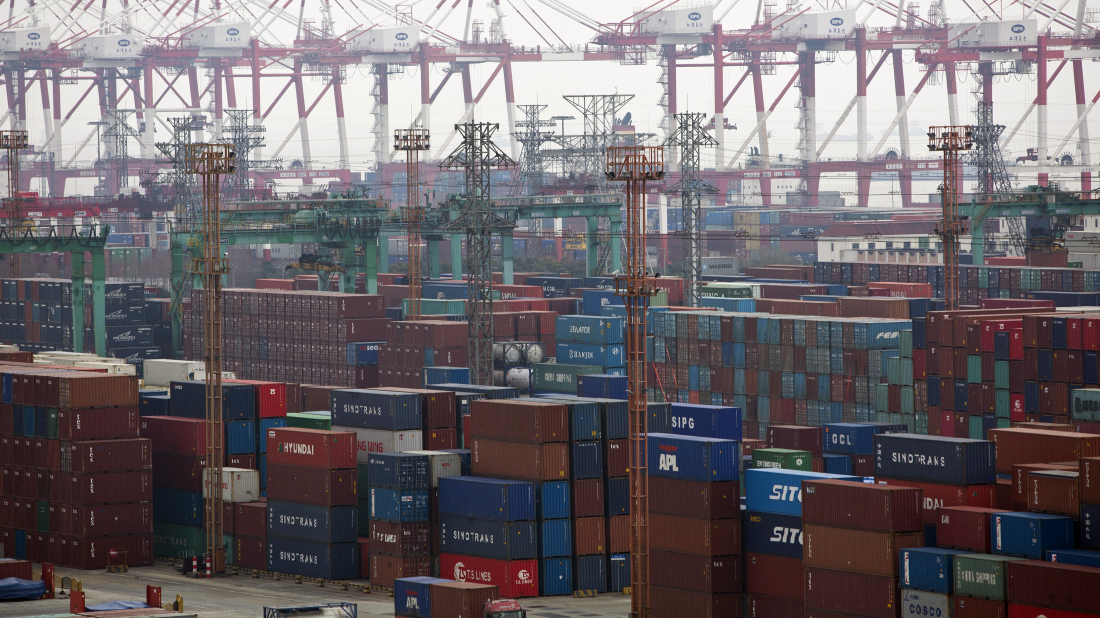
The first container ship to operate on the China-Europe Arctic express route has arrived in Poland, marking a milestone in commercial shipping through the Arctic’s Northeast Passage.
The vessel, Istanbul Bridge, reached the Port of Gdansk in northern Poland on Sunday after a 26-day journey from the Ningbo-Zhoushan Port in China’s Zhejiang Province, according to China’s state-run Xinhua news agency.
Carrying around 4,000 twenty-foot equivalent units (TEUs) of cargo, the ship made stops in the UK and Germany before arriving in Poland. Its next destination will be the Netherlands.
The new China-Europe Arctic Express Route travels directly through the Arctic’s Northeast Passage, significantly reducing shipping time compared with traditional sea routes — which take around 40 days via the Suez Canal and about 50 days via the Cape of Good Hope.
The Istanbul Bridge reached its first European stop, Felixstowe in the UK, within 20 days — a duration comparable to or even faster than the China-Europe freight train, which takes roughly 25 days.
Li Xiaobin, chief operating officer of route operator Sea Legend Line Limited, said the Arctic route offers stable conditions for cargo sensitive to temperature and delivery times.
“The low temperatures help preserve certain high-tech components,” Li noted.
Sea Legend Line plans to introduce regular summer voyages on the Arctic route by 2026 and aims to expand its express service network to Eastern Europe during the winter months when the passage is closed to navigation.

Winter weather has brought air travel in the German capital to a complete halt, stranding thousands of passengers as severe icing conditions make runways and aircraft unsafe for operation and force authorities to shut down one of Europe’s key transport hubs.
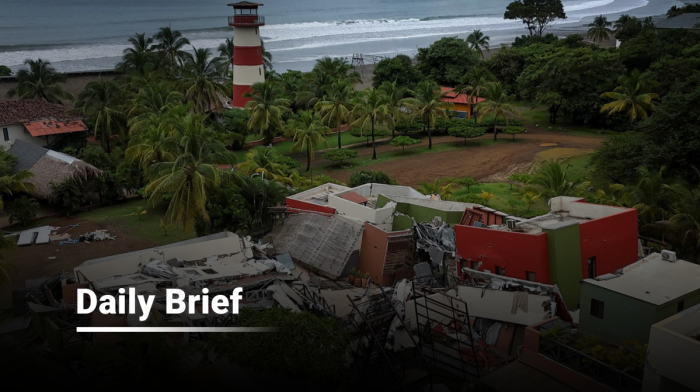
Storm Leonardo hit Spain and Portugal on Tuesday, forcing more than 11,000 people from their homes, as a man in Portugal died after his car was swept away by floodwaters and a second body was found in Malaga.
An attacker opened fire at the gates of a Shiite Muslim mosque in Islamabad on Friday before detonating a suicide bomb that killed at least 31 people in the deadliest assault of its kind in the capital in more than a decade.
Alphabet is emerging as a frontrunner in the global artificial intelligence race, as analysts and executives say Google has overtaken OpenAI, marking a sharp reversal from a year ago when the company was widely seen as lagging.
Using art as a quiet alarm, a new exhibition in Baku is drawing attention to endangered wildlife and the need for environmental responsibility.
France and Canada opened new consulates in Nuuk, Greenland’s capital, on Friday, stepping up their Arctic presence in a show of support for Denmark, a NATO ally, amid renewed demands by U.S. President Donald Trump to acquire the strategically located territory.
Russia launched a large-scale overnight attack on Ukraine’s energy system early on Saturday (7 January), hitting power generation and distribution facilities with more than 400 drones and around 40 missiles, Ukrainian officials have said.
Start your day informed with AnewZ Morning Brief: here are the top news stories for the 7th of February, covering the latest developments you need to know.
U.S. and Ukrainian negotiators have discussed an ambitious goal of reaching a peace agreement between Russia and Ukraine by March, though the timeline is widely viewed as unrealistic due to deep disagreements over territory, according to multiple sources familiar with the talks.
At least 31 people have been killed and scores wounded in a suicide bombing at a mosque in Pakistan’s capital, Islamabad, during Friday prayers, prompting widespread international condemnation.
You can download the AnewZ application from Play Store and the App Store.
What is your opinion on this topic?
Leave the first comment