Britain and the Republic of Ireland will jointly announce a new framework on Friday to address the legacy of decades of sectarian violence in Northern Ireland and replace a controversial British law that offered amnesties to ex-soldiers and nationalist groups.
The agreement will fulfil a pledge by Prime Minister Keir Starmer to repeal the previous Conservative government's Legacy Act. This had a section in it which offered immunity from prosecution for those who cooperate with a new investigative body, the Independent Commission for Reconciliation and Information Recovery (ICRIR), - a provision that was ruled incompatible with human rights law.
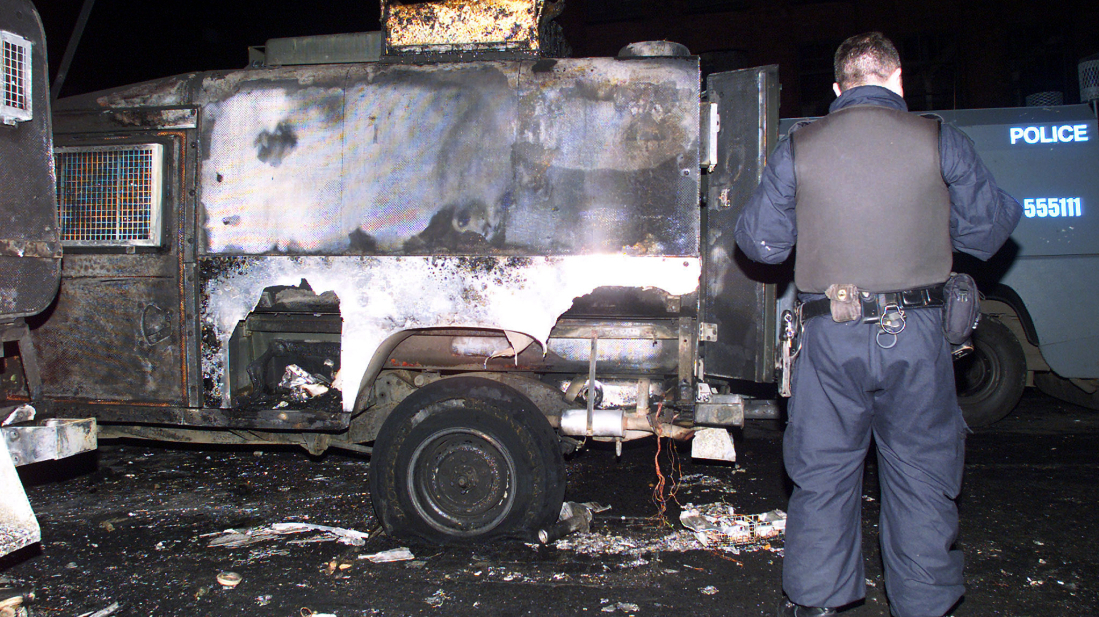
Controversially, the law stopped inquests into cases from the three decades of conflict between Irish nationalist groups seeking a united Ireland, pro-British "loyalist" paramilitaries and the British military.
It was opposed by victims' families, all political parties in Northern Ireland, including pro-British and Irish nationalist groups, and the Irish government, which brought a legal challenge against Britain at the European Court of Human Rights.
Britain's Northern Ireland Minister Hilary Benn said this month that the plans would significantly reform the contested ICRIR and make it capable of referring cases for potential prosecution and give it independent oversight.
A separate information recovery body, as envisioned in a 2014 UK-Irish legacy agreement that was never implemented and overridden by the Legacy Act, will also be included, a source familiar with the framework said.
Dublin has said it would revisit its legal challenge against Britain if a new framework is put in place and is human rights-compliant. Starmer's government has sought to reset relations with Ireland that were strained during Brexit.
The previous Conservative government defended its approach by arguing that prosecutions linked to the events of up to 57 years ago - also known as the Troubles - were increasingly unlikely to lead to convictions and that it wanted to draw a line under the conflict.
While some trials have collapsed in recent years, the first former British soldier to be convicted of an offence since the peace deal was given a suspended sentence in 2023.
The trial of the sole British soldier charged with murder over the 1972 "Bloody Sunday" killings of 13 unarmed Catholic civil rights marchers also began this week.











What is your opinion on this topic?
Leave the first comment