Ethiopia officially inaugurates Africa's largest hydroelectric dam on Tuesday, a project that will provide energy to millions of Ethiopians while deepening a rift with downstream Egypt that has unsettled the region.
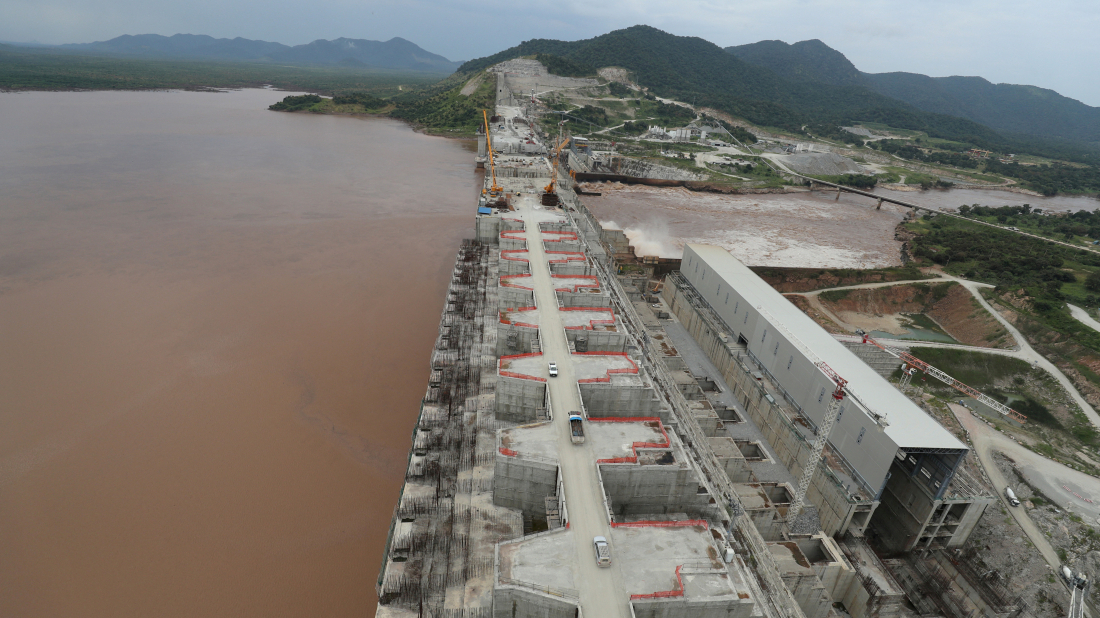
Ethiopia, the continent's second most populous nation with a population of 120 million, sees the $5 billion Grand Ethiopian Renaissance Dam (GERD) on a tributary of the River Nile as central to its ambitions for economic development.
Begun in 2011, the dam's power generation should eventually rise to 5,150 MW from the 750 MW that its two active turbines are already producing.
Prime Minister Abiy Ahmed has said Ethiopia will use the energy to improve Ethiopians' access to electricity while also exporting surplus power to the region.
However, Ethiopia's downstream neighbours, have watched the project advance with dread.
Opposition in Egypt
Egypt, which built its own Aswan High Dam on the Nile in the 1960s, fears the GERD could restrict its water supply during periods of drought, and could lead to the construction of other upstream dams.
It has bitterly opposed the dam from the start, arguing that it violates water treaties dating to the British colonial era and poses an existential threat.
Egypt, with a population of about 108 million, depends on the Nile for about 90% of its fresh water.
Officials said it would continue to closely monitor developments on the Blue Nile and "exercise its right to take all the appropriate measures to defend and protect the interests of the Egyptian people", Egyptian Foreign Ministry spokesperson Tamim Khallaf told Reuters on Monday (8 September).
Sudan has joined Egypt's calls for legally binding agreements on the dam's filling and operation, but could also benefit from better flood management and access to cheap energy.
Cairo's position received support from U.S. President Donald Trump during his first term. Trump said it was a dangerous situation and that Cairo could end up "blowing up that dam", but his administration failed to secure a deal on the project, over which years of talks produced no agreement.
Ethiopia said it's 'Not a threat'
Insisting that the project's development is a sovereign right, Ethiopia has pressed ahead. In 2020, it began filling the reservoir in phases while arguing that the dam would not significantly harm downstream countries.
"The Renaissance Dam is not a threat, but a shared opportunity," Abiy told parliament in July.
"The energy and development it will generate stand to uplift not just Ethiopia," he said.
Independent research shows that so far, no major disruptions to downstream flow have been recorded — partly due to favourable rainfall and cautious filling of the reservoir during wet seasons over a five-year period.
In Ethiopia, which has faced years of internal armed conflict, largely along ethnic lines, the GERD has proven a source of national unity, said Magnus Taylor from the International Crisis Group think tank.
"The idea that Ethiopia should be able to build a dam on its own territory... and shouldn't be pushed around by Egypt is broadly something that most Ethiopians would get behind," he said.
Ethiopia's central bank provided 91% of the project's funding, while 9% was financed by Ethiopians through bond sales and gifts, without any foreign assistance, local media has reported.
Unconnected to the grid
The dam's reservoir has flooded an area larger than Greater London, which the government says will provide a steady water supply for hydropower and irrigation downstream while limiting floods and drought.
Rural Ethiopians, however, may have to wait a little longer to benefit from the extra power: only around half of them are connected to the national grid.
While relations with Egypt over the dam have deteriorated in the last year, they can still get worse, said Matt Bryden from think tank Sahan Research.
Landlocked Ethiopia's plan to gain access to the sea via its old adversaries Eritrea or Somalia has seen Egypt throw its weight behind Asmara and Mogadishu.
The idea of strategic rival Egypt dictating not only Nile water usage but access to the Red Sea, is clearly unacceptable to Addis Ababa, Bryden said.












What is your opinion on this topic?
Leave the first comment