Meloni says Greenland security should be discussed within NATO framework
Italian Prime Minister Giorgia Meloni said on Saturday (17 January) that concerns over security in Greenland should be addressed within the framework ...
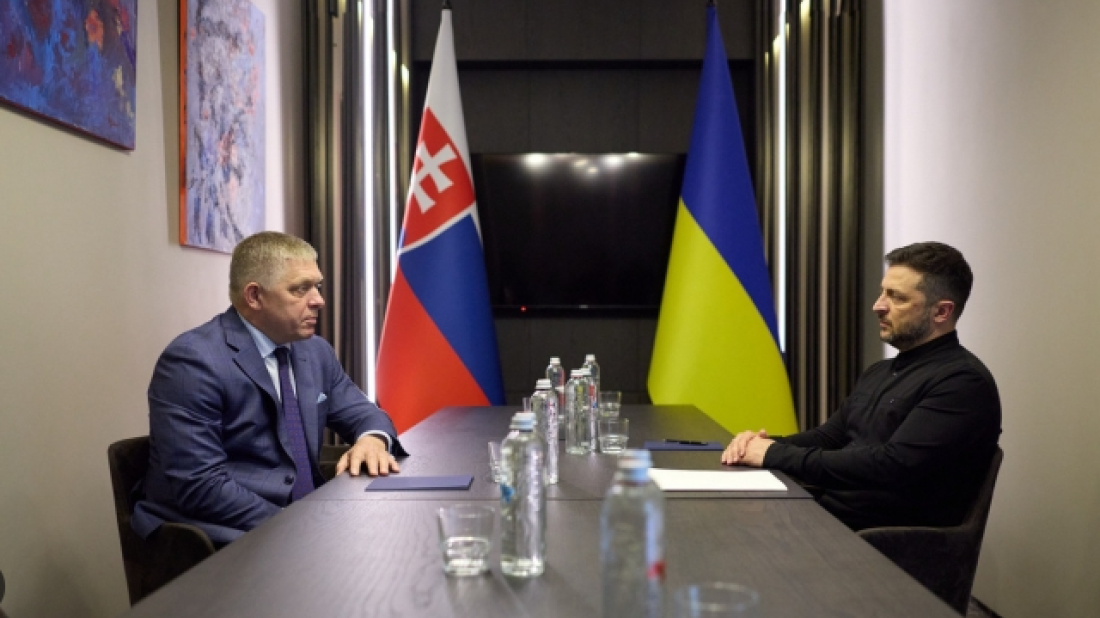
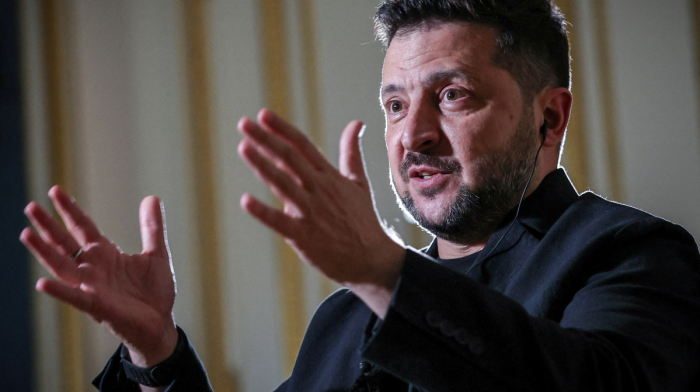
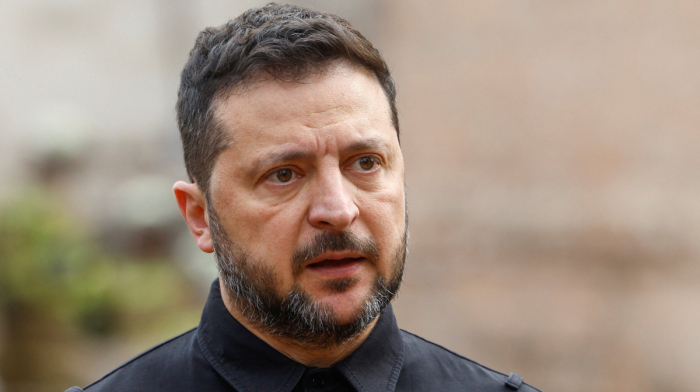
Ukrainian President Volodymyr Zelenskyy said on Friday (September 5) that Kyiv would continue targeting Russian energy infrastructure in response to repeated strikes on Ukraine’s own facilities, despite complaints from Slovakia and Hungary over disruptions to their oil supplies.
His remarks followed his first high-level meeting with Slovak Prime Minister Robert Fico in Uzhhorod, near the Slovak border. The two leaders have previously clashed over energy issues, with Slovakia and Hungary maintaining purchases of Russian oil and gas even as most EU states have reduced dependence since Russia’s 2022 invasion.
Recent Ukrainian strikes on the Druzhba pipeline, which carries Russian oil through Ukraine to Slovakia, have caused interruptions in supply to both Slovakia and Hungary. “Ukraine responds to Russia’s attacks on our energy facilities, and will keep doing so,” Zelenskyy told reporters, adding: “We want this war to end. But no one is going to sit in the dark and accept it.”
Fico argued the attacks were harming Slovakia, even if aimed at what Ukraine sees as “legitimate” targets. He stressed that the interests of other countries connected to the international energy network should also be considered.
Zelenskyy said Kyiv was open to supplying Slovakia with oil and gas—provided it was not of Russian origin. Fico, however, has criticised Ukraine’s decision not to renew its gas transit contract with Russia at the end of 2024, after which Gazprom rerouted supplies under a separate long-term deal with Slovakia.
The Slovak leader has also resisted EU proposals to phase out Russian energy imports, briefly blocking the bloc’s latest sanctions package while seeking safeguards against potential economic fallout for his country.
Despite their disagreements, Fico said there was room for cooperation, particularly in energy, and expressed hope that Ukraine would secure security guarantees. He also offered Slovakia’s experience to support Kyiv in its EU accession talks.
Meanwhile, U.S. President Donald Trump told European leaders on Thursday that Europe must halt purchases of Russian oil, which he said continued to finance Moscow’s war.

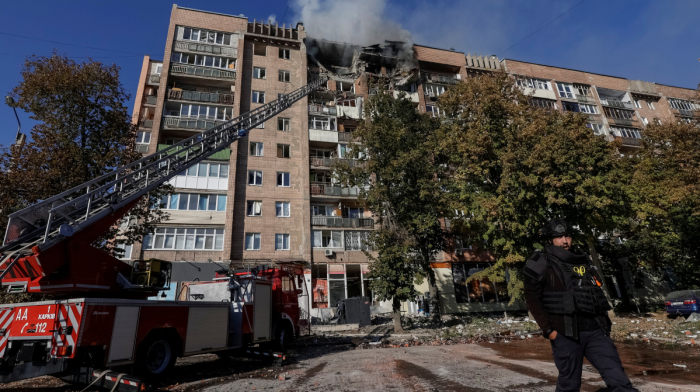
A railway power outage in Tokyo disrupted the morning commute for roughly 673,000 passengers on Friday (16 January) as two main lines with some of the world's busiest stations were halted after reports of a fire.
The Turkish Defence Ministry has voiced its support for recent military operations by Syrian government forces against the Kurdish-led Syrian Democratic Forces (SDF), which enjoy the support of the United States.
Tens of thousands of users were left unable to access Elon Musk’s social media platform X on Friday, with outages reported across multiple countries including the United States, the United Kingdom, Canada and Australia.
Armenia has reaffirmed that it has no intention of taking any actions directed against Iran, with senior officials stressing that relations with Tehran remain friendly and constructive.
Russian President Vladimir Putin held separate calls with Israeli Prime Minister Benjamin Netanyahu and Iranian President Masoud Pezeshkian on 16 January, offering Russia’s help to mediate tensions and promote dialogue in the Middle East.
Italian Prime Minister Giorgia Meloni said on Saturday (17 January) that concerns over security in Greenland should be addressed within the framework of NATO, describing a ground military intervention as highly unlikely.
The European Union has called an emergency meeting of its ambassadors after U.S. President Donald Trump vowed to impose escalating tariffs on European allies unless the United States is allowed to buy Greenland.
The European Union and South American bloc Mercosur have signed a long-awaited free trade agreement in Paraguay, opening the way for what would become the EU’s largest-ever trade deal.
Israel said on Saturday that the Trump administration’s announcement on the composition of a new Gaza executive board was made without coordination and contradicts Israeli government policy.
Trump administration officials held months-long discussions with Venezuela’s hardline interior minister Diosdado Cabello before the U.S. operation that led to the seizure of President Nicolás Maduro, according to multiple people familiar with the matter.
You can download the AnewZ application from Play Store and the App Store.
What is your opinion on this topic?
Leave the first comment