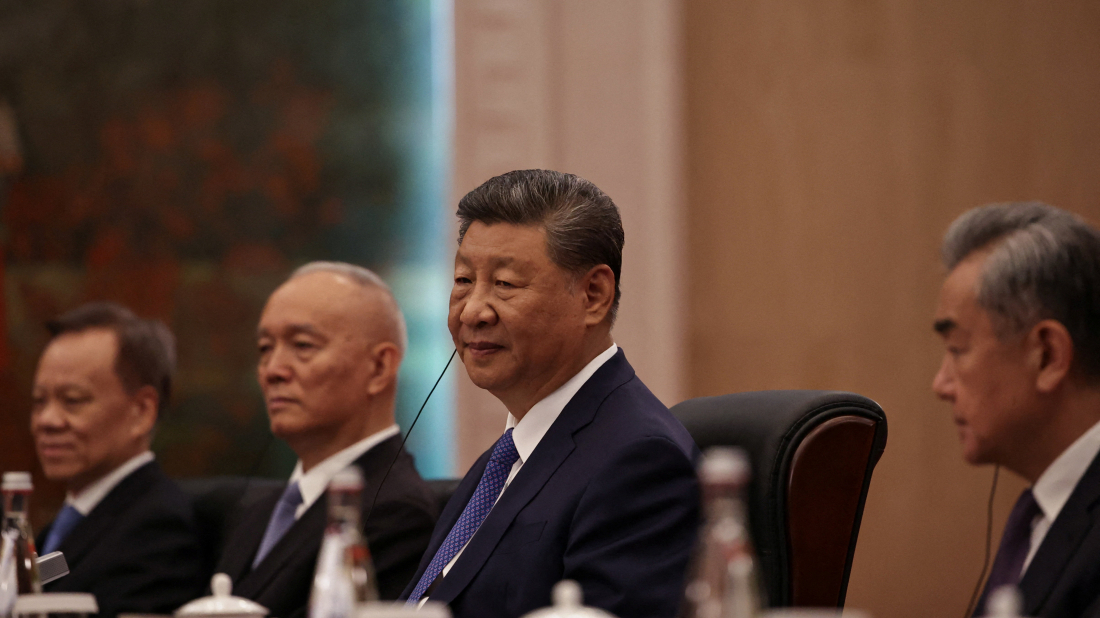
Chinese President Xi Jinping is holding a series of high-level meetings with world leaders in Tianjin today, ahead of the Shanghai Cooperation Organisation Summit.
The summit, hosted under China's chairmanship, has brought together leaders from more than 20 countries and international organisations. Discussions are set to focus on trade, regional security, connectivity, and cooperation on global challenges. Xi’s bilateral meetings are highlighting China's role
Azerbaijani President Ilham Aliyev
On the morning of August 31, Xi met Azerbaijani President Ilham Aliyev at the Tianjin Guest House during the SCO Summit and the commemoration of the 80th anniversary of the victory in the Chinese People’s War of Resistance Against Japanese Aggression and the World Anti-Fascist War.
Xi described China and Azerbaijan as close partners, highlighting over three decades of deepened political trust and growing cooperation. He noted that the establishment of the China-Azerbaijan comprehensive strategic partnership in April marked a new chapter in bilateral relations. Xi called for stronger alignment of development strategies, deeper Belt and Road cooperation, enhanced trade and investment, and collaboration in areas such as digital economy, green development, and artificial intelligence.
Aliyev said the partnership reflects the strength of bilateral ties, citing rapid growth in trade and expanding cooperation across sectors. He reaffirmed support for the one-China principle and expressed readiness to boost collaboration in technology, connectivity, and tourism, as well as within the SCO framework. Both sides signed agreements in artificial intelligence, scientific innovation, finance, and media.
Kyrgyz President Sadyr Japarov
On the morning of August 31, Xi met Kyrgyz President Sadyr Japarov at the Tianjin Guest House. Xi noted that the two leaders have already met twice this year, achieving broad consensus on strengthening cooperation and planning the future of China-Kyrgyzstan relations. He called for deepened alignment of development strategies, broader practical cooperation, and closer collaboration in areas such as trade, investment, connectivity, clean energy, green minerals, and artificial intelligence. Xi also highlighted the importance of expanding exchanges in culture, education, health, and tourism, and voiced full support for Kyrgyzstan’s upcoming rotating presidency of the SCO. Japarov described China as a close and reliable partner, expressing appreciation for China’s support during times of difficulty. He praised China’s rapid development under Xi’s leadership and stressed Kyrgyzstan’s readiness to enhance cooperation in technology, connectivity, and clean energy. He reiterated support for the one-China principle and expressed commitment to strengthening multilateral coordination. Both sides signed agreements in areas including connectivity, human resources, civil aviation, and subnational cooperation.
Armenian Prime Minister Nikol Pashinyan
On the morning of August 31, Xi met Armenian Prime Minister Nikol Pashinyan at the Tianjin Guest House, where the two leaders announced the establishment of a strategic partnership between China and Armenia. Xi noted that the two countries have maintained mutual respect and trust over 33 years of diplomatic relations, fostering steady growth in bilateral ties. He called the new strategic partnership an important milestone and urged closer collaboration in Belt and Road cooperation, connectivity, and exchanges in education, science and technology, culture, and tourism. Xi also expressed support for Armenia’s participation in the SCO and underscored the importance of multilateralism in advancing shared development. Pashinyan highlighted China’s economic achievements under Xi’s leadership and said Armenia hopes to learn from China’s development experience. He reaffirmed Armenia’s commitment to the one-China principle and expressed interest in expanding economic, trade, and regional cooperation. Both sides issued a joint statement establishing the partnership and signed multiple agreements in areas including market regulation, metrology, and media.
Belarusian President Aleksandr Lukashenko
On the morning of August 31, Xi met Belarusian President Aleksandr Lukashenko at the Tianjin Guest House. Xi noted the historical ties between the two nations, forged during their joint struggle against militarism and fascism, and emphasised the enduring friendship between their peoples. He said China is ready to work with Belarus to advance peace, development, and win-win cooperation, while practicing true multilateralism. Xi highlighted the steady growth of the China-Belarus all-weather comprehensive strategic partnership and called for deeper cooperation through high-quality Belt and Road projects, stronger alignment of development strategies, and innovation-driven growth. He also underscored the importance of expanding exchanges in education, culture, tourism, and youth, and enhancing coordination within multilateral platforms such as the SCO and BRICS. Lukashenko praised China’s development achievements and its commitment to fairness and multilateralism, describing Belarus as a reliable partner and friend of China. He expressed readiness to deepen cooperation across governance, trade, and other areas. Both sides signed agreements in fields including science and technology, finance, media, transportation, and customs.
UN Secretary-General António Guterres
On the afternoon of August 30, Xi met with United Nations Secretary-General António Guterres at the Tianjin Guest House. Xi emphasised that the UN, founded 80 years ago at the end of the Second World War, remains the premier platform for countries to coordinate actions and address shared challenges. He reiterated China’s commitment to multilateralism, global development initiatives, and deeper cooperation with the organisation to promote peace and prosperity. Guterres thanked China for its consistent support of the UN, describing the country as a cornerstone of multilateralism, and called for closer collaboration on global governance reform, artificial intelligence, and climate action.
Cambodian Prime Minister Hun Manet
Later in the day, Xi met Cambodian Prime Minister Hun Manet, emphasising the enduring strength of China-Cambodia relations. Xi described the partnership as "rock-solid," underscoring the importance of long-term solidarity and cooperation. He highlighted ongoing initiatives such as the "Diamond Hexagon" framework, the Industrial and Technological Corridor, and the Fish and Rice Corridor, aimed at boosting trade and supporting Cambodia's self-reliant growth. Hun Manet praised China’s steadfast support, reaffirmed Cambodia’s commitment to the one-China principle, and expressed readiness to deepen cooperation in trade, infrastructure, and combating cross-border crimes, including online fraud and gambling.
Myanmar’s Acting President Min Aung Hlaing
Xi also met with Myanmar’s Acting President Min Aung Hlaing, reaffirming the importance of the long-standing pauk-phaw friendship between the two countries. Xi highlighted the 75th anniversary of diplomatic relations as an opportunity to deepen strategic cooperation and advance the China-Myanmar Economic Corridor. He pledged support for Myanmar in safeguarding sovereignty, rebuilding after the recent earthquake, and restoring stability and development. Min Aung Hlaing thanked China for its enduring support and commitment, reaffirming Myanmar’s adherence to the one-China policy and its readiness to enhance cooperation in trade, infrastructure, energy, and other sectors under the Belt and Road framework. Both sides also signed agreements in customs, news media, and other fields to strengthen bilateral collaboration.
Egyptian Prime Minister Mostafa Madbouly
In another bilateral meeting, Xi met with Egyptian Prime Minister Mostafa Madbouly. Xi highlighted that Egypt was the first Arab and African country to establish diplomatic relations with China and noted that relations are now at their strongest. With the 70th anniversary of diplomatic ties approaching next year, Xi called for closer political trust and deeper cooperation, including aligning the Belt and Road Initiative with Egypt’s Vision 2030. He encouraged joint work in trade, manufacturing, and new energy sectors, as well as stronger collaboration in multilateral affairs. Madbouly, delivering greetings from President Abdel Fattah El-Sisi, reaffirmed Egypt’s commitment to the one-China principle and expressed readiness to expand high-level exchanges and deepen cooperation in investment, finance, new energy, and desalination, while reinforcing coordination with China in defending the interests of the Global South.
Kazakhstan President Kassym-Jomart Tokayev
Later in the evening, Xi met with Kazakhstan’s President Kassym-Jomart Tokayev. Xi stressed that China and Kazakhstan are trusted strategic partners and reaffirmed the importance of maintaining good-neighbourly relations and mutual support on core interests. He encouraged closer alignment of development strategies, stronger energy cooperation, and deeper connectivity through both infrastructure and policy coordination. Tokayev praised China’s effective role during its SCO presidency and highlighted the record levels of bilateral trade and successful cooperation projects. The leaders witnessed the signing of more than 20 agreements covering sectors such as energy, technology, housing, education, sports, and wildlife protection, along with the establishment of two new Luban Workshops in Kazakhstan to enhance vocational training and skills development.
Nepali Prime Minister K. P. Sharma Oli
Xi also held talks with Nepali Prime Minister K. P. Sharma Oli, highlighting the close, long-standing friendship between China and Nepal. Xi said the two neighbours, linked by mountains and rivers, have stood together through seven decades of diplomatic ties and are making steady progress in high-quality Belt and Road cooperation. He called for deeper strategic trust, stronger connectivity, and expanded cooperation in areas including industry, agriculture, new energy, artificial intelligence, education, and security. Oli reaffirmed Nepal’s adherence to the one-China principle, praised China’s role in supporting Nepal’s economic and social development, and expressed readiness to expand collaboration in trade, tourism, technology, and climate initiatives.
















What is your opinion on this topic?
Leave the first comment