Ancient hand stencil in Indonesia pushes back origins of rock art
A faint hand outline found in an Indonesian cave has been dated to at least 67,800 years ago, making it the oldest known example of rock art and offer...
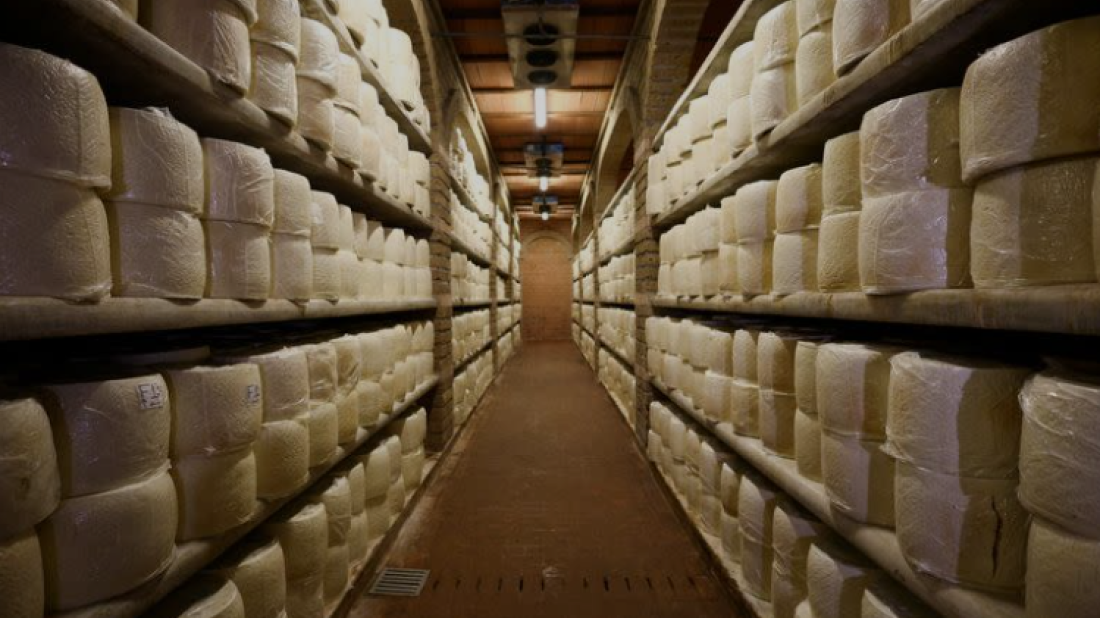
U.S. tariffs of 30% on European Union goods could reduce Italy’s GDP by up to 0.8% by 2027, according to the country’s main business lobby, Confindustria, as transatlantic trade talks remain ongoing.
President Donald Trump has warned of imposing 30% tariffs on EU imports beginning August 1. However, his trade representative, Howard Lutnick, stated on Sunday that there is still "plenty of room" to reach a deal with European officials.
If implemented without any EU countermeasures, the tariffs could lower Italy’s GDP by 0.25% this year, 0.59% in 2026, and 0.82% in 2027, according to Confindustria’s research division.
Key Italian exports to the U.S. include machinery, pharmaceuticals, automobiles, and food products such as olive oil, pasta, cheese, and wine.
In a separate analysis, consulting firm EY projected an even steeper impact, estimating that 30% tariffs would reduce Italy’s GDP by 1.4% during 2025–2026, potentially wiping out all expected economic growth for that period.
By contrast, Italy’s national statistics agency Istat had forecast GDP growth of 0.6% in 2025 and 0.8% in 2026.
Confindustria has argued that the only acceptable U.S. tariff level is zero, noting that EU exporters are already disadvantaged by a weakening dollar, which has fallen over 12% against the euro since the beginning of the year.

Several locally-developed instant messaging applications were reportedly restored in Iran on Tuesday (20 January), partially easing communications restrictions imposed after recent unrest.
There was a common theme in speeches at the World Economic Forum on Tuesday (20 January). China’s Vice-Premier, He Lifeng, warned that "tariffs and trade wars have no winners," while France's Emmanuel Macron, labelled "endless accumulation of new tariffs" from the U.S. "fundamentally unacceptable."
U.S. President Donald Trump said Washington would “work something out” with NATO allies on Tuesday, defending his approach to the alliance while renewing his push for U.S. control of Greenland amid rising tensions with Europe.
At the World Economic Forum’s “Defining Eurasia’s Economic Identity” panel on 20 January 2026, leaders from Azerbaijan, Armenia and Serbia discussed how the South Caucasus and wider Eurasian region can strengthen economic ties, peace and geopolitical stability amid shifting global influence.
The European Union has proposed new restrictions on exports of drone and missile-related technology to Iran, while preparing additional sanctions in response to what it described as Tehran’s "brutal suppression" of protesters.
The stark, frozen beauty of the Arctic has become the unlikely stage for a high-stakes diplomatic standoff that threatens to dismantle the transatlantic security architecture.
Start your day informed with AnewZ Morning Brief: here are the top news stories for the 22nd of January, covering the latest developments you need to know.
NATO Secretary General Mark Rutte says the status of Greenland did not arise in his talks with U.S. President Donald Trump, as Trump stepped back from tariff threats and ruled out using force to take control of the territory.
Venezuelan oil exports under a flagship $2 billion supply deal with the U.S. reached about 7.8 million barrels on Wednesday, vessel-tracking data and documents from state-run PDVSA showed.
A fire alarm prompted the partial evacuation of the Davos Congress Centre on Wednesday evening while Donald Trump was inside the building attending the World Economic Forum, Swiss authorities said.
You can download the AnewZ application from Play Store and the App Store.
What is your opinion on this topic?
Leave the first comment