live Iran says it has no trust in U.S. as nuclear tensions and talks continue- Middle East conflict
Iran’s Foreign Minister Abbas Araghchi said Tehran has “no trust” in the United States and will only consider negotiations if Was...
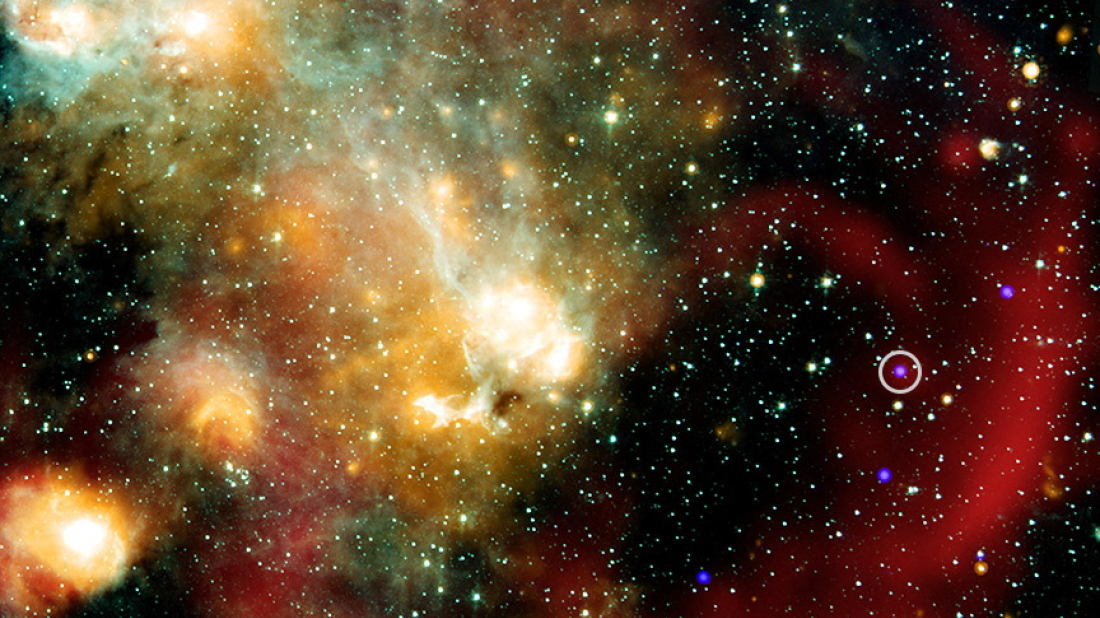
A newly discovered object in the Milky Way is baffling astronomers with bursts of radio and X-rays every 44 minutes.
Astronomers have identified a mysterious new object in the Milky Way, named ASKAP J1832-0911, which emits bursts of radio waves and X-rays for two minutes every 44 minutes.
An international team reports that the object—possibly a star, a binary system, or something else entirely—releases X-rays at the same time it sends out radio pulses.
Located about 15,000 light-years away in a dense region filled with stars, gas, and dust, the object may be a highly magnetized dead star, such as a neutron star or white dwarf.
NASA’s Chandra X-ray Observatory first detected the X-ray emissions by chance last year while observing a nearby supernova remnant. It marks the first time X-rays have been linked to a long-period radio transient—an extremely rare type of object that pulses on timescales of tens of minutes.
The object’s hyperactive phase lasted roughly a month. Outside that window, it showed no X-ray activity, leading scientists to suggest that more such hidden objects could be waiting to be found.
The U.S.-Israeli war with Iran loomed over U.S. President Donald Trump's visit to China, as signs emerged that the conflict is causing a shift in alliances across the Middle East.
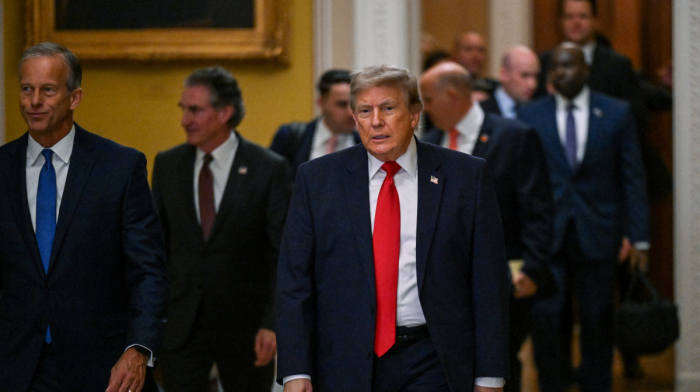
When Donald Trump boarded Air Force One for Beijing on Tuesday, he brought two cabinet members whose presence in China would have seemed unlikely a year ago, highlighting an unusual moment in U.S.–China relations.
The Eurovision Song Contest opened in Vienna on Tuesday amid heightened political tensions, as Israel competed in the first semi-final despite a boycott by five European broadcasters over the war in Gaza.
A new trilateral energy partnership involving Uzbekneftegaz, Azerbaijan’s state oil company SOCAR and BP has been announced during Uzbekistan Energy Week 2026 in Tashkent.
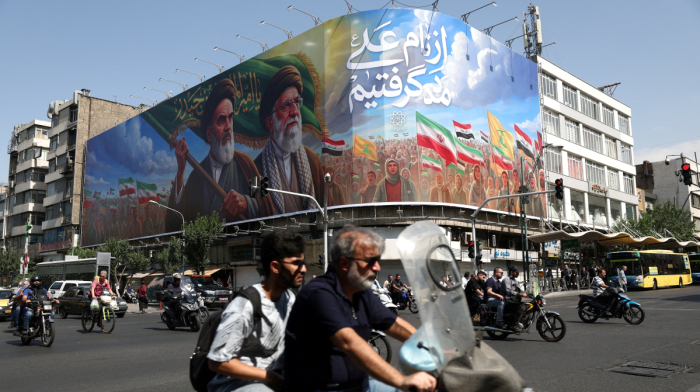
Iran’s Foreign Minister Abbas Araghchi said Tehran has “no trust” in the United States and will only consider negotiations if Washington shows seriousness. His remarks came as talks on Iran’s nuclear programme continued, with Trump and Xi also opposing Iran acquiring nuclear weapons.
Japanese filmmaker Koji Fukada has said that the use of artificial intelligence (AI) to “jump straight to the result” risks undermining the purpose of art, which he believes should be rooted in self-expression and a deeper understanding of the world.
The Spanish government has issued a defiant message to Silicon Valley, confirming it will push ahead with stringent new legislation designed to make social networks and Artificial Intelligence (AI) demonstrably safer.
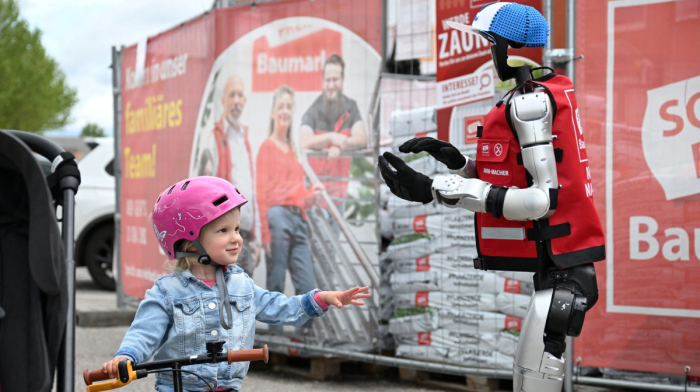
A robotics startup says it has built an AI “brain” that can teach humanoid robots new physical skills in days rather than months, as the race to deploy human-shaped machines in factories and warehouses accelerates.
Apple and Meta have publicly opposed a Canadian bill they say could force technology companies to weaken encryption on devices and online services if it becomes law.
European Union countries and European Parliament lawmakers have agreed on a softened version of the bloc’s landmark artificial intelligence rules, including delayed implementation, in a move critics say reflects growing concessions to major technology firms.
You can download the AnewZ application from Play Store and the App Store.
What is your opinion on this topic?
Leave the first comment