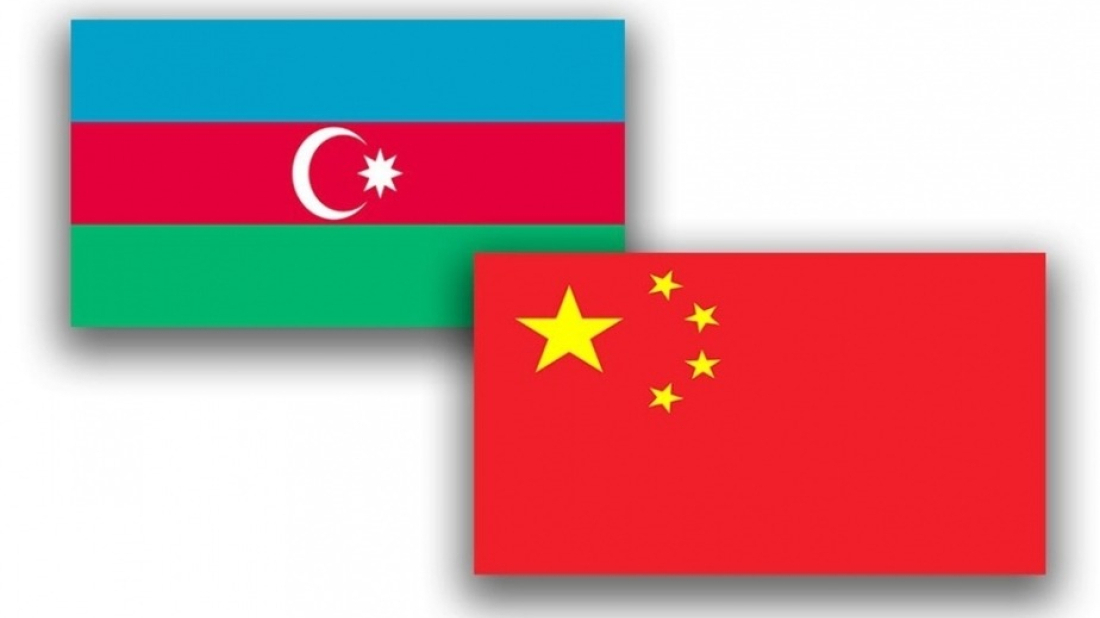
Azerbaijan and China are exploring expanded cooperation to increase the number of container block trains traversing the Middle Corridor, a vital East-West freight route linking China with Europe via Central Asia and the South Caucasus.
The initiative was discussed at the Transport Logistic 2025 exhibition currently underway in Munich, where Azerbaijan Railways (AZD), a subsidiary of AZCON Holding, is actively participating.
AZD Chairman Rovshan Rustamov held key meetings with transport industry leaders, including Yang Bin, President of China Railway Container Transport Corporation (CRCT), to review ways to deepen bilateral rail logistics cooperation. Discussions centered on agreements reached during President Ilham Aliyev’s April visit to China, which emphasized support for the Belt and Road Initiative and promoted multimodal international transport through Azerbaijan.
Among the focal points was the integration of CRCT into Middle Corridor Multimodal Ltd., a trilateral venture by railway authorities of Azerbaijan, Georgia, and Kazakhstan, aimed at streamlining cargo flow along the corridor. Officials also reviewed plans for a digital tracking platform that would monitor cargo moving westward from China to the Black Sea, enhancing visibility and efficiency across the route.
Rustamov also met with Wangsu Dong, Executive Director of Beijing Trans Eurasia International Logistics, to examine proposals for scaling up round-trip block train shipments between China and Europe. Discussions highlighted the importance of increasing freight volumes and improving transit times on the corridor in the near term.
Further engagements at the exhibition involved strategic talks with European port operators and logistics firms, including Burgas Port (Bulgaria) CEO Boris Balev, and HHLA International GmbH, the German logistics group operating at Hamburg Port. These meetings focused on enhancing regional port interconnectivity and strengthening the Middle Corridor’s position as a viable alternative to northern and southern transport routes.
Additional sessions with leaders from Germany’s Rhenus Group and Austria’s ÖBB Rail Cargo Group, a subsidiary of Austrian Railways, explored potential joint initiatives to optimize freight flow across Azerbaijan as part of the larger China–Europe–China trade link.
Throughout the event, Azerbaijani officials emphasized the country's growing role as a key transit hub in East–West trade, citing the Baku–Tbilisi–Kars railway and other infrastructure investments as central to boosting the corridor’s reliability and appeal to global shippers.
The meetings in Munich reflect sustained momentum in developing the Middle Corridor as a competitive and geopolitically stable alternative for Eurasian freight transit, amid ongoing disruptions affecting other major trade routes.

















What is your opinion on this topic?
Leave the first comment