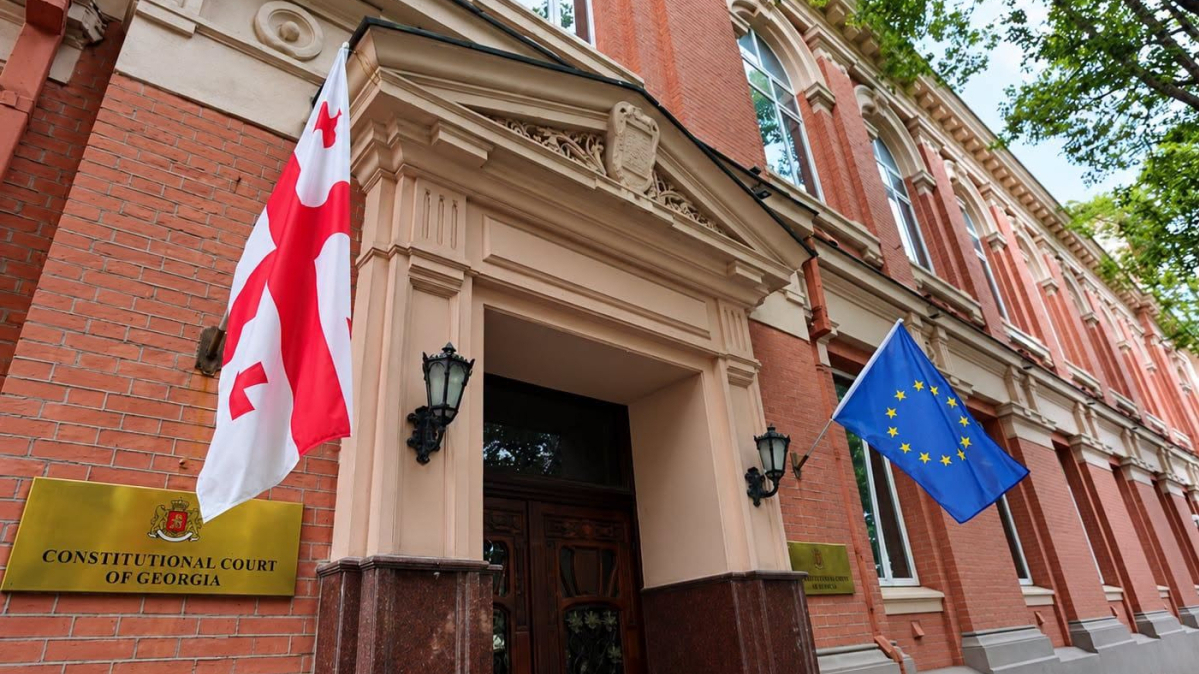
Georgia's Constitutional Court has begun hearing a landmark case that could see five opposition parties banned following a legal challenge by the ruling Georgian Dream party. Hearings are ongoing and expected to continue until at least Friday.
What is the case about?
The court, based in the Black Sea city of Batumi, is considering a lawsuit filed by 88 Georgian Dream MPs seeking to have five opposition parties declared unconstitutional and stripped of their registration.
The parties are the United National Movement (UNM), Coalition for Change, Strong Georgia (Lelo), the Federalist Party and Gakharia for Georgia.
The lawsuit initially targeted three parties before being expanded to include five. Georgian Dream claims they share a common goal of undermining Georgia's constitutional order.
The ruling party accuses them of rejecting the legitimacy of elected authorities since 2016. It also points to the UNM's time in power between 2004 and 2012, citing alleged prison abuses and the 2008 war with Russia. A new opposition alliance formed in March is also cited in the lawsuit.
The parties command significant electoral support. Four of them secured nearly 785,000 votes, representing 37.79 per cent of the total, in the 2024 parliamentary elections.
Tensions rise in courtroom
The opening hearing was marked by tense exchanges. The UNM called for all seven judges to be removed, arguing that the court, as currently constituted, could not deliver a fair and impartial hearing. It described the case as political rather than legal. Other parties made similar requests, but all were rejected.
As arguments became increasingly political, court chairman Revaz Nadaraia intervened, warning that proceedings must focus on legal arguments rather than political statements, which he said “are worth absolutely nothing” in court.
Opposition figure Levan Tsutskiridze of Freedom Square was removed from the courtroom after addressing the judges directly.
Judges also rejected a request to call imprisoned former President Mikheil Saakashvili as a witness, ruling that the opposition had failed to explain what his testimony would establish.
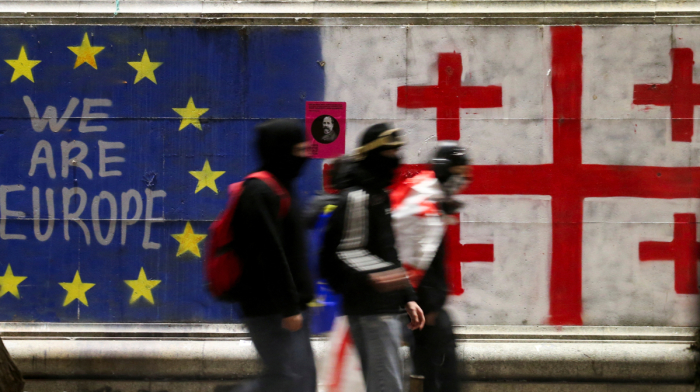
Small protest outside court
Freedom Square organised a protest outside the courthouse as proceedings continued. The demonstration remained small and peaceful, with no signs of escalation.
The modest turnout drew criticism from the government. Prime Minister Irakli Kobakhidze had predicted that only“20 or 30 people” would attend.
He claimed the turnout reflected declining public support for the opposition parties, which he described as “a network of foreign agents”.
Opposition leaders dismissed the criticism, arguing that they are fighting for their political survival and that protest numbers do not reflect the seriousness of the case.
Government defends legal challenge
Kobakhidze has defended the lawsuit, describing the opposition parties as “unconstitutional in their essence” and arguing that banning them would help create “a healthy political spectrum” in Georgia.
He also accused opposition leaders of seeking to avoid constitutional justice.
His comments followed a meeting between opposition representatives and the British, German and French ambassadors a day before the hearing. Kobakhidze criticised the meeting, suggesting that opposition leaders preferred briefing foreign diplomats to defending their position in court.
Opposition warns of deeper isolation
During the diplomatic meeting, opposition leaders raised concerns about what they described as growing threats to Georgian democracy.
They maintain that the lawsuit is politically motivated and driven by Georgian Dream founder Bidzina Ivanishvili.
Zurab Japaridze of Coalition for Change also criticised what he sees as the European Union's lack of a coherent response to developments in Georgia.
He suggested that Western governments could impose sanctions but warned that the EU still lacks a clear policy towards the country.
Japaridze argued that banning opposition parties would push Georgia further away from the democratic world and deepen its international isolation.
European institutions raise concerns
The legal challenge has also drawn criticism from European institutions.
On 8 October, the European Parliament adopted a resolution addressing attempts to ban opposition parties in Georgia.
Council of Europe Secretary General Alain Berset has warned that European Court of Human Rights case law requires compelling justification for dissolving a political party.
The Council of Europe's Venice Commission has also criticised legislative changes introduced in 2025 that expanded the Constitutional Court's powers in cases involving political party bans.
The Georgian government has rejected the criticism, describing such statements as interference in the country's judicial process.
What happens next?
Hearings are scheduled to continue on Thursday and Friday, although a final decision could still be months away.
The Constitutional Court has until 24 June 2027 to deliver its ruling.
If the judges approve the proposed bans, the decision would mark the largest removal of opposition parties in Georgia's modern history, with potentially far-reaching consequences for the country's political landscape.
Read more:














What is your opinion on this topic?
Leave the first comment