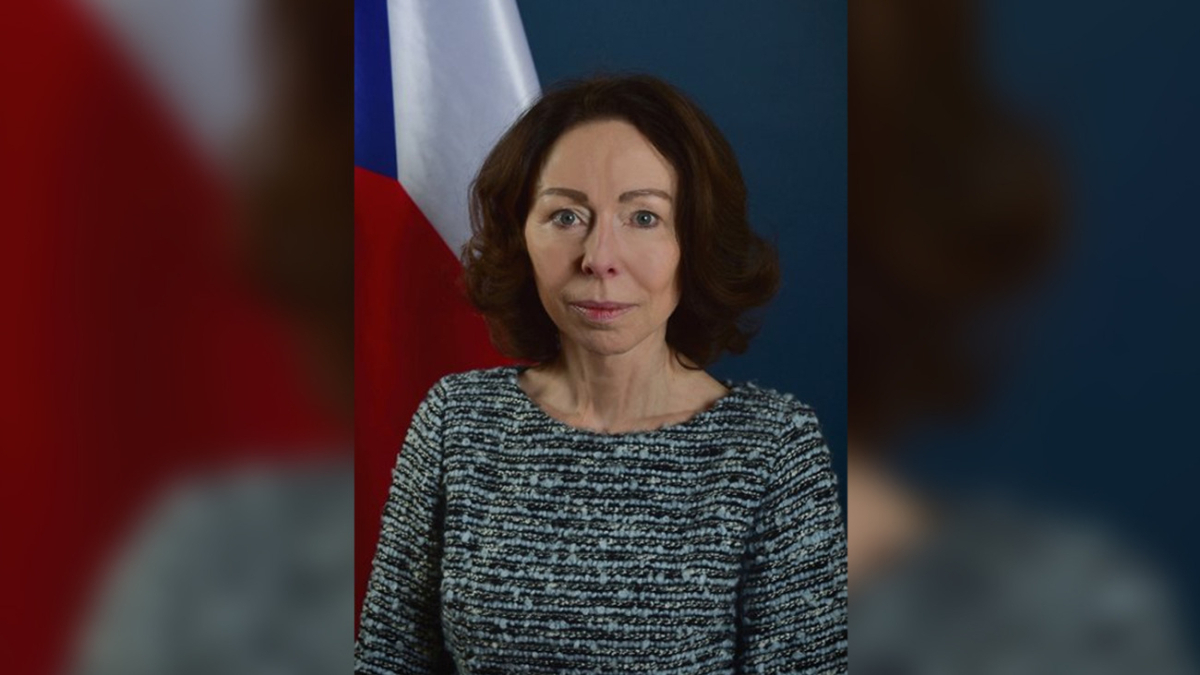
Azerbaijan and the Czech Republic have been strategic partners for more than a decade. In an exclusive interview, AnewZ's Orkhan Amashov posed some questions to the Czech Deputy Minister of Foreign Affairs, Marie Chatardová, about how the two countries' relations continue to evolve.
Energy has long stood at the heart of the relationship between Azerbaijan and the Czech Republic, but today the agenda is considerably broader, and includes trade, investment, industry, connectivity and an evolving regional landscape.
Five months after Czech Prime Minister Andrej Babiš visited Baku, where does this partnership stand, and where might it go next?
Orkhan Amashov, AnewZ: Azerbaijan and the Czech Republic have been strategic partners since 2015. Following Prime Minister Babiš’s April visit identified several concrete areas for deeper cooperation, what has actually moved into implementation?
Marie Chatardová, Deputy FM of Czech Republic: The visit of Prime Minister Andrej Babiš and First Deputy Prime Minister Karel Havlíček opened up entirely new opportunities and gave our strategic partnership a strong impetus.
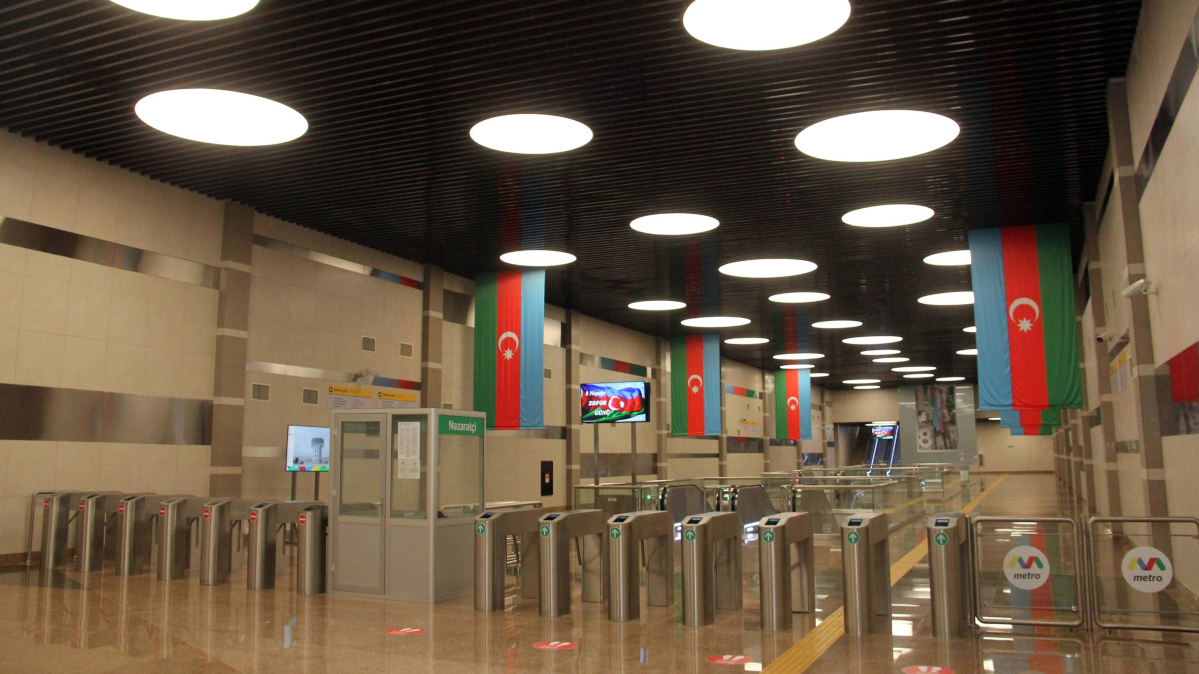
We are already seeing tangible progress. Several memoranda signed during the visit are moving into the implementation phase, particularly in energy, transport, defence and industrial cooperation. Discussions are also advancing in transport infrastructure, including opportunities related to the modernisation and digitalisation of the Baku Metro.
Considerable emphasis is now being placed on the format of the intergovernmental Joint Commission for Economic, Scientific, Technical and Cultural Cooperation, which was elevated to the level of economy ministers. In the meantime, projects involving Czech and Azerbaijani companies continue to receive maximum support.
This is also why I consider my visit to Azerbaijan important and why I am devoting part of it to the economic relations agenda.
Orkhan Amashov, AnewZ: Azerbaijan supplied around 42 per cent of Czech oil imports in 2025, whilst long-term gas supplies are now under discussion. How significantly could Azerbaijan reshape the Czech Republic’s energy security?
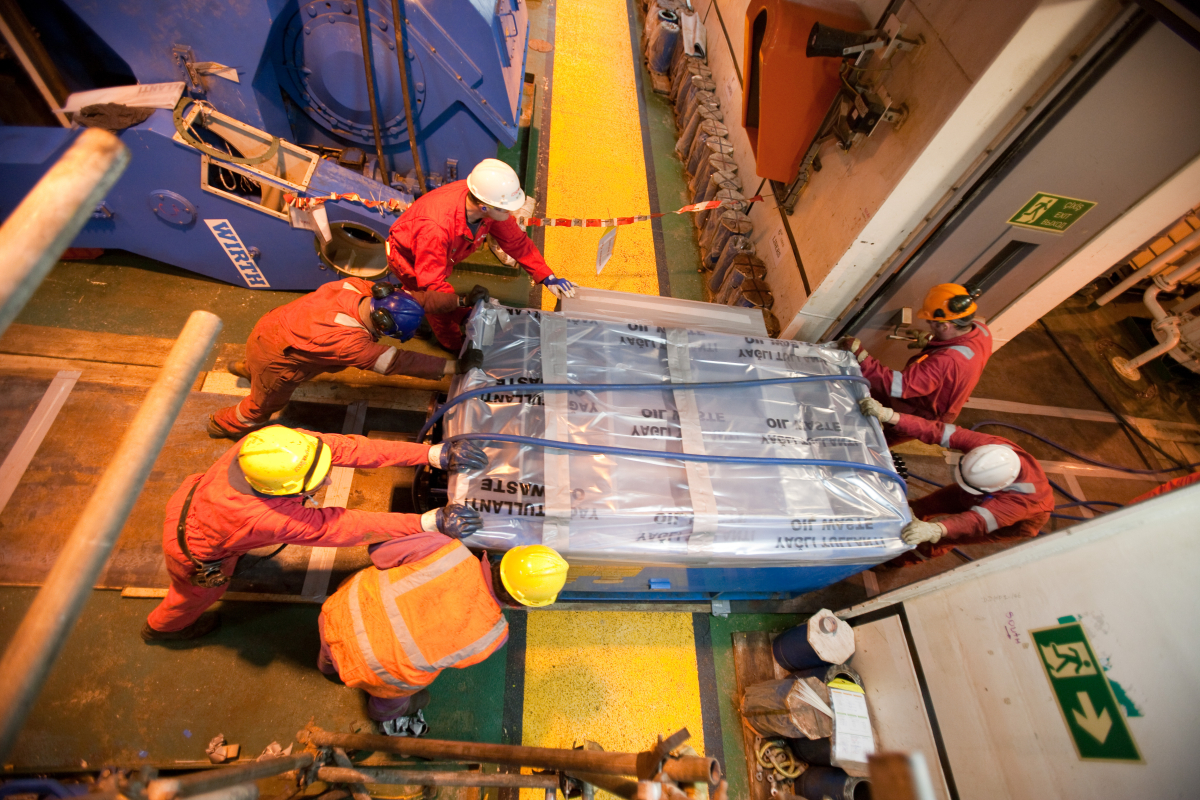
Marie Chatardová, Deputy FM of Czech Republic: Azerbaijan is our traditional, reliable and important partner in oil supplies. As you rightly pointed out, more than 42 per cent of Czech crude oil imports came from your country in 2025, making it our largest supplier.
Refineries in the Czech Republic (PKN Orlen) and other suppliers like Slovnaft, MOL, and ÖMV are stabilising their market positions in the long term thanks to supplies from Azerbaijan. We strive in the long term for the diversification of sources to be supported by the development of oil infrastructure, which allows supplying the Czech Republic and Central Europe from multiple sources.
The EU is slowly coming to terms with the fact that gas will form one of the foundations of our energy sector for decades to come. I know the Southern Gas Corridor project very well: in 2009, during the first gas crisis, we organised a summit in Prague during our presidency of the Council of the EU, where we presented to the entire EU, with a long-term vision together with Azerbaijan, the necessity of new infrastructure projects.
Azerbaijan played a significant role in the preparation of the summit, and we still remember it today, because geopolitical developments have unfortunately proven us right. We are therefore naturally interested in expanding cooperation beyond oil.
Orkhan Amashov, AnewZ: Bilateral trade remains dominated by Azerbaijani energy, but April’s discussions ranged from Baku Metro modernisation and technology transfer to joint industrial and defence production. What does the next stage of economic cooperation hold in store?
Marie Chatardová, Deputy FM of Czech Republic: The successful development of the Azerbaijani economy, for which both I and our companies have great respect, allows businesses to consider qualitatively new forms of cooperation beyond just trade.
The Metro is a good example. It is an infrastructure project for which Škoda Group, one of the Czech Republic’s and Europe’s leading companies, offers not only the supply of trains and technology, but a significant part of it can also be the localisation of maintenance, modernisation and the education of young people in new professions. Rail and urban transport have experienced great global development over the past decade.
The same applies to other technologically demanding sectors, such as the defence and security industry, energy, healthcare, smart mobility solutions, airport technologies, IT, or digitalisation. We have a lot to offer, and we are keen to do so.
Orkhan Amashov, AnewZ: Europe is restructuring its energy architecture away from Russian dependence. Where does the Czech Republic see Azerbaijan and the Southern Gas Corridor in Europe’s long-term energy strategy?
Marie Chatardová, Deputy FM of Czech Republic: Europe’s energy security today is built on diversification, resilience and trusted partnerships.
In that context, Azerbaijan has become an increasingly important strategic partner for Europe. The Southern Gas Corridor is much more than an energy project. It is a key component of our broader effort to strengthen energy security through diversified supply routes. We support efforts to further develop energy connectivity.
At the same time, I see opportunities extending beyond hydrocarbons. Renewable energy, electricity interconnections and energy efficiency are becoming increasingly important parts of the EU-Azerbaijan energy partnership.
Orkhan Amashov, AnewZ:
As Azerbaijan’s strategic partner, how important is it for the Czech Republic to see the Azerbaijan-Armenia peace process brought to completion? And what tangible benefits could the Czech Republic itself derive from peace and greater connectivity in the South Caucasus?
Marie Chatardová, Deputy FM of Czech Republic: We strongly support a comprehensive and lasting peace between Azerbaijan and Armenia and welcome the progress achieved so far. It will unlock significant economic potential, strengthen regional stability, improve transport and trade links and enhance connectivity between Europe, the South Caucasus and Central Asia.
An integral part of this process is the TRIPP project. It will create entirely new and exceptional possibilities for rail freight transport.
For Czech companies, this will mean new opportunities in infrastructure, transport engineering, logistics, energy and advanced technologies. More broadly, it will contribute to a stable and interconnected neighbourhood, which is clearly in Europe’s interest.
Orkhan Amashov, AnewZ: Prime Minister Babiš travelled from Azerbaijan to Kazakhstan and Uzbekistan in April. As Azerbaijan’s integration with Central Asia deepens, does Prague increasingly see it not merely as a South Caucasus partner, but as a strategic gateway between Europe and wider Central Asia?
Marie Chatardová, Deputy FM of Czech Republic: Absolutely. The Czech Republic increasingly sees Azerbaijan not only as an important South Caucasus player but also as a bridge connecting Europe and Central Asia. Azerbaijan’s strategic location, modern transport infrastructure and active role in regional connectivity projects make it an indispensable link in emerging East-West trade routes.
The growing importance of the Middle Corridor only reinforces this role. For us, Azerbaijan is not simply a trade destination. It is a partner in developing resilient trade, transport and energy links connecting Europe with the wider Central Asian region.
Orkhan Amashov is AnewZ's Deputy Editor-in-Chief and the host of the 'Context' programme.











What is your opinion on this topic?
Leave the first comment