Critical minerals: the new arena of U.S.–China competition
The U.S. and China are locked in a growing struggle over critical minerals, the materials that power everything from electric vehicles and microchips ...
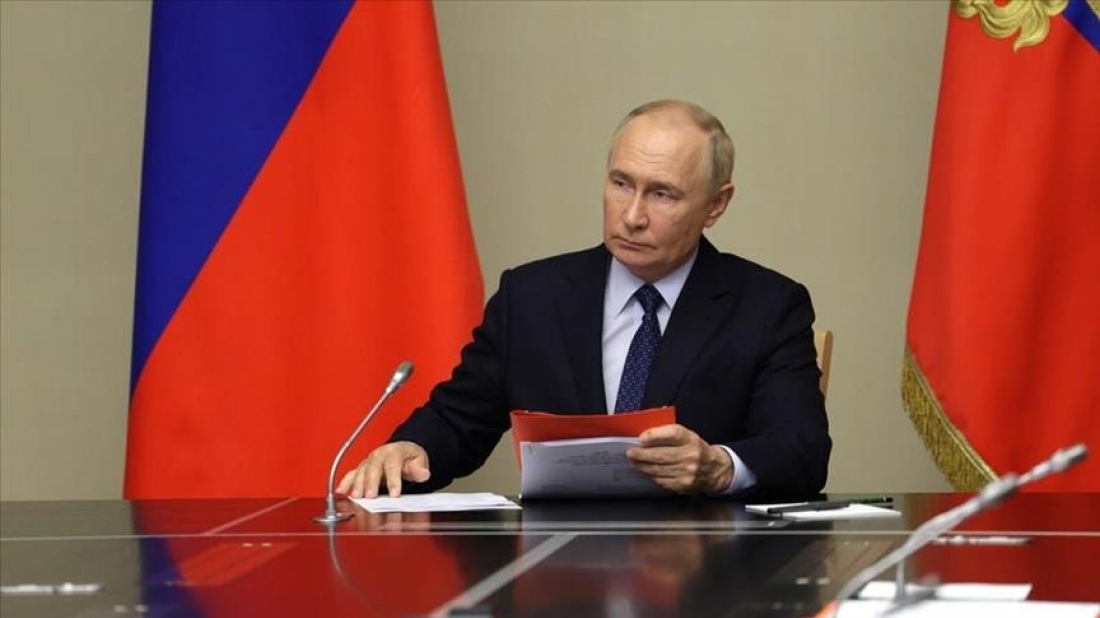
Relations between Russia and China have reached an “unprecedentedly high level,” Russian President Vladimir Putin said on Saturday, highlighting both the economic and strategic dimensions of the partnership.
In an interview with China’s Xinhua news agency, Putin noted that bilateral trade has grown by nearly $100 billion since 2021. “China is undoubtedly Russia’s leading trading partner, while Russia has become China’s fifth-largest foreign partner over the past year,” he said.
He added that although trade is measured in dollars, transactions are now “almost entirely in national currencies,” with the dollar and euro shares falling “to statistical error levels.”
Putin also stressed that Russia remains China’s main supplier of oil and gas. Gas deliveries via the Power of Siberia pipeline have exceeded 100 billion cubic metres since it began operations in 2019. The planned completion of the Far Eastern gas pipeline in 2027 will further strengthen Moscow’s role as a key market for Chinese car exports and energy demands.
Beyond economics, Putin underlined the strategic dimension of the relationship, calling Russia–China cooperation “a key factor in global politics.” He pointed to joint work at the UN and the Group of Friends in Defence of the UN Charter as platforms to strengthen the Global South.
Both nations support reforms to make the UN Security Council more democratic and reflective of current realities, with greater representation from Asia, Africa and Latin America. Putin also noted active cooperation with China within BRICS to enhance Beijing’s influence in the international system.
The Russian president criticised Western sanctions, describing them as discriminatory, and called for reforms to the IMF and World Bank. He outlined a shared vision with China for a “fair, open and resilient new financial system” free from neocolonial purposes.
Putin’s four-day visit to China will begin on Sunday at the invitation of President Xi Jinping. He will first attend the Shanghai Cooperation Organisation summit in Tianjin, then travel to Beijing to take part in events marking the 80th anniversary of the victory over militarist Japan and the end of the Second World War, where he will be a guest of honour.

Rivers and reservoirs across Spain and Portugal were on the verge of overflowing on Wednesday as a new weather front pounded the Iberian peninsula, compounding damage from last week's Storm Kristin.
Iran’s Islamic Revolutionary Guard Corps (IRGC) unveiled a new underground ballistic missile base on Wednesday (4 February), just over a day before the start of mediated nuclear negotiations with the United States, slated for Friday in Oman.
Morocco has evacuated more than 100,000 people from four provinces after heavy rainfall triggered flash floods across several northern regions, the Interior Ministry said on Wednesday.
A second group of Palestinians receiving medical treatment arrived in Egypt from Gaza via the Rafah border crossing on Tuesday (3 February).
The World Health Organization has added the Nipah virus to its list of the world’s top 10 priority diseases, alongside COVID-19 and the Zika virus, warning that its epidemic potential highlights the global risk posed by fast-spreading outbreaks.
Georgia and the United States have held a rare high-level meeting in Washington, reopening cautious discussion about relations after years of political stagnation.
Using art as a quiet alarm, a new exhibition in Baku is drawing attention to endangered wildlife and the need for environmental responsibility.
The United States and Iran are set to hold nuclear talks in Oman on Friday after Tehran requested a change of venue and a strictly bilateral, nuclear-focused format, a move that is fuelling questions about Iran’s negotiating strategy.
Iran’s Islamic Revolutionary Guard Corps (IRGC) unveiled a new underground ballistic missile base on Wednesday (4 February), just over a day before the start of mediated nuclear negotiations with the United States, slated for Friday in Oman.
The joint awarding of the Zayed Award for Human Fraternity to Azerbaijani President Ilham Aliyev and Armenian Prime Minister Nikol Pashinyan in Abu Dhabi on 4 February underscores a shared commitment to peace and reconciliation, political analyst Fuad Karimli told AnewZ.
You can download the AnewZ application from Play Store and the App Store.
What is your opinion on this topic?
Leave the first comment