The South Caucasus is going through one of its most dynamic periods in decades. After years of tension, Armenia and Azerbaijan are moving closer to a final peace deal.
One of the key outcomes of this agreement is expected to be the long-discussed Zangezur corridor, a land route connecting Azerbaijan with Turkey through Armenian territory.
This development poses a real challenge for Georgia, as traditionally it is the main transit bridge between Europe and Asia. If international cargo shifts to the new route, Tbilisi risks losing part of its strategic role as the region’s gateway.
But Georgia is not standing by. Instead, it is accelerating infrastructure development to reinforce its place on the map.
A Strategic Highway on the Black Sea
This week, Georgia’s Department of Roads under the Ministry of Infrastructure announced an international tender for supervision of construction on the new Batumi–Sarpi highway.
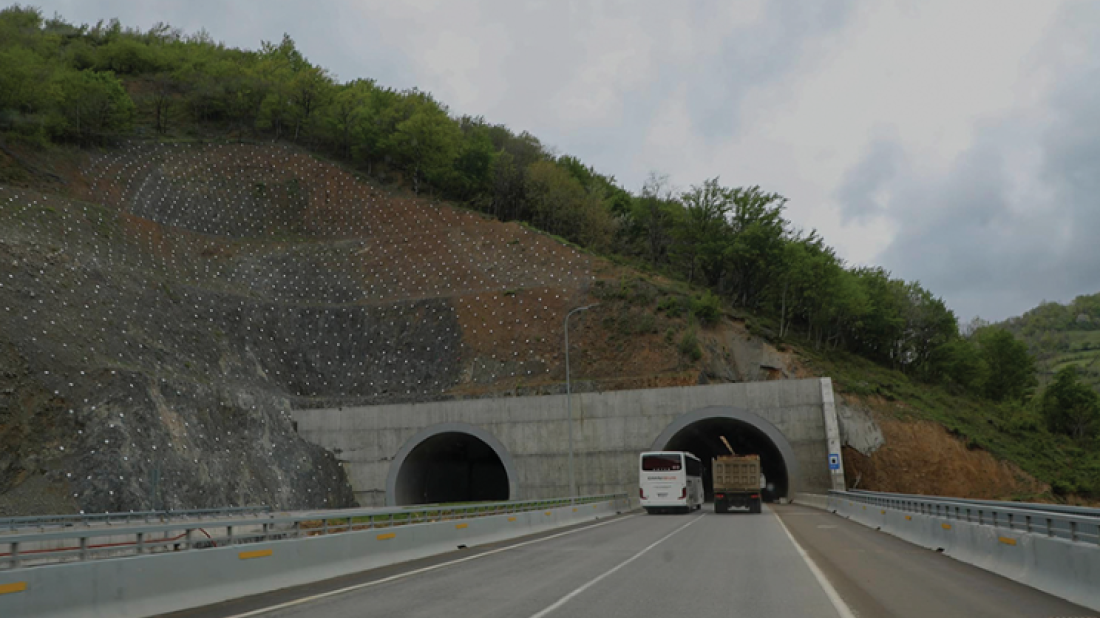
The project is designed to connect the recently completed Batumi bypass road directly with the Turkish border. Once finished, it will serve as both a vital transit corridor and a lifeline for Georgia’s main tourist city, Batumi.
According to the plan, the new road will stretch 11 kilometres, featuring:
- - a 7.6-kilometre tunnel,
- - a 1.47-kilometre bridge,
- - two modern interchanges,
- - and extensive coastal and riverbank protections.
The project will also include fortification works to secure the route against natural risks common to the Black Sea coastline.
International Backing
The initiative is financed through a loan from the Asian Development Bank, combined with support from Georgia’s state budget. The estimated cost of supervision alone stands at $14 million.
International companies interested in overseeing the project have until 22 September, 2025, to submit their proposals in English via the Asian Development Bank’s online platform. The supervision phase is planned to last 48 months.
Why It Matters
For Georgia, the stakes are high. Batumi is not only a regional hub but also the country’s tourism capital. Millions of visitors arrive every year to enjoy the Black Sea coast, and a smoother link to Turkey will further boost cross-border tourism.
The highway is also expected to ease congestion. Until recently, the only route ran directly through Batumi’s residential and tourist areas, creating bottlenecks and slowing international freight. The Batumi bypass road, completed in October 2024, was the first step in solving this problem. Now, the Batumi–Sarpi highway will take that progress further.
Georgia’s Response to Regional Change
The broader message is that Georgia is determined to maintain its role as a key transit and trade corridor despite the geopolitical shifts in the South Caucasus.
With the Zangezur corridor on the horizon, Georgia faces greater competition. Yet by investing in modern infrastructure, it hopes not only to safeguard its transit importance but also to expand its tourism and economic potential.
As the South Caucasus prepares for a new political and economic reality, Georgia’s future is straightforward — build, connect, and remain indispensable.
















What is your opinion on this topic?
Leave the first comment