View: Türkiye and Hungary strengthen trade, energy and defence ties
Türkiye has reinforced its strategic partnership with Hungary, expanding cooperation in trade, energy, defence, and innovation following high-level t...
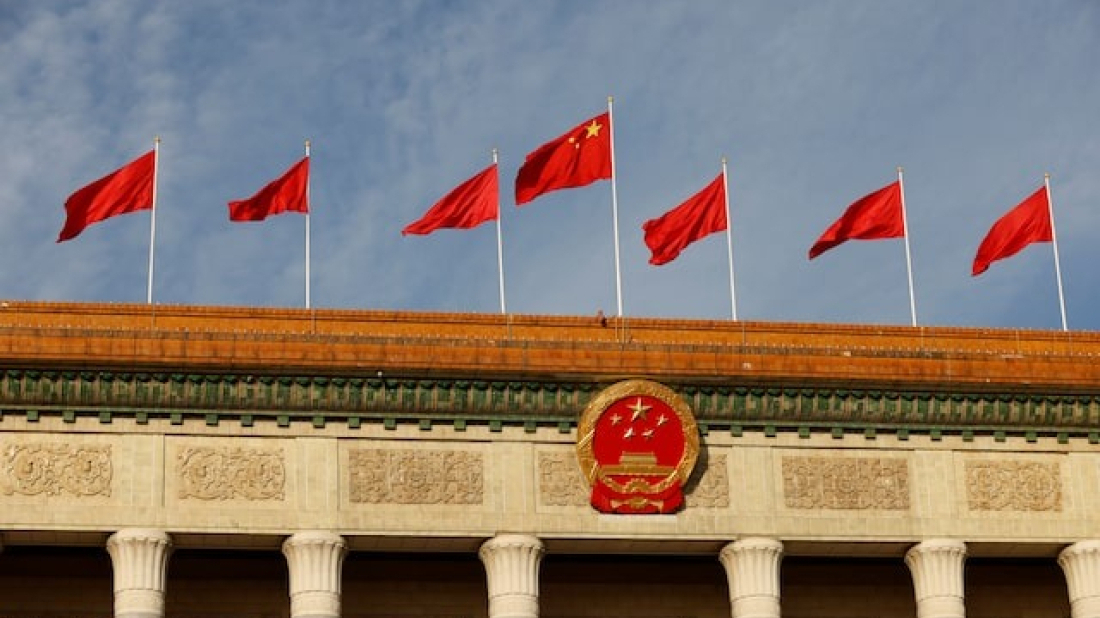
The U.S. State Department says Beijing has blocked a U.S. Patent and Trademark Office employee who was visiting relatives in China from leaving the country, prompting high-level talks to secure the official’s return.
The unnamed civil servant, described as travelling “in a personal capacity,” became subject to an exit ban several months ago, the State Department confirmed on Monday.
“We are tracking this case very closely and are engaged with Chinese officials to resolve the situation as quickly as possible,” a spokesperson said.
The Washington Post reported that Chinese border officers halted the man after discovering he had not declared his U.S. government job on his visa application. Neither the U.S. Commerce Department—of which the patent office is a part—nor the Chinese embassy in Washington responded to requests for comment.
Beijing has increasingly used exit bans against both Chinese citizens and foreigners in civil, regulatory and criminal investigations. Rights group Safeguard Defenders says more than 120 foreign nationals were barred from leaving China between 2018 and 2023, though precise figures are difficult to verify.
In a separate case, Wells Fargo banker Chenyue Mao—a U.S. citizen—was stopped from boarding a flight last week. China’s foreign ministry said on Monday that she “must cooperate with a criminal inquiry.” The U.S. bank has suspended all staff travel to China pending clarification, a person familiar with the matter told Reuters.
The latest exit bans come as Washington and Beijing try to steady relations strained by trade tariffs, the origins of COVID-19 and tensions over Taiwan.

A delayed local vote in the rural Honduran town of San Antonio de Flores has become a pivotal moment in the country’s tightest presidential contest, with both campaigns watching its results as counting stretches into a second week.
Authorities in Japan lifted all tsunami warnings on Tuesday following a strong 7.5-magnitude earthquake that struck off the northeastern coast late on Monday, injuring at least 30 people and forcing around 90,000 residents to evacuate their homes.
Pressure is mounting between Venezuela and the United States as both nations emphasise military preparedness and strategic positioning.
Paramount Skydance (PSKY.O) has launched a $108.4 billion hostile takeover bid for Warner Bros Discovery (WBD.O). The escalation follows a high-stakes battle that had appeared to end last week when Netflix secured a $72 billion deal for the studio giant’s assets.
Tehran has protested to Washington because of the travel ban on its football team delegation as well as Iranian fans who would like to travel to the United States for the upcoming World Cup matches in 2026.
Kazakhstan has begun redirecting part of its crude exports, sending oil from the Kashagan field to China for the first time.
Azerbaijan and Slovakia are set to strengthen bilateral ties and cooperation as President Ilham Aliyev meets Richard Raši, Speaker of the National Council of the Slovak Republic on Tuesday, 9 December.
Azerbaijan’s outreach to Europe is entering a more visible phase, and the visit to Slovakia has become a focal point in understanding how these ties are evolving.
The Georgian Parliament is moving to fast-track amendments that would change how assemblies and demonstrations are organised. Lawmakers say the goal is to improve public order, while civil society groups warn the measures could limit key democratic freedoms.
Georgia is entering one of the most consequential phases of its foreign policy in years.
You can download the AnewZ application from Play Store and the App Store.
What is your opinion on this topic?
Leave the first comment